
Livraison le jour même et le lendemain

Qualité garantie

Débloquez vos offres de bienvenue: Livraison GRATUITE | Jusqu'à -80 % | 30 jours d'essai gratuits à JoyPlus
Téléchargez l'application
Sticky rice might seem simple to choose: you search for sticky rice, pick a pack and start cooking. Yet many purchases go wrong because of confusing names, the wrong quantity, or a cooking method that doesn’t suit the rice. If you want to make mango sticky rice at home, your needs will be different from a restaurant that prepares dumplings or rice cakes every day.
Joybuy Product Recommendation Officer helps you assess the key differences without relying on marketing language. Pay particular attention to the rice variety, its origin, the packaging, and how you intend to use the rice.
The English terms glutinous rice and sticky rice both refer to sticky rice. Despite the name, this rice naturally contains no gluten. The grains become sticky and compact after steaming.
This is quite different from ordinary sushi or jasmine rice. Sushi rice also becomes sticky, but it has a different grain and is usually prepared with rice vinegar. For traditional Thai sticky rice, mango sticky rice or zongzi, you need a pack that clearly states glutinous rice, sticky rice or kleefrijst.
If you follow a gluten-free diet, always check the current packaging and allergen information. According to the product information, a product with only rice as an ingredient contains none of the 14 major EU allergens, but you should check for cross-contamination and labelling changes yourself.
A 1 kg pack is practical for a first recipe or regular home use. For families, meal prepping or a party, sticky rice 4.5 kg may be more sensible. Catering and hospitality businesses tend to look at sticky rice 10 kg, sticky rice 18 kg or sticky rice 20 kg.
A large bag is only good value if you can store the rice in a dry, sealed container. Moisture, heat and direct sunlight can affect the quality. So put an opened bag in a well-sealing storage container and check you have enough space before ordering a bulk pack.
Thai sticky rice is usually rinsed first, then soaked and finally steamed. Simply boiling it in lots of water can give a different texture. The exact time depends on the grain, the quantity and the recipe. So follow the instructions on the pack.
For some uses, such as Chinese rice cakes, tangyuan or dumplings, soaking before preparation can be important. With black sticky rice, a longer soaking time is often recommended, for example several hours or overnight.
Choose white sticky rice for savoury Thai dishes, steamed rice and classic mango sticky rice. Black sticky rice turns a dark purple-black colour after cooking and is often used for desserts, porridge, rice pudding and sweet rice cakes. The flavour and texture can vary between products.
For desserts, a soft, cohesive texture is handy. For dumplings, zongzi and Chinese snacks, a firmer grain may be more suitable. Don’t just read “sticky rice” – also look at the suggested uses and cooking instructions.
A short ingredients list is clear. Different products in the range consist of 100% sticky rice or 100% black sticky rice. The origin does vary: according to the product information, some products are made in Thailand, while others are packed or produced in the United States or the Netherlands.
Don’t be guided solely by terms like “premium” or “extra quality”. Check objective details such as:
For a household that occasionally makes an Asian dessert, 1 kg or 2 kg is usually manageable. A sticky rice 4.5 kg pack suits families, larger dinner parties and home cooks who regularly prepare Asian dishes.
Restaurants, caterers and other professional kitchens can choose 10 kg, 18 kg or 20 kg. Pay extra attention to storage, ease of lifting, and whether you can seal the bag hygienically after opening. A large pack reduces the number of small packs, but is less practical if you only use sticky rice a few times a year.
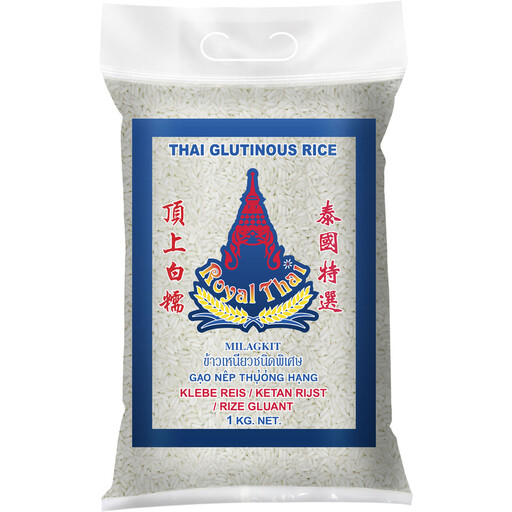
Why this suits the profile: The 1 kg pack is manageable for anyone wanting to try sticky rice for a dessert, side dish or small family dinner.
The product information lists sticky rice as an ingredient and states that the product is naturally gluten-free. The small bag limits the risk of long-term storage.
1 kg net weight; 100% sticky rice according to the product information; suitable for home use.
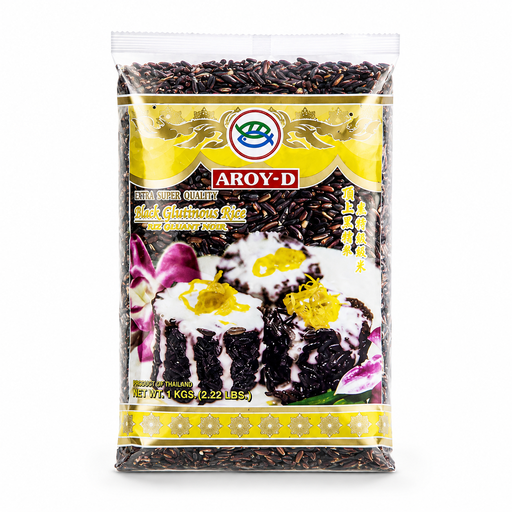
Why this suits the profile: This black sticky rice suits home cooks looking for a dark colour, a soft firm bite and a clear use for desserts.
The product information explicitly mentions black glutinous rice, the origin Thailand and a soaking recommendation of 6–8 hours or overnight.
1 kg black sticky rice; according to product information suitable for sweet and savoury preparations; product from Thailand.
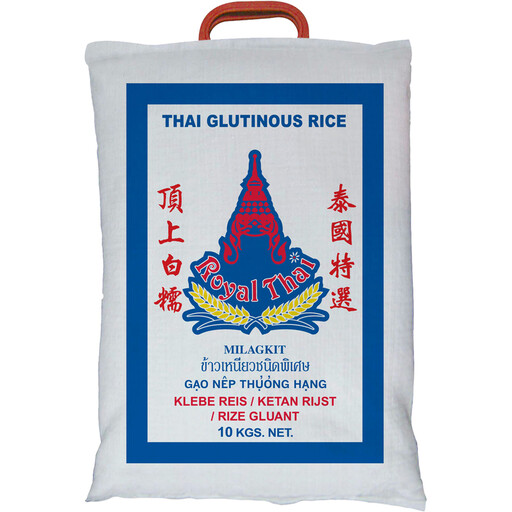
Why this suits the profile: The 10 kg pack is aimed at frequent use in a large household, catering or a professional kitchen.
The product information states that the rice should be rinsed and steamed before preparation, rather than being cooked like ordinary rice.
10 kg net weight; according to product information 100% sticky rice; sturdy, airtight plastic packaging.
We have put together a full, up-to-date list of products that fully meet these strict selection criteria and comply with current European safety regulations.
For sushi, extra care is needed: sticky rice can become sticky, but it is not automatically the same as Japanese sushi rice. So check the recipe and the desired grain texture before ordering.
Yes. Glutinous rice, sticky rice and kleefrijst are common names for rice that holds together strongly after cooking. The term “glutinous” does not mean the rice contains gluten. However, always check the allergen information on the current packaging.
For mango sticky rice, white Thai sticky rice is usually used. Choose a product that clearly states sticky rice or glutinous rice and follow the instructions for soaking and steaming. Black sticky rice can also be used in a variation of the dessert, but gives a different colour, flavour and texture.
For occasional home use, 1 kg is often practical. Families and home cooks who regularly make Asian dishes can look at 2 kg or 4.5 kg. For restaurants, caterers and heavy users, packs of 10 kg, 18 kg or 20 kg are suitable if you have a dry, sealed storage space.
