
Livraison le jour même et le lendemain

Qualité garantie

Débloquez vos offres de bienvenue: Livraison GRATUITE | Jusqu'à -80 % | 30 jours d'essai gratuits à JoyPlus
Téléchargez l'application
Looking to buy sticky rice for mango sticky rice, dumplings, Thai dishes or a large gathering? The packaging is not the only factor to consider. The terms sticky rice and glutinous rice are often used interchangeably, yet not every rice variety delivers the same result in a saucepan or steamer.
As a Joybuy Product Recommendation Officer, I assess product information based on practical details: ingredients, origin, pack size and the uses listed on the label or in the product description. This helps you avoid overpaying for rice that is not suited to your recipe.
Sticky rice naturally contains a high proportion of amylopectin. After soaking and steaming, this gives the grains a cohesive, elastic texture. That is different from basmati, pandan rice or regular white rice.
Sushi rice is not automatically the same as Thai or Chinese sticky rice either. Sushi is typically made with short-grain rice and sushi vinegar. Some product descriptions list glutinous rice as suitable for sushi and dumplings, but always check the recipe and the texture you want. For traditional mango sticky rice or Thai sticky rice dishes, choose a product clearly labelled “Thai sticky rice” or “glutinous rice”.
Terms like these say little without verifiable details. Instead, look at:
When a brand makes claims about aroma, texture or quality, treat them as manufacturer product claims. For example, the Royal Umbrella product description refers to 100% Thai sticky rice and traditional Thai uses. These are details from the listing, not an independent guarantee of every cooking result.
A 1 kg pack of sticky rice is practical for a household that wants to try different recipes. A 4.5 kg pack is better suited to regular preparation, meal prep or a family. For restaurants, caterers and high-volume users, 10 kg, 18 kg or 20 kg packs make more sense.
A large bag does require suitable storage. Keep the rice in a cool, dry place away from direct sunlight. Reseal the packaging securely after opening or transfer the rice to a clean, airtight container. Check the best-before information before use and do not use a product with damaged packaging.
Check that the product consists of 100% sticky rice and does not list added flavourings or colourings. The selected products in this overview list rice as the only ingredient. Several variants state on the product page that they contain none of the 14 major EU allergens. Nevertheless, always check the current packaging, particularly in cases of food allergies or possible cross-contamination.
“Gluten-free rice” means here that the ingredients list does not mention cereals containing gluten. This is not a medical claim. Anyone with coeliac disease or who must strictly avoid gluten should also read the packaging and product information regarding traces.
For Thai recipes, Thai sticky rice from Thailand can be a natural choice. Royal Thai, Royal Umbrella, Sunlee and Green Dragon offer variants described in the product information as Thai sticky rice.
Chinese sticky rice is often used for zongzi, tangyuan, nian gao and sweet rice balls. According to the product description, Green Dragon Glutinous Rice 1 kg is recommended for Chinese pastries and desserts. The preparation method varies by dish: rinsing, soaking and steaming often produces a different texture from cooking the rice directly.
Use this practical guide:
For larger packs, also consider portability. A 20 kg bag is difficult to move and should be transferred to a suitable container after opening.
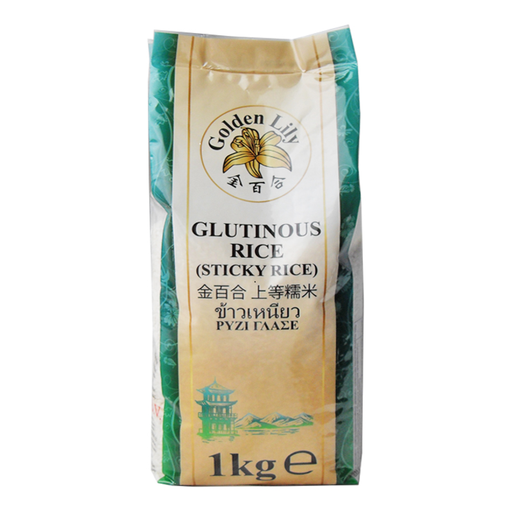
Why it fits: A manageable quantity for anyone who wants to try Chinese desserts, dumplings or a new recipe without building up a large stock.
The 1 kg pack helps minimise waste and makes it easier to learn the preferred cooking method first.
100% sticky rice according to the product information; soaking and steaming are listed as preparation steps.
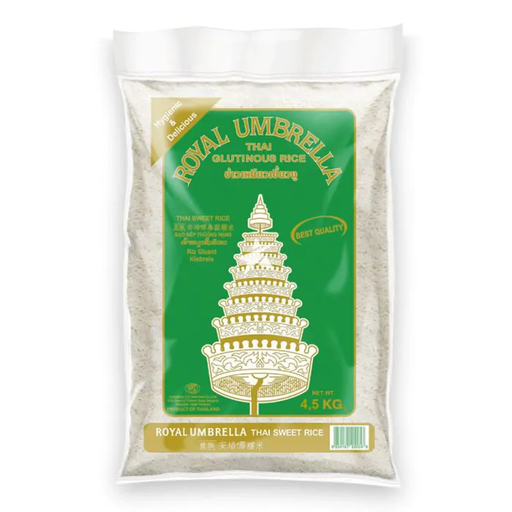
Why it fits: Ideal for home cooks who regularly prepare Thai dishes and want a larger supply.
The product information explicitly states that it is 100% Thai sticky rice, helping distinguish it from regular pandan or jasmine rice.
Sourced from Thailand according to the product listing; the pack size is designed for larger household quantities.
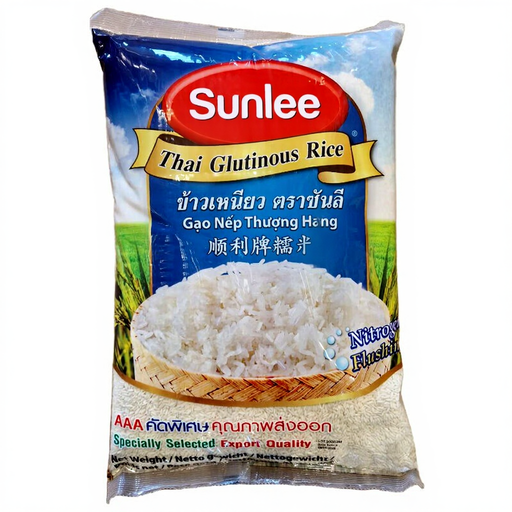
Why it fits: A generous bag for families, celebratory meals and small-scale catering.
The description mentions whole grains, high stickiness and uses including dumplings, tangyuan and zongzi.
Made in Thailand according to the product information and suitable for a steamer, hob or rice cooker, depending on the recipe.
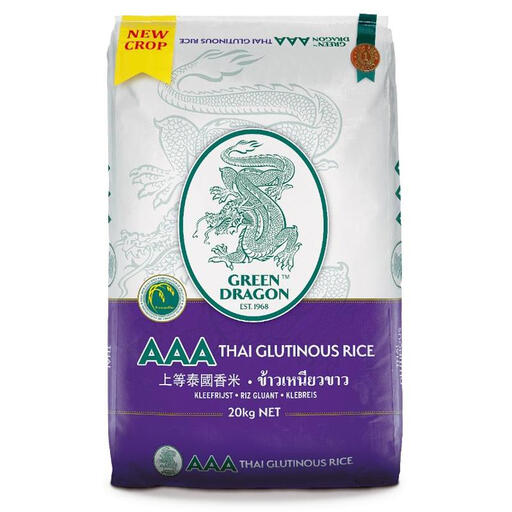
Why it fits: Designed for restaurants, caterers or households that prepare large quantities on a very regular basis.
Choose a 20 kg pack only when your consumption justifies it. This helps prevent unnecessary storage and quality loss after opening.
The product description states that it contains 100% sticky rice, is suitable for desserts and savoury recipes, and comes in a 20 kg pack.
Browse a current selection of sticky white rice and compare pack sizes, origins and uses before placing your order.
For mango sticky rice, steamed rice is typically combined with coconut milk and sugar. For zongzi, tangyuan and dumplings, the soaking time, filling and steaming duration determine the final texture.
Yes. “Glutinous rice”, “sticky rice” and “kleefrijst” generally refer to the same rice category. The name “glutinous” does not mean that the rice contains gluten; always check the current allergen information on the packaging.
For occasional use, a 1 kg pack of sticky rice is usually the most practical choice. If you cook weekly or prepare food for several people, consider 2 kg or 4.5 kg. Packs of 10 kg, 18 kg or 20 kg are mainly suited to hospitality, catering and high-volume use.
This depends on the product and the dish. Several product descriptions state that Thai sticky rice should first be rinsed, soaked and steamed. Always follow the instructions on the packaging and adapt the preparation method to the recipe.
