
Vandaag of morgen in huis

Kwaliteit gegarandeerd

Welkomstaanbiedingen ontgrendelen: GRATIS bezorging | Tot 80% korting | Gratis 30 dagen JoyPlus-proefperiode
Download de app
Stainless steel storage containers with lids are useful for leftovers, packed lunches, meal prep and storing food in the fridge. However, a product title such as “airtight”, “leakproof” or “oven-safe” does not tell you everything. In practice, the seal, lid and usage restrictions determine whether a storage container is genuinely convenient to use.
The Joybuy Product Recommendation Officer therefore focuses primarily on verifiable details: material, capacity, closure, care and suitability for the fridge, freezer, oven or microwave.
For several stainless steel food containers, only the metal base is suitable for the dishwasher. According to the product information, PP lids and silicone seals are often better washed by hand. Always check whether “dishwasher-safe” applies to the complete set or only to the container.
A lid that is regularly washed at too high a temperature may stop fitting properly over time. This increases the risk of leaks.
An airtight storage container usually has a silicone ring and locking clips. These help keep smells and moisture contained. However, the quality of the seal depends on a properly fitting ring, fully closed clips and a lid that has not become distorted.
Do not fill a container with soup or sauce right to the brim. Also check that the silicone ring is correctly positioned in its groove. For carrying food in a bag, a flat model with several locking points is often more practical than a loosely fitting lid.
Metal and microwaves are not automatically a safe combination. The product information supplied for some stainless steel models contains conflicting guidance about microwave use. If in doubt, it is safer not to use the stainless steel container in the microwave and to transfer the food to a suitable microwave-safe dish.
With a glass oven dish with a lid, only the dish itself is usually heat-resistant. The PP lid must be removed before use in the oven, microwave or dishwasher if this is specified in the product information.
304 stainless steel is a widely used material for food containers. It is uncoated, generally does not absorb smells and is suitable for everyday storage when the product is designed for this purpose.
316 or 316L stainless steel is described in product information as a variant offering greater corrosion resistance. This can be useful if you often store moist, salty or acidic dishes. The material specification alone does not guarantee a longer service life; thickness, closure and finish also matter.
Borosilicate glass is transparent, so you can see the contents immediately. It can also be used for certain oven and microwave applications, but always check the maximum temperature and remove the lid. Glass is heavier than stainless steel and may break if dropped or exposed to a sudden temperature change.
Choose the capacity based on your portions:
Do not consider capacity alone; check the external dimensions too. A 2,400 ml container may take up more space than expected because of its lid and rounded corners.
For leakproof food containers, multiple locking clips and a silicone sealing ring are important features. Check whether the ring can be removed. This makes it easier to remove crumbs and grease.
Also pay attention to the following:
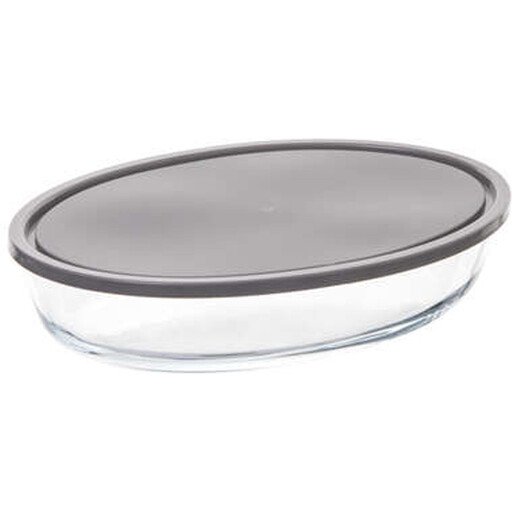
Why it suits this profile: This glass oven dish with lid combines cooking and storage. Its 2.4-litre capacity is suitable for leftovers, oven-baked dishes and family-sized portions.
The product information states separately that the lid must not be used in the oven, microwave or dishwasher. This makes the usage restrictions clearer.
Borosilicate glass, a 2.4-litre capacity and, according to the product description, suitable for the oven, microwave, dishwasher and freezer; the lid has restrictions.

Why it suits this profile: The three sizes—600, 1,100 and 2,200 ml—are suitable for a range of portions and organised food storage in the fridge.
According to the product information, four locking clips and a silicone ring are designed to provide an airtight seal. The lid must be washed by hand.
316 stainless steel, three capacities, suitable for the freezer and, according to the product information, stackable. Only use the microwave function when the current instructions explicitly permit it.
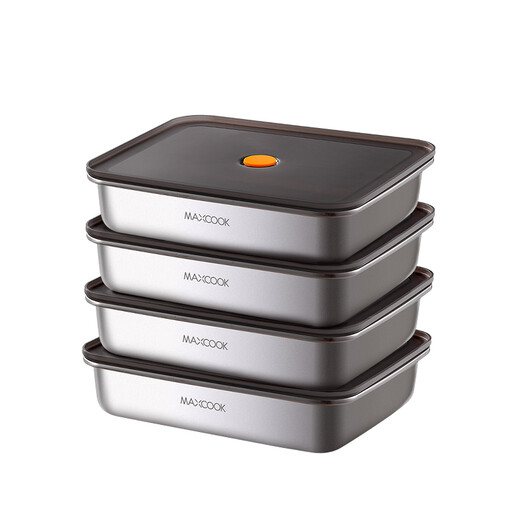
Why it suits this profile: Four identical 1,600 ml containers are practical for batch cooking, preparing several lunches or dividing leftovers for a household.
The product information explicitly states: do not use in the microwave and keep away from naked flames. This helps prevent incorrect use when reheating food.
316L stainless steel, four identical sizes, suitable for the freezer and, according to the product information, dishwasher-safe. Do not use in the oven or microwave without explicit permission.
We have put together a complete, up-to-date list of products that fully meet these strict selection criteria and the applicable European safety regulations.
Choose stainless steel if you are mainly looking for a lightweight, sturdy and opaque container for lunch, the fridge or the freezer. Stainless steel food containers eliminate the risk of broken glass, but you cannot see the contents without opening the lid.
Choose glass if you want to check your meal at a glance or are looking for an oven dish that can go from oven to table. Bear in mind the greater weight and the restrictions that apply to plastic lids. Both materials can work well for everyday meal prep; the right capacity and closure are more important than marketing terms.
This varies by model. According to their product information, several of the sets mentioned are described as freezer-safe. However, leave some space at the top, especially for liquids that expand. Also check that the lid closes correctly after the container has defrosted.
Do not assume that they can. Some product descriptions specify limited microwave use, while others warn against using the container in a microwave. Follow the latest safety instructions for the specific product. If the information is contradictory, it is safer not to use the stainless steel container in the microwave.
The metal base can last a long time under normal use, but the lifespan of the set also depends on the silicone ring, locking clips and lid. Wash the components according to the instructions, avoid abrasive products and replace the ring if it becomes hard, cracked or misshapen. This will help the seal continue to work effectively.
