
Livraison le jour même et le lendemain

Qualité garantie

Débloquez vos offres de bienvenue: Livraison GRATUITE | Jusqu'à -80 % | 30 jours d'essai gratuits à JoyPlus
Téléchargez l'application
Stainless steel food storage containers are handy for leftovers, meal prep, lunch and travel. However, a shiny exterior does not guarantee a good purchase. In particular, the seal, capacity and usage restrictions determine how practical a container is in everyday use.
Three common pitfalls:
“Leak-proof” without a clear closure system
A lid with only a loose press-fit edge may be sufficient for dry food, but less suitable for soup, sauce or yoghurt. Check whether it has clips, a silicone sealing ring or a screw-top closure.
Dishwasher-safe without distinguishing between components
The stainless steel container may be dishwasher-safe, while the lid or silicone ring is better washed by hand. For example, the COOKER KING set states that the containers can go in the dishwasher, but that the lids and rings should preferably be placed on the top rack or cleaned by hand.
Confusion about ovens, microwaves and freezers
Stainless steel must not be used in a microwave. Some product pages mention oven use, but the lid must be removed and the safety instructions followed. A glass lid can also break when exposed to sudden temperature changes. Always check the product-specific warnings.
304 stainless steel is commonly used for stainless steel food storage containers. It is a widely used grade for food contact and is generally described in product information as coating-free, low-odour and corrosion-resistant. This does not mean that every container is automatically suitable for every use: the lid materials and care instructions matter too.
316 stainless steel is also used in food containers. According to Maxcook’s product descriptions, this material is designed to offer greater corrosion resistance. That may be appealing for intensive use, but also consider the weight, closure and total set capacity. A higher material number alone does not determine whether a container is right for your lunch or fridge.
For lunch, meal prep containers of around 600 to 1,000 ml are often practical. Larger formats are better suited to leftovers, salads or multiple portions. As well as the capacity in millilitres, consider the shape:
Also check the external dimensions. A 2,400 ml container may be spacious for use at home, but inconvenient in a standard rucksack.
For leak-proof food containers, the closure and sealing ring are more important than simply using the term “airtight”. A silicone ring can help seal the connection between the container and lid. Clips or a screw-top lid provide additional security. When carrying liquids, it is best to keep the container upright and avoid filling it to the brim.
A dishwasher-safe food storage container saves time, but removable rings and lids must be able to dry thoroughly. Check whether the components can be taken apart for cleaning. Do not use wire wool or abrasive scouring pads, as these can damage the surface.
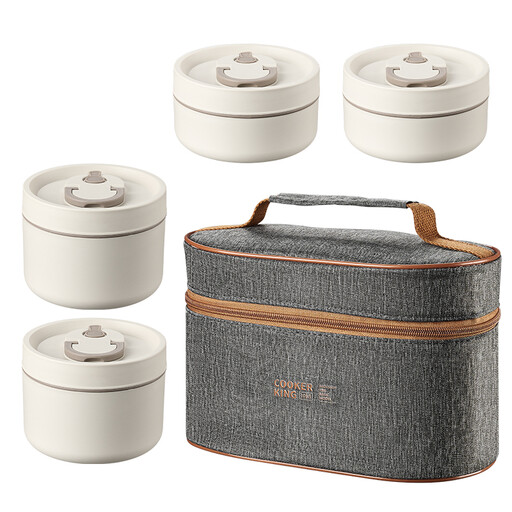
Why it suits this profile: A set of five containers offers a simple starting point for leftovers, lunch and meal prep. According to the product information, the containers are dishwasher-safe.
The product information distinguishes between dishwasher use for the containers and careful cleaning of the lids and silicone rings. When carrying hot soup, the valve should be opened first to release pressure.
304 stainless steel containers, a five-piece set and an insulated lunch bag included. The bag itself is not dishwasher-safe.

Why it suits this profile: The combination of 1,000, 1,800 and 3,000 ml suits households that store both small portions and larger meals.
The set uses glass lids with silicone rings. The product warning states that sudden temperature changes should be avoided and that the container must not be used in a microwave.
304 stainless steel, borosilicate glass, three sizes and a stackable design. According to the product information, the containers can be used in the fridge, freezer and dishwasher in line with the stated instructions.
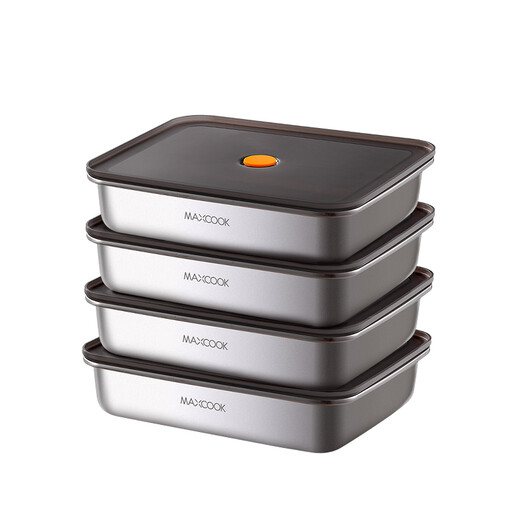
Why it suits this profile: Four identical containers are easy to organise for regular meal prep, larger portions and households that prepare several meals in advance.
The set explicitly states that it is suitable for freezer and dishwasher use. The warning rules out microwave use and direct contact with naked flames.
316L stainless steel, four containers with the same capacity and the option of cleaning them by hand or in the dishwasher.
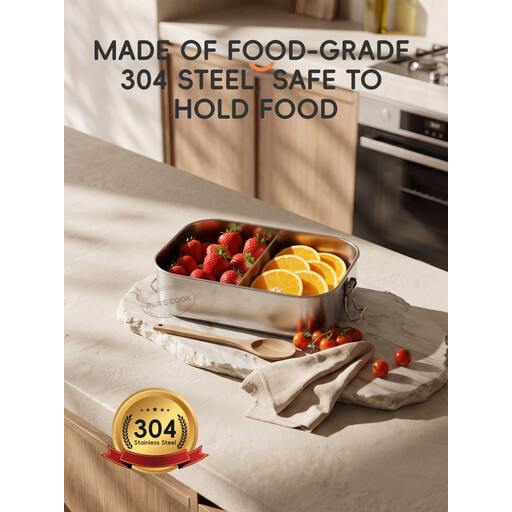
Why it suits this profile: The two compartments are practical for school, the office, commuting and picnics where bread, fruit or snacks need to be kept separate.
The product information mentions clips and a removable silicone seal. After filling, check that all clips are closed, especially when carrying moist food.
304 stainless steel, two compartments, securing clips and a dishwasher-safe specification. Do not use the lunch box in a microwave.
We have put together a complete, up-to-date list of products that fully meet these strict selection criteria and the applicable European safety regulations.
A thermal food jar is a different category from a standard food storage container. Vacuum-insulated models such as the Maxcook Food Jar are designed for taking hot or cold contents with you while you are out and about. According to the product information, temperature retention of 4 to 6 hours is stated; this is a brand claim, not a guarantee for every situation. Preheating or pre-cooling with water is recommended before use. These jars are generally washed by hand.
That depends on the specific model and closure. Products that explicitly state that they are suitable for freezer use may be used for this purpose. Leave room for expansion and follow the manufacturer’s instructions.
Many stainless steel containers can go in the dishwasher. Lids, clips and silicone rings may require hand washing or placement on the top rack. Always check the care information for each product.
Their lifespan depends on the material, closure and care. Stainless steel generally absorbs odours less readily than some plastic materials, but lid edges and silicone seals can wear out with frequent use. Replace a ring or lid when it no longer fits securely, has become deformed or is damaged.
