
Vandaag of morgen in huis

Kwaliteit gegarandeerd

Welkomstaanbiedingen ontgrendelen: GRATIS bezorging | Tot 80% korting | Gratis 30 dagen JoyPlus-proefperiode
Download de app
Stainless steel food storage containers are ideal for leftovers, meal prep, lunches and freezer storage. However, terms such as “airtight” or “leak-proof” do not tell the whole story. The closure, sealing ring and dimensions ultimately determine whether a container works well in a Dutch kitchen, bicycle pannier or work bag.
Pay particular attention to these three common pitfalls:
Many 304 stainless steel storage containers are suitable for everyday food use. 304 stainless steel generally refers in product information to a type of rust-resistant steel used for kitchen products. 316 stainless steel is also used for food storage containers and, according to the manufacturer’s product specifications, offers greater corrosion resistance.
Do not rely solely on the term “food-grade”. Also check:
A stainless steel container generally absorbs less odour than some plastic alternatives, but that does not automatically mean every product performs equally well. The quality of the finish and closure remains important.
For leak-proof food containers, silicone sealing rings and sturdy fastening clips are practical features. For a stainless steel lunchbox for school, work or train journeys, a lid with multiple fastening points is often more convenient than a simple loose clip-on lid.
Pay attention to the following:
For example, the COOKER KING set states that the silicone air valve must be opened before removing the lid from a container holding hot food or soup. This prevents pressure from building up during opening. Also allow hot food to cool first, as instructed, before sealing it airtight.
Freezer-safe food storage containers are practical for portions you prepare in advance. However, check whether the claim applies to the complete product. A stainless steel container may be freezer-safe, while a glass or plastic lid may have different instructions.
Dishwasher-safe food containers are attractive for everyday use. Here too, the different components may vary:
Take extra care with microwave and oven use. Stainless steel must not be used in the microwave. Some product descriptions mention oven use, while the safety warning lists restrictions. In the case of the PURECOOK container with glass lid, the supplied instructions conflict: one passage mentions microwave and oven use, while the safety warning says to avoid the microwave and naked flames. Therefore, do not use this model in the microwave and follow the most cautious safety instruction.
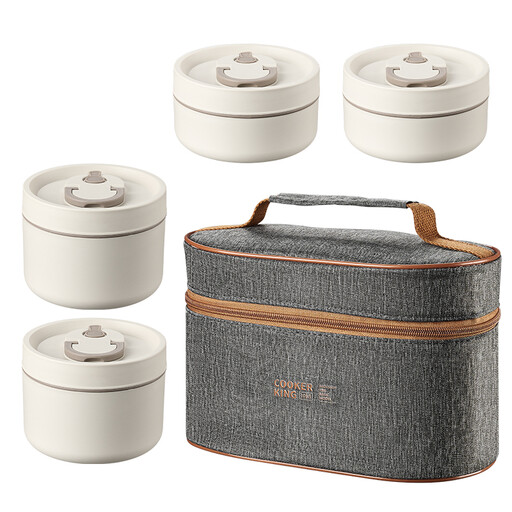
Why it suits this profile: A set of five containers is practical for anyone who wants to organise lunch, leftovers and meal prep portions at the same time.
The product information specifies 304 stainless steel and clearly states separately that the lids and silicone rings need to be cleaned differently from the containers.
Five-piece set, 304 stainless steel containers and a described vent for hot food.

Why it suits this profile: The three capacities offer options for snacks, an individual lunch or a larger meal.
The material and capacities are clearly specified; freezer and dishwasher use are also permitted according to the product information.
316 stainless steel, three sizes, lids included, and suitable for the freezer and dishwasher according to the listed specifications.
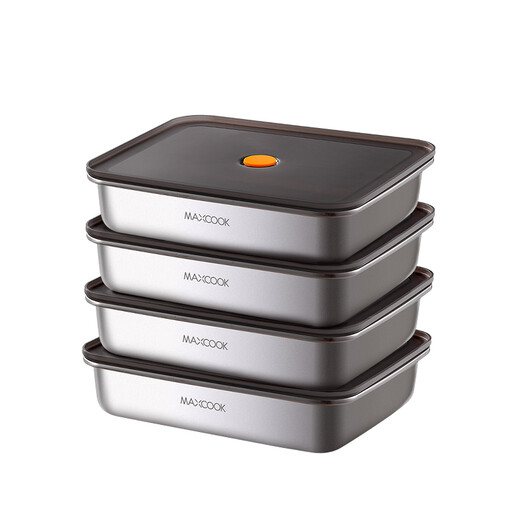
Why it suits this profile: Four identical, spacious containers are ideal for households that prepare several portions at once or store larger quantities.
The square capacity is clearly specified. Microwave use is excluded, making the material limitation clear.
Four 1,600 ml containers, 316L stainless steel, suitable for the freezer and dishwasher according to the product description.
Wash new stainless steel food storage containers with mild washing-up liquid before first use. Remove the sealing rings if the design allows it. This helps prevent food residue from collecting in the rim. Dry all parts before stacking or storing them.
Do not use sharp metal utensils in the container if the manufacturer warns against scratching. Do not fill containers beyond the stated capacity, and leave room when freezing food. Regularly check clips and silicone rings for deformation, cracks or persistent food odours.
A bento lunchbox with compartments is suitable when you want to keep ingredients separate. Deep containers with a seal are more practical for soup or sauce. For a small portion on the go, a 600 ml container may be sufficient; anyone storing a full meal or leftovers will generally need 1,000 ml or more.
We have put together a complete, up-to-date list of products that fully meet these strict selection criteria and the applicable European safety regulations.
They can when this is explicitly stated in the product information. Also check the lid, sealing ring and maximum fill level. Leave room for liquids, as food can expand when it freezes.
No, stainless steel must not be used in the microwave. Transfer food to a microwave-safe dish first. Even for products whose description mentions oven use, you should follow the specific safety warnings.
Their lifespan depends on the material, closure and maintenance. A container can remain usable for a long time if you avoid abrasive products, naked flames and incorrect use. Sealing rings and plastic clips are often the parts that wear out first; replace the product or component as soon as the closure is no longer reliable.
