
Vandaag of morgen in huis

Kwaliteit gegarandeerd

Welkomstaanbiedingen ontgrendelen: GRATIS bezorging | Tot 80% korting | Gratis 30 dagen JoyPlus-proefperiode
Download de app
By Joybuy Product Recommendation Officer, July 28, 2026
You have a camera that can shoot stunning 4K footage, but the recording suddenly stops mid-shoot. Or you miss that one perfect shot because the camera is busy writing the previous burst of images. Sound familiar? The culprit is often not the camera, but an SD card for 4K video that can't keep up.
The memory card market is filled with technical terms like U3, V30, and UHS-I. It can be challenging to determine which card is truly suitable for your DSLR or mirrorless camera. In this article, we'll guide you through the specifications and provide concrete recommendations, so you can make an informed decision and focus on what really matters: capturing your vision.
Before we look at the products, here are a few key factors to consider when finding the right memory card for your camera.
For recording 4K video, the minimum sustained write speed is the most important specification. This is the speed the card can guarantee without stuttering or dropping frames. Two symbols are crucial here:
Note: Manufacturers often advertise the maximum read speed (e.g., "up to 200 MB/s") because this number is higher. However, for recording, the write speed is more important.
SD cards come in different capacity types. For 4K video, where files are very large, you need a card with ample space.
Always check your camera's manual to see the maximum supported capacity.
A fast SD card will only perform optimally if your camera supports its speed. Most modern cameras support the UHS-I interface. Some newer, high-end models support UHS-II, which enables even higher speeds. A UHS-II card will work in a UHS-I slot, but it will operate at the lower UHS-I speed. Therefore, it's not always worth paying extra for a UHS-II card if your camera doesn't support it.
Based on specifications essential for 4K video and high-speed photography, we have selected a few cards that are popular among content creators.
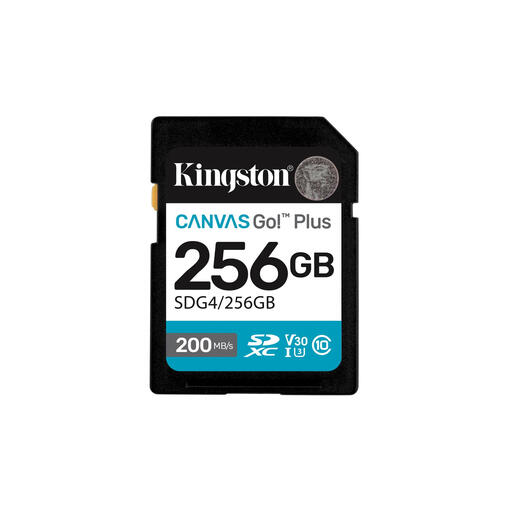
Why it stands out: This card from Kingston is designed for speed. With an advertised write speed of up to 160 MB/s and a read speed of up to 200 MB/s, this card is geared towards processing large files quickly. This is ideal for clearing the buffer during burst photography and efficiently transferring 4K footage to your computer.
Benefits:
Who is it for? For the photographer or videographer who frequently shoots in burst mode or regularly needs to transfer large volumes of 4K files where every second counts. To achieve the maximum read speed, Kingston recommends using a compatible card reader.
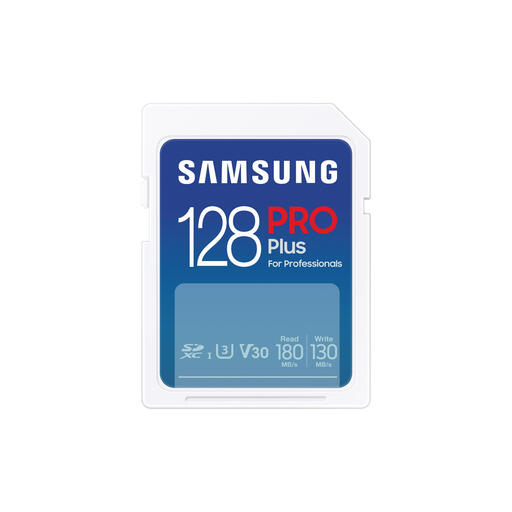
Why it stands out: With the Samsung PRO Plus, Samsung emphasizes reliability and durability. According to Samsung, the card offers 7-proof protection against water, extreme temperatures, X-rays, and shocks, among other things. This makes it an attractive option for creators who often work in challenging conditions.
Benefits:
Who is it for? For the content creator who works on location and needs a robust, reliable card that can withstand the elements. The 128 GB capacity is a great all-around choice for both photography and video projects.
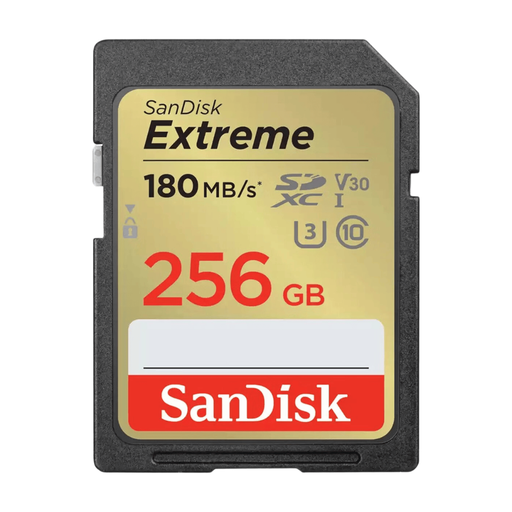
Why it stands out: The SanDisk Extreme series has been a popular choice among photographers and videographers for years. This card offers a solid balance of speed, capacity, and reliability. With a write speed of up to 130 MB/s and V30 certification, it is well-equipped for the demands of 4K video and high-speed photo bursts.
Benefits:
Who is it for? An excellent all-rounder for both hobbyists and professionals looking for a reliable SD card for their DSLR or mirrorless camera. The 256 GB version offers plenty of space at a reasonable price, making it a practical choice for a wide range of projects.
While SD cards are the standard for most modern cameras, some older or specialized devices use different formats. If you are looking for another type of memory card, such as an xD-Picture Card memory card, you can browse our wider selection for more options.
In practice, both classifications mean the same thing: a guaranteed minimum sustained write speed of 30 MB/s. The V-Class (V30, V60, V90) is a newer standard developed specifically with video in mind, but a U3 card is just as capable for 4K recording. A card with both logos offers double the assurance.
This depends heavily on the bitrate (compression) your camera uses. As a rule of thumb, you can expect to fit approximately 4 to 6 hours of 4K video (30 fps) on a 256 GB card. If you film at a higher frame rate (60 fps) or with lower compression, the recording time will be shorter.
Yes, you can. A faster card (e.g., UHS-II) in an older camera (that only supports UHS-I) will work, but it will operate at the camera's maximum speed. You would be paying for speed you can't utilize. However, it can be a future-proof purchase if you plan to upgrade your camera soon.
