
Vandaag of morgen in huis

Kwaliteit gegarandeerd

Welkomstaanbiedingen ontgrendelen: GRATIS bezorging | Tot 80% korting | Gratis 30 dagen JoyPlus-proefperiode
Download de app
A 128GB microSD card may seem simple to choose at first glance. However, differences in speed, file system and compatibility can have a major impact. A card that is suitable for photos on a smartphone is not automatically suitable for a drone or 4K camera.
As a Joybuy Product Recommendation Officer, I filter product information based on practical considerations. This helps you see which specifications can be verified and which marketing claims are best viewed in context.
Packaging may quote a read speed of, for example, 160, 170 or 200 MB/s. This is mainly relevant when transferring files. For video recording, the write speed is at least as important.
A fast microSD card with a high read speed may still be less suitable for continuous filming if its write speed or video speed class is not appropriate for your camera.
U3 and V30 are useful markings for compatible devices. V30 refers to a minimum sustained write speed of 30 MB/s under the applicable conditions. U3 is a UHS speed class with a similar minimum write speed.
Actual performance also depends on the card reader, camera, smartphone or drone. According to information provided by the manufacturers, certain cards are suitable for 4K recording, but that does not mean every device supports the same resolution or bitrate.
A 128GB microSDXC card generally uses the exFAT file system. So check whether your device supports microSDXC. Older devices may only accept microSDHC cards with a lower capacity.
Also pay attention to the physical connection. A microSD card with an adapter can be used in a standard SD slot, but the adapter does not increase the storage capacity or speed.
A 128GB memory card provides space for photos, Full HD video, documents, apps and games. The actual available space is slightly lower due to formatting and system use.
Look out for these markings:
For a smartphone, A1 is often sufficient for everyday use. If you want to install apps on the card or move a lot of files, you may want to consider A2. For a camera, drone or action camera, the focus is more often on U3 and V30.
Read speed determines how quickly files can be opened or transferred. Write speed is important when capturing photos in bursts and when using a 4K video memory card.
Always check:
For a microSD card for a camera, drone or outdoor equipment, water resistance, temperature resistance, shock resistance and protection against X-rays can be practical advantages. These features do not make backups unnecessary. A memory card is still a storage medium that can be damaged or lost.
It is best to format a new card in the device in which you will use it, and back up important files regularly.
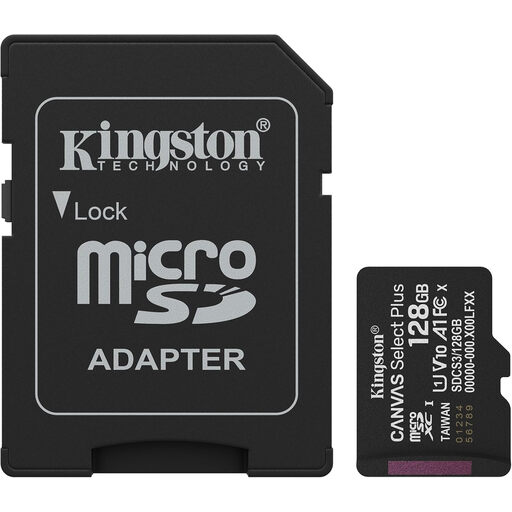
Why it suits this profile: This card is designed for everyday use in smartphones, cameras and other compatible devices. The supplied SD adapter allows it to be used in a standard SD slot.
The product information lists not only the capacity, but also Class 10, UHS-I, A1 and a read speed of up to 150 MB/s. However, check that your device supports these specifications.
128GB capacity, A1 app classification, Class 10 UHS-I and an SD adapter.
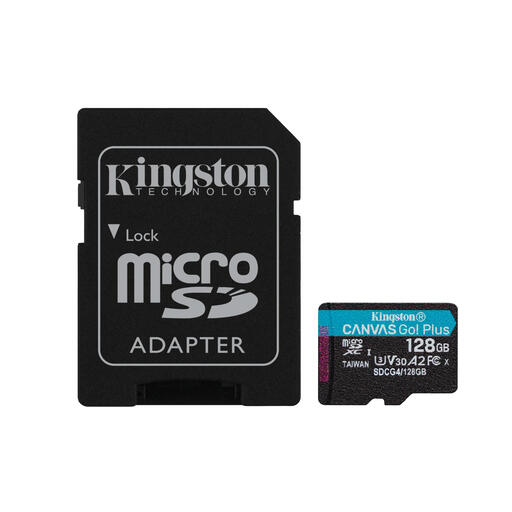
Why it suits this profile: The combination of U3, V30 and A2 is well suited to users who move lots of files, use apps or record video on compatible equipment.
As well as a read speed of up to 200 MB/s, the card lists a write speed of up to 100 MB/s and a V30 classification. This provides more information than just a maximum transfer speed.
A2, U3, V30, exFAT, 128GB capacity and a supplied SD adapter.
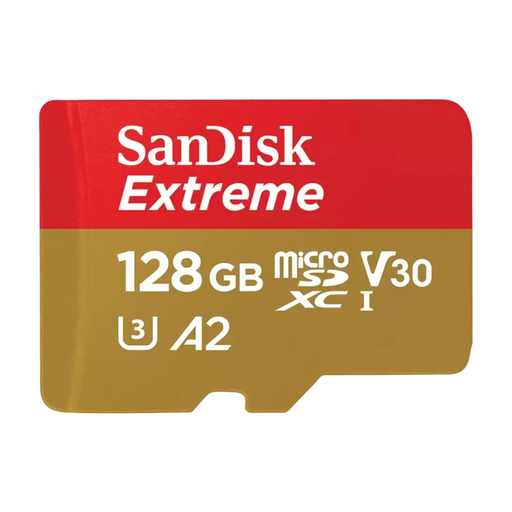
Why it suits this profile: According to the product description, this card is intended for cameras, drones, action cameras and smartphones that support microSDXC, among other devices.
V30 and A2 are clearly listed. The specified write and read speeds are up to 90 and 160 MB/s respectively, according to the product specifications; check your camera or drone’s requirements.
128GB, V30, A2, UHS-I, an SD adapter and, according to the product information, protection against water, shocks, temperature and X-rays.
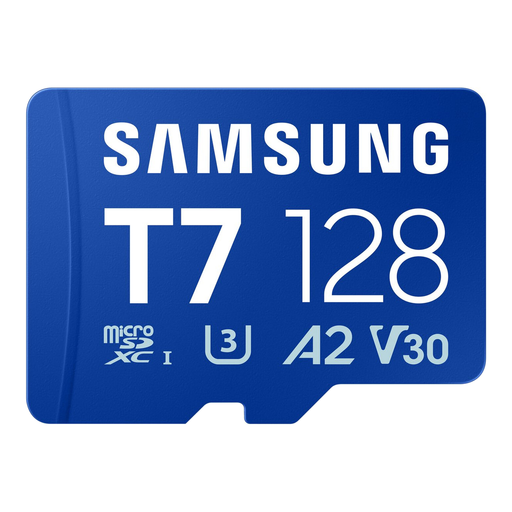
Why it suits this profile: According to the product information, this card is intended for compatible smartphones, tablets, laptops, action cameras, drones and handheld consoles.
The product description lists U3, V30 and A2 alongside a read speed of up to 170 MB/s. However, check that your console or mobile device supports microSDXC and these performance levels.
128GB, UHS-I, U3, V30, A2 and, according to the brand description, protection against water, temperature, X-rays and drops.
We have put together a complete, up-to-date list of products that fully meet these strict selection criteria and the applicable European safety regulations.
A card with an adapter is useful for devices with a standard SD slot. Only use the adapter if it fits properly, and do not remove the card during a transfer.
For photos, Full HD video, documents and a number of apps, 128GB can be a practical choice. The available space depends on the operating system and file sizes. Check whether your smartphone supports storage on a microSD card; not every phone allows apps to be stored on the card.
That depends on the recording settings and the camera’s requirements. V30 and U3 are relevant markings for many 4K applications, but always check the manual for your camera, drone or action camera. A higher classification does not replace a compatibility check.
The lifespan depends on write load, temperature, usage and storage conditions. Frequent continuous recording, such as with a dashcam, puts different demands on a card than occasional photography. So make backups and, for long-term recording, choose a card whose manufacturer explicitly states that it is suitable for this use.
