
Vandaag of morgen in huis

Kwaliteit gegarandeerd

Welkomstaanbiedingen ontgrendelen: GRATIS bezorging | Tot 80% korting | Gratis 30 dagen JoyPlus-proefperiode
Download de app
A 256GB microSD card may seem straightforward to choose at first glance. However, two cards with the same storage capacity can differ significantly in speed, compatibility and lifespan. For example, a high read speed on the packaging does not automatically mean that the card can write quickly enough for 4K video. Not every card will fit every device either.
In this buying guide, you’ll find out which specifications matter for a 256GB microSDXC card, which marketing claims to assess critically and which popular options are suitable for smartphones, cameras, drones, dash cams and games consoles.
Manufacturers often state a speed of, for example, 150 or 200 MB/s. This is usually the maximum read speed under specific conditions. For recording video, the write speed is particularly important. A card that reads files quickly may still struggle with extended video recordings.
That’s why you should look for the combination of U3 and V30 when choosing a card for 4K video. These markings indicate a minimum sustained write speed within the relevant class. The actual speed still depends on the camera, card reader, file type and temperature.
A 256GB microSDXC card generally uses the SDXC format and often the exFAT file system. Older smartphones, cameras or dash cams may support only SDHC or a lower capacity. Check your device’s manual or product specifications before placing your order.
If your device has a standard SD slot, you’ll need an adapter. A microSD card for a camera can therefore be used in a camera with an SD slot, but only if an SD adapter is included or available separately.
Waterproof, shock-resistant and temperature-resistant features are useful, but they do not protect your data from accidental deletion, wear and tear or a faulty device. According to the product descriptions of the brands mentioned, certain cards have been tested against factors including water, X-rays and temperature fluctuations. This does not guarantee that data will be preserved under every circumstance.
That’s why you should regularly transfer important photos and videos to a computer, NAS or cloud storage.
A 256GB memory card provides space for plenty of photos, videos, apps and games. The actual available space will be slightly lower due to formatting and system use. Also check whether your smartphone, tablet, drone or Nintendo Switch supports the capacity.
For a microSD card for Nintendo Switch, choosing the right model is also important. The Nintendo SanDisk microSD Express Card for Switch 2 has a capacity of 256GB and supports SD Express and UHS-I. This card is intended for the Switch 2, so check which console model you use.
UHS-I is the card’s bus or transfer technology. This says something not only about the card itself, but also about the maximum speed that the device and card reader can make use of.
For a fast memory card for a drone, action camera or camera, U3 and V30 are often more relevant than a high maximum read speed alone.
A microSD card is smaller than a standard SD card. With an adapter, you can sometimes use it in an SD slot, but not every package includes one. The 256GB SanDisk Extreme SDXC Card is a standard 256GB SD card and, according to the product specifications, does not need an SD adapter. This card is therefore primarily suitable for devices with a full-size SD slot.
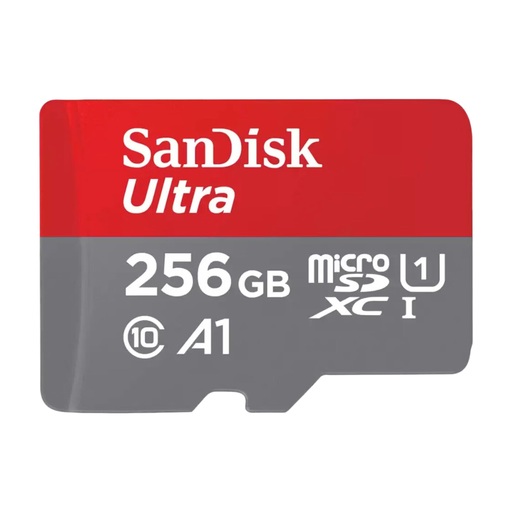
Why it suits this profile: A practical option for Android smartphones and tablets that need extra storage for photos, Full HD video and apps. According to the product description, this card offers read speeds of up to 150 MB/s and has an A1 classification.
The product information clearly states the capacity, UHS-I standard and A1 classification. However, check that your device supports microSDXC.
256GB storage, A1 for compatible apps and an SD adapter according to the product details.
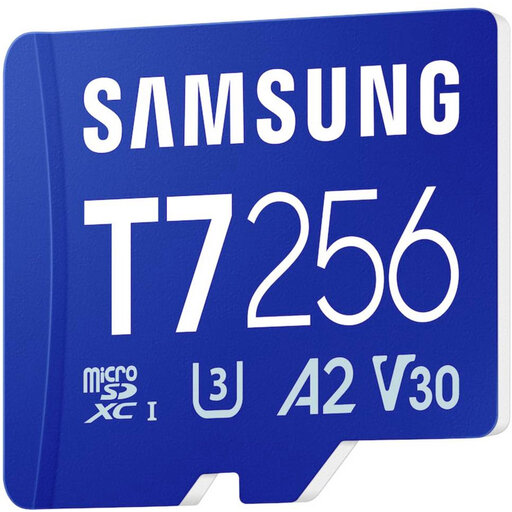
Why it suits this profile: Designed for users looking for high specifications for smartphones, tablets, action cameras, drones and handheld consoles. According to the product description, the card supports UHS-I, U3, V30 and A2.
Alongside the stated read speed of up to 170 MB/s, video and application classifications are also specified. Check whether your device can take advantage of this performance.
256GB, U3/V30 for compatible video equipment, A2 and a three-year warranty stated in the product description.
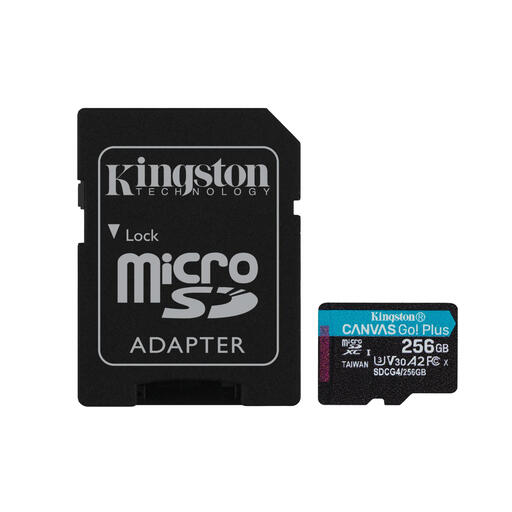
Why it suits this profile: Suitable for drone users, action camera owners and mobile gamers looking for a U3 and V30 card. The included SD adapter enables use in compatible SD slots.
The relevant U3, V30 and A2 markings are listed alongside the stated speeds. This makes comparison easier than relying on a marketing name alone.
Read speeds of up to 200 MB/s and write speeds of up to 160 MB/s according to the product specifications, plus an SD adapter.
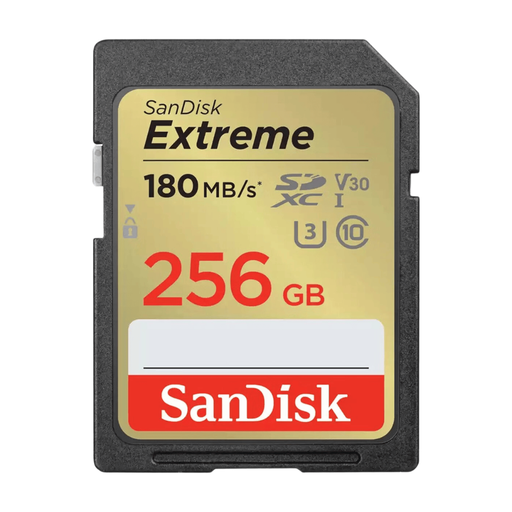
Why it suits this profile: A standard 256GB SD card for photographers and videographers with a camera that supports SDXC. According to the product information, the card features UHS-I, U3 and V30.
The write and read speeds are stated separately: up to 130 MB/s write and 180 MB/s read. This makes it easier to match the card to your video recording needs.
256GB, V30/U3, stated speeds of up to 180 and 130 MB/s, and a five-year manufacturer’s warranty according to the product description.
We’ve put together a complete, up-to-date list of products that fully meet these strict selection criteria and the applicable European safety regulations.
That depends on the maximum supported capacity and the type of card slot. Check whether your smartphone supports microSDXC. Some phones accept cards only up to a certain capacity. Formatting may be required after insertion, so back up any existing data beforehand.
Lifespan varies depending on the brand, memory type, write load and conditions of use. A card in a dash cam or security camera is written to far more intensively than a card used for occasional photos. For continuous recording, use a model that, according to the product specifications, is intended for that purpose, and replace the card if you experience read errors or recording problems.
No. For documents, music and standard smartphone photos, a Class 10 UHS-I card may be sufficient. For 4K video, drones, action cameras and intensive app use, U3, V30 and sometimes A2 are more relevant. Compare your device’s requirements with the card’s specifications rather than looking only at the price or maximum read speed.
