
Same-day & Next-day Delivery

Quality Guaranteed

Unlock Your Welcome Offers: FREE Delivery | Up to 80% OFF | Free 30-day JoyPlus trial
Download the APP
Prawn dumplings are ideal for a quick meal, snack or dim sum dish at home. However, prawn gyoza, ha kau and other prawn dumplings can differ considerably in their filling, size, preparation method and packaging. If you only look at the photo or the word “premium”, you may end up buying a product that does not suit the way you intend to use it.
When choosing, pay particular attention to these three common pitfalls:
Ingredients are listed in descending order by weight. Also check the stated prawn percentage. According to the product information, AJINOMOTO Gyoza Prawn contains 27% peeled prawns, while BML Shrimp Gyoza lists 34,90% prawns. This percentage does not tell you everything about the flavour or texture, but it does help you compare products more objectively.
Also check the additional ingredients. Some dumplings contain cabbage, carrot, chives or mushrooms. Other varieties combine prawns with fish, pork or pork fat. If you are looking for a specific composition, it is best to read the full ingredients list rather than relying on the product name alone.
Gyoza usually have a wheat-flour wrapper and are well suited to pan-frying. This gives prawn gyoza a crisp base while the top remains soft. According to the product information, KHY Shrimp Gyoza can be pan-fried, deep-fried or steamed.
Ha kau or crystal prawn dumplings often have a thin, partly translucent wrapper. These dim sum prawns are usually steamed. Mooijer Ha Kau Shrimp Dumpling specifies a steaming time of 8 to 10 minutes from frozen. Freshasia Whole Prawn Egg Dumpling can also be steamed and, according to the product information, added to soup.
Check the following for every pack:
Do not compare only the price per pack, but also the weight and number of pieces. AJINOMOTO Gyoza Prawn contains 30 pieces in 600 g. Ben’s Crystal Shrimp Dumplings contains 800 g, divided into 32 pieces of 25 g each. This gives you a clearer idea of the portion size.
Frozen prawn dumplings should remain frozen until use, generally at the temperature stated on the packaging. Several product listings state that refreezing after defrosting is not recommended. Plan the quantity you need and check on delivery that the cold chain has remained intact.
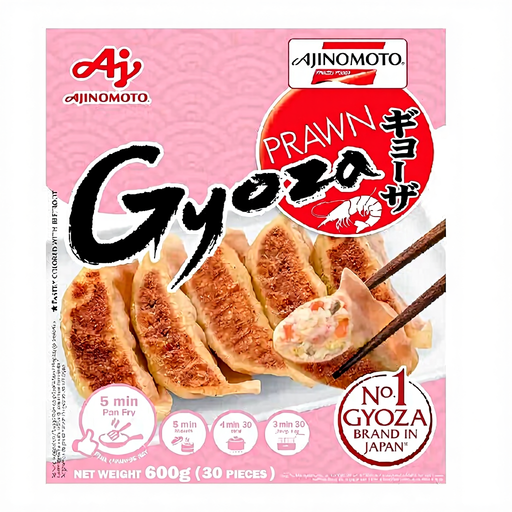
Why it suits this profile: The 600 g pack with 30 pieces is easy to manage for anyone buying prawn dumplings for the first time and looking to divide portions conveniently.
The prawn percentage is stated in the product information: 27% peeled prawns. This means you do not have to rely on the product image alone.
30 pieces per pack; filling with prawns and vegetables; suitable as a quick meal or snack.
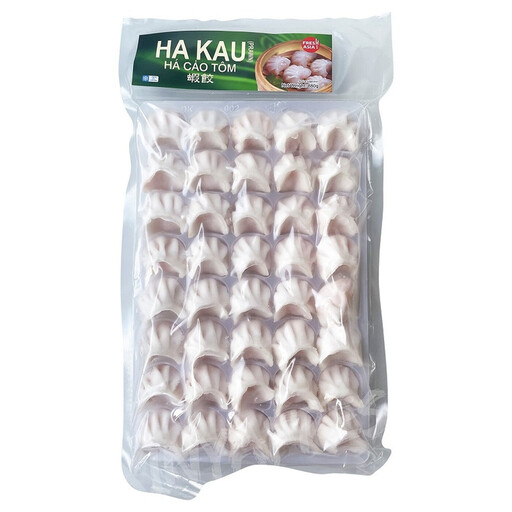
Why it suits this profile: The thin, translucent wrapper and a filling that contains 45% prawns according to the product information are ideal for enjoying a dim sum experience at home.
The composition separately states the ratio of filling to wrapper. However, always check the current packaging for allergens and cooking instructions.
880 g contents; suitable for steaming; transparent wrapper; 8 g protein per 100 g according to the product information.
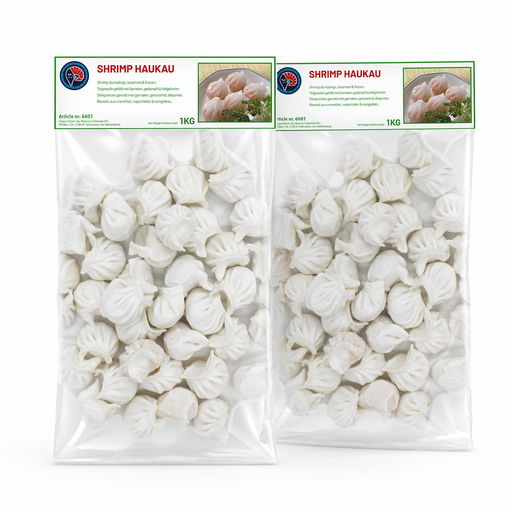
Why it suits this profile: Two 1 kg packs are designed for high-volume use, regular gatherings or a professional kitchen where portions need to be readily available.
The IQF packaging is described as containing individually quick-frozen products. This makes it easier to plan your stock, but check the storage instructions after opening.
2 kg total contents; crystal ha kau style; nutritional information lists 25% prawns and 153 kcal per 100 g.
To steam dumplings, use a steamer basket with enough space between the pieces. If necessary, place perforated baking paper or a suitable liner underneath the dumplings to help prevent the wrappers from sticking. Put frozen dumplings straight into the steamer basket if the packaging indicates that this is appropriate.
If you want to pan-fry prawn gyoza, heat a small amount of oil in a frying pan. KHY Shrimp Gyoza instructions state: fry for approximately 2 minutes, add water, continue cooking with the lid on, then remove the lid and allow the water to evaporate. The exact time depends on the pan, heat source and size of the dumplings. Therefore, check that the dumplings are heated through.
For a crispy result, some varieties can be deep-fried. Always use the temperature and cooking time stated on the packaging. Do not routinely remove frozen dumplings from the freezer in advance: several products specifically state that they should be cooked without defrosting.
Prawn dumplings almost always contain crustaceans. Wheat, gluten, soya, sesame, egg and fish are also common. For example, Mooijer Ha Kau lists crustaceans and molluscs, fish, gluten, sesame and soya. According to the product information, Ben’s Crystal Shrimp Dumplings contains, among other ingredients, prawns, fish, soya, sesame and wheat.
If you have an allergy or intolerance, always check the label on the packaging you receive. Product information may change, and cross-contamination is not listed consistently in every online description.
We have put together a complete, up-to-date list of products that fully meet these strict selection criteria and the applicable European safety regulations.
This varies depending on the product and size. The available product information gives cooking times of approximately 5 minutes for some gyoza and 8 to 10 minutes for ha kau. Cook frozen dumplings according to the label and check that the filling is heated through.
In many cases, yes. KHY Shrimp Gyoza and BML Shrimp Gyoza specify cooking from frozen. When cooking in a pan, you may sometimes need to add water and use a lid to cook the filling thoroughly. Always follow the instructions for the specific product.
Store them frozen at the temperature stated on the packaging. After defrosting, they should be kept chilled according to the product information and eaten within the specified period. Do not refreeze a defrosted product.
