
Same-day & Next-day Delivery

Quality Guaranteed

Unlock Your Welcome Offers: FREE Delivery | Up to 80% OFF | Free 30-day JoyPlus trial
Download the APP
Looking to buy frozen dumplings for a quick meal, dim sum lunch or snack? The range can seem fairly straightforward at first, but there are major differences between Chinese dumplings, gyoza and ha kau. It is not just the flavour that matters: the ratio of filling to dough, the cooking method and the packaging all determine whether your purchase is right for your household.
Pay particular attention to these common pitfalls:
Start by checking the ingredients list and the quantitative declaration for the filling. For example, Freshasia Shrimp Dumpling 880g states that the filling contains 45% prawns, with the filling making up 55% of the product overall. Mooijer Ha Kau Shrimp Dumpling lists 25% prawn and 8% fish. Ben’s Crystal Shrimp Dumplings contain, among other ingredients, 17.2% prawn, 8.76% fish, yam bean and bamboo shoot.
You will notice this difference not only in the ingredients, but also in the type of product. Prawn dumplings with a higher proportion of shellfish are well suited to anyone looking for a more pronounced prawn flavour. A mixed filling containing fish, vegetables or pork fat can offer a different texture and price per portion.
Also check the allergens. Many frozen dumplings contain wheat or gluten, soya and sesame. Prawn varieties also contain crustaceans and sometimes fish. With vegan dumplings, ‘vegan’ does not automatically mean gluten-free: bibigo Korean BBQ Gyoza, for example, contains wheat and wheat gluten.
For a busy household, the cooking method is at least as important as the filling.
Always check the packaging or product page to see whether you should cook the dumplings straight from frozen. For several products, including KHY Chicken Gyoza, the instructions state: do not defrost. Once defrosted, frozen products must not be refrozen according to the storage information provided.
Compare the weight and, where stated, the number of pieces. Ben’s Crystal Shrimp Dumplings contain 800 grams, divided into 32 pieces weighing 25 grams each. This makes portion planning straightforward. Other packs only state the total weight, so the number of dumplings may vary.
For a family or regular dumpling eaters, packs of 600 grams or more are often practical. A smaller pack of 300 to 500 grams is better suited to a student, couple or household that wants to try different flavours. Also consider the cold chain during delivery: products requiring frozen storage must remain frozen until use. Store them at home at -18 °C or below, unless the label states otherwise.
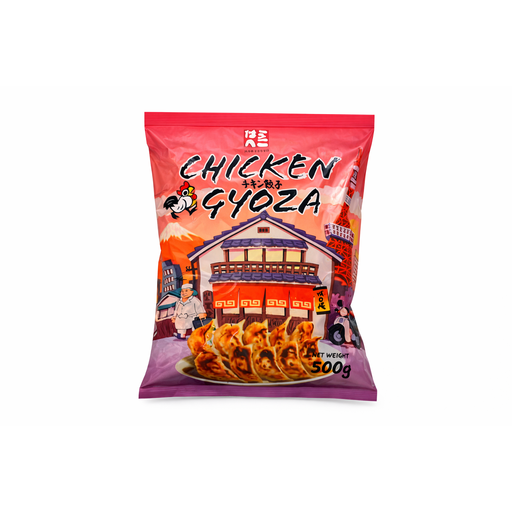
Why it suits this profile: An accessible chicken gyoza for anyone wanting to get started quickly with Japanese-style dumplings at home. It can be cooked in a frying pan, steamer basket or deep-fat fryer.
The cooking instructions are clear: fry for 2 minutes, add water and cook through with the lid on. You do not have to guess the temperature or cooking time.
500 grams, suitable for three cooking methods and a stated nutritional value of 147 kcal per 100 grams.
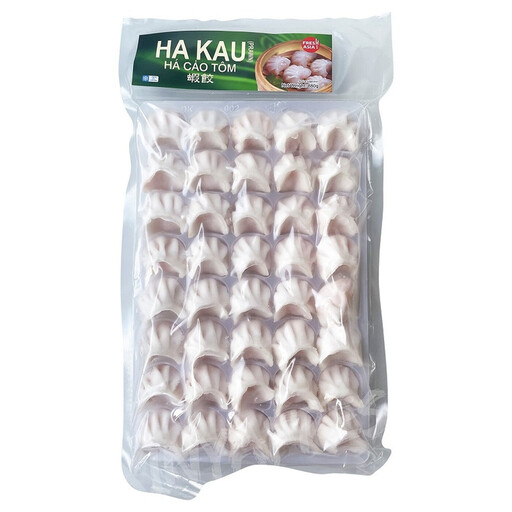
Why it suits this profile: For fans of har gow or a pronounced prawn filling who want to serve several portions.
The product lists both 45% prawns and 55% total filling. It also clearly states that steaming is the recommended cooking method.
880 grams, a translucent starch-rich dough and 155 kcal per 100 grams according to the product information.
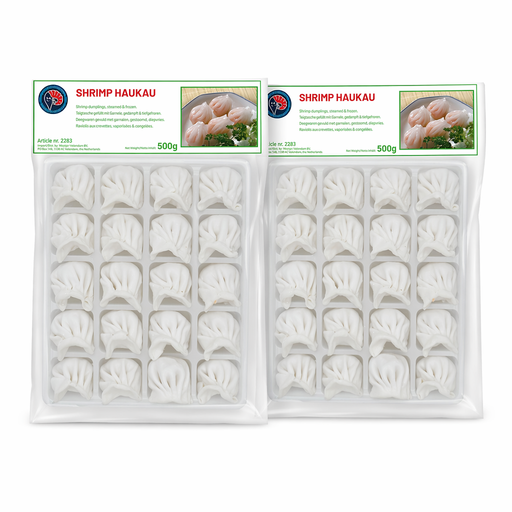
Why it suits this profile: A bulk pack for dim sum lovers who regularly steam dumplings for a family, guests or meal planning.
The pack contains two 500-gram bags, so you do not have to open the entire quantity at once.
1 kilogram in total, a steaming time of 8 to 10 minutes and 25% prawns according to the product information.
Unless the label says otherwise, place dumplings in the pan or steamer basket while still frozen. When steaming, perforated baking paper or a lightly greased steamer basket helps prevent sticking. Leave space between the pieces so the steam can circulate around them.
For pan-fried gyoza, use a little oil and then add water. Keep the lid on the pan while they cook through. With pork dumplings, chicken gyoza and mixed dim sum, always check that the filling is piping hot and fully cooked. Raw dough filling must not be eaten.
If you want to try several flavours, you can vary your selection with Chinese dumplings, gyoza, vegan dumplings, siu mai and ha kau. This gives you a varied supply of Asian frozen products without having to prepare a completely new dish each time.
We have put together a complete, up-to-date list of products that fully meet these strict selection criteria and the applicable European safety regulations.
Yes, many products are designed to be cooked, steamed or fried straight from the freezer. Always check the cooking instructions. KHY Chicken Gyoza and Ben’s Crystal Shrimp Dumplings, among others, state that they do not need to be defrosted.
Store them at -18 °C or below and follow the best-before date on the packaging. Once defrosted, keep them refrigerated and use them within the stated period. Do not refreeze defrosted dumplings.
Gyoza are practical if you are using a frying pan: chicken, prawn and vegetable varieties are often ready in just a few minutes. For a dim sum meal, steamed products such as ha kau or siu mai are a better choice. Above all, compare the cooking time, packaging and allergens before placing your order.
