
Same-day & Next-day Delivery

Quality Guaranteed

Unlock Your Welcome Offers: FREE Delivery | Up to 80% OFF | Free 30-day JoyPlus trial
Download the APP
Fancy dim sum without visiting a restaurant? Frozen prawn dumplings are quick to prepare and suit a light meal, a sharing platter or a generous Asian feast. Yet many packs look much the same. The differences often come down to the ratio of prawns to dough, the cooking method and the pack size.
If you focus only on an appealing photo or the word “authentic”, you could end up buying a product that does not suit your kitchen. Use these practical checkpoints to compare prawn gyoza, ha kau prawn dumplings, shrimp dumplings and other Asian frozen dumplings in a straightforward way.
The net weight only tells you how much product you are buying. Also check the percentage of prawns in the ingredients list. For example, FRESHASIA Shrimp Ha Kao 500g lists 37.13% prawn. Freshasia Shrimp Dumpling 880g states that the filling contains 45% prawns, along with ingredients including pork fat and starch.
As a result, a 1 kg bag may have a different ratio of filling to wrapper than a smaller pack. Compare the prawn content of each product, rather than just the price per bag.
The shape and dough partly determine how you should prepare the dumpling:
A product suitable for steaming will not necessarily produce the same result in a frying pan. Check the cooking instructions before you buy.
Prawn dumplings usually contain crustaceans. They may also contain wheat, gluten, soya, sesame, fish, egg or milk. For example, FRESHASIA Shrimp Ha Kao contains crustaceans, wheat, sesame and soya. KUNGFU Juicy Bao Pork & Prawn also contains fish and milk.
Always read the label on the specific pack. Recipes and allergen information can vary by brand or product variant. If you have an allergy, the product packaging takes precedence.
Look at the ingredients in descending order and find the stated prawn content. A product with vegetables, pork or fish in the filling may have a different flavour and texture from a dumpling made mainly with prawns.
The dough is important too. Wheat starch and tapioca starch often give ha kau its familiar semi-translucent appearance. Gyoza generally uses wheat flour for a firmer wrapper that stands up better to frying.
Most products in this category are cooked directly from frozen. Defrosting can cause the dough to tear or stick to the steamer basket. Follow the instructions on the packaging.
Practical examples:
When steaming prawn dumplings, leave space between the pieces and use perforated baking paper if necessary. This helps prevent the dumplings from sticking to one another or to the base.
Frozen products should be stored at –18 °C or below, unless the packaging states otherwise. Keep them out of the freezer for as little time as possible and do not refreeze a product once it has thawed.
For home use, 400–500 g can be a practical size. For families, stock cupboards or food service, packs from 800 g to 1 kg may be more suitable. With larger packs, however, consider how much freezer space you have and how you will store the contents after opening.
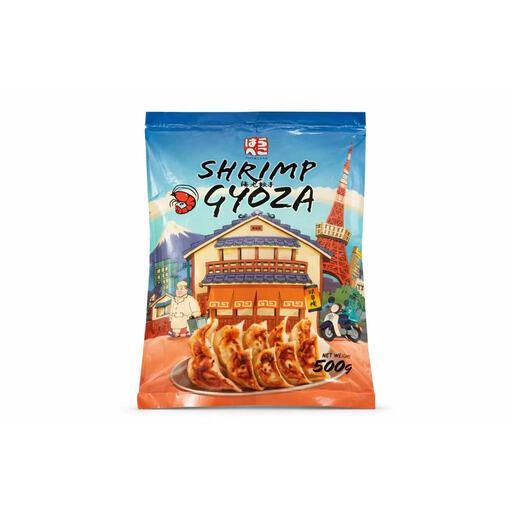
Why it suits this profile: This gyoza can be steamed, pan-fried or deep-fried. That makes it suitable for anyone who wants to try different cooking methods without buying several products.
The preparation methods are clearly described and the pack contains 500 g. Do check the allergens: prawns, soya and wheat are listed.
500 g; suitable for pan-frying, deep-frying and steaming; 7.3 g protein and 0.8 g salt per 100 g according to the product information.
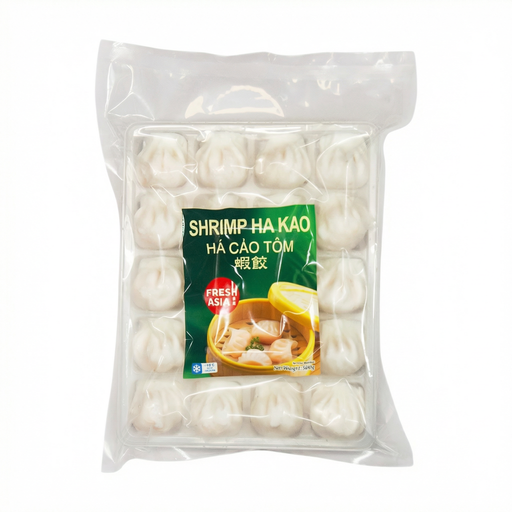
Why it suits this profile: The product description refers to the classic Cantonese style, with translucent dough and 37.13% prawns. That makes it a good choice for fans of har gow and steamed dim sum.
The prawn content, allergens and steaming time of 8–10 minutes are stated in the product information. This gives you more to compare than just the packaging.
500 g; steam from frozen; 171 kcal and 7.2 g protein per 100 g according to the label.
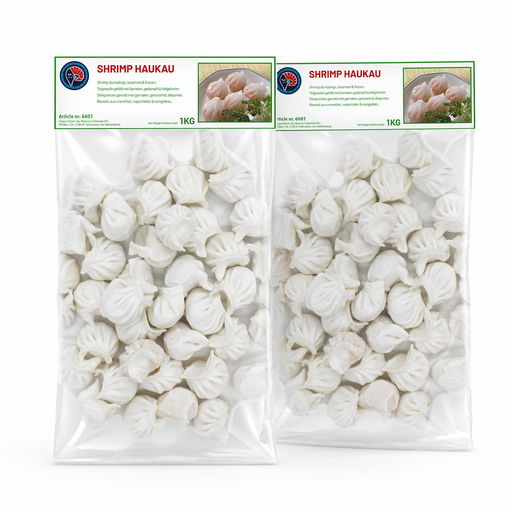
Why it suits this profile: The twin 1 kg pack is aimed at larger households, hospitality and food service. The dumplings are intended for steaming and are supplied as an IQF product.
The bulk pack makes the quantity clear from the outset. Before ordering, check your freezer capacity and the current allergen information on the packaging.
2 × 1 kg; IQF pack; 153 kcal and 5.6 g protein per 100 g according to the nutritional information provided.
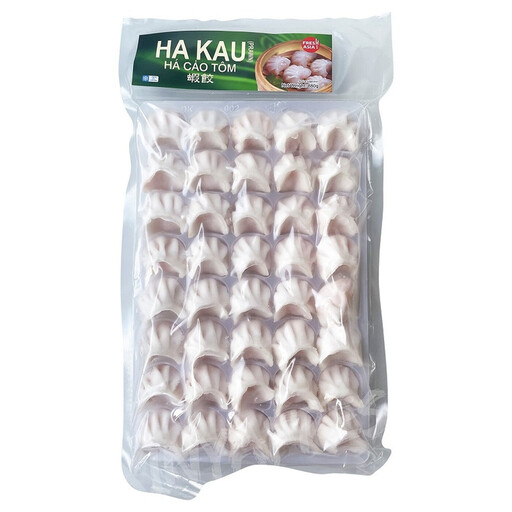
Why it suits this profile: At 880 g, this is a generous option for a dim sum meal at home. The product description mentions a translucent wrapper and steaming as the preparation method.
The filling’s 45% prawn content is stated, allowing you to compare the contents more accurately with the total weight.
880 g; 45% prawns in the filling; 155 kcal and 1.2 g salt per 100 g according to the product information.
We have put together a complete, up-to-date list of products that fully meet these strict selection criteria and the applicable European safety regulations.
Usually, yes. Many products are designed to be cooked directly from frozen. Always check the packaging, as the cooking time varies depending on the size and brand. Ha kau often takes around 8–10 minutes to steam, while smaller crystal dumplings may need less time.
Leave space between the dumplings and use baking paper, a perforated steaming mat or a lightly greased surface. Only place the steamer basket over boiling water and avoid opening the lid unnecessarily during cooking. Serve the dumplings immediately after cooking.
Keep them continuously at the temperature stated on the packaging, generally –18 °C or below. The best-before date is printed on the packaging. Once thawed, follow the product instructions and do not refreeze. When ordering prawn dumplings, also check that the cold chain and delivery information are clearly stated.
