
Vandaag of morgen in huis

Kwaliteit gegarandeerd

Welkomstaanbiedingen ontgrendelen: GRATIS bezorging | Tot 80% korting | Gratis 30 dagen JoyPlus-proefperiode
Download de app
A carton of orange juice may seem simple to choose, but the differences between 100% juice, fruit drinks and orange drinks are significant. Eye-catching packaging tells you little about the fruit content, sugar levels or flavour. If you focus only on the brand name or a special offer, you could end up paying for a product that does not suit your everyday needs.
This practical guide compares fresh orange juice, orange juice with no added sugar, juice with pulp and smaller packs for when you are out and about. The product details are based on the available product information and nutrition labels.
With orange juice with no added sugar, the sugars usually occur naturally in the fruit. That does not mean the product contains no sugar. For example, Appelsientje Orange Juice states 8.6 grams of sugar per 100 ml, while the product information says that no sugar has been added.
Always compare:
A product with “orange” on the front may be a fruit drink containing water, milk ingredients, sweeteners or a limited percentage of juice. According to the ingredients list, Fruit Drink Orange 1000ml contains, among other ingredients, orange and apple juice, milk ingredients and steviol glycosides. This makes it a different product category from 100% orange juice.
Mirinda Orange is not pure fruit juice either: the ingredients list states carbonated water, sugar, 4% orange juice from concentrate and sweeteners.
A large pack often seems better value, but once opened, orange juice needs to be kept refrigerated and used within the stated period. For one person, 1-litre orange juice may be more practical. For a family, guests or a shared breakfast, a 1.5-litre orange juice pack may be a better fit.
When comparing special offers, work out the price per litre. A multipack of smaller portions may cost more per litre, but can be convenient for school, work or days out.
Look out for these terms on the label:
A product made from concentrate is not automatically a poor choice. The key question is whether its composition matches your expectations. If you are looking for a pronounced fruit flavour, it is best to start with a product that has a high fruit percentage.
Always compare the nutritional values per 100 ml. This allows you to compare different pack sizes fairly. The available product information includes the following examples:
A lower sugar figure may be linked to a lower fruit percentage or the use of sweeteners. Always check the ingredients list as well. “Light” or “mild” does not, on its own, tell you how much orange it contains.
Orange juice with pulp contains small pieces of pulp, giving it a different texture. According to the product information, Appelsientje Orange Juice with extra pulp contains 100% fruit and orange juice from concentrate with extra pulp.
Choose the pack size according to how you plan to use it:
Store unopened products according to the label in a cool place, away from direct sunlight and heat. Once opened, the product should be kept in the fridge. Always follow the use-by and storage instructions on the packaging.
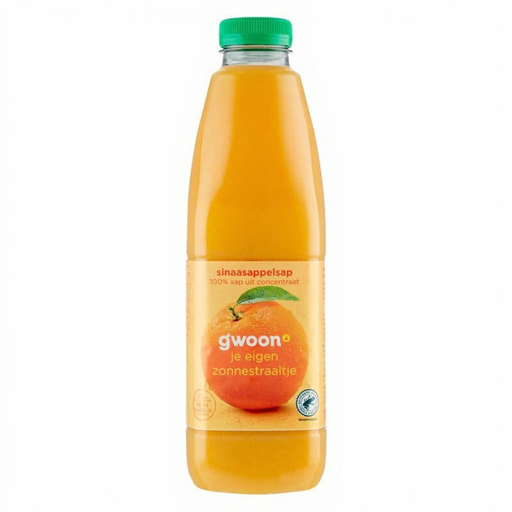
Why it suits this profile: The 1.5-litre pack is suitable for a household that regularly serves juice at breakfast and wants to compare the price per litre.
The ingredients list states orange juice from concentrate and ascorbic acid as an antioxidant. However, check the current packaging and nutritional values before buying.
1.5-litre volume; according to the product information, none of the 14 major EU allergens.
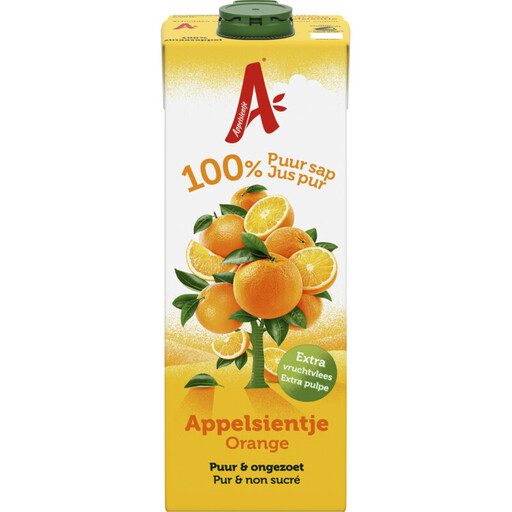
Why it suits this profile: If you are looking for 100% fruit juice with extra pulp, you get clear product specifications and a compact size for refrigerated storage.
The descriptions “100% fruit content” and “with extra pulp” make the difference from an orange drink clear. According to the product information, no sugar has been added.
1 litre; extra pulp; 41 kcal and 8.6 grams of sugar per 100 ml according to the nutrition label.
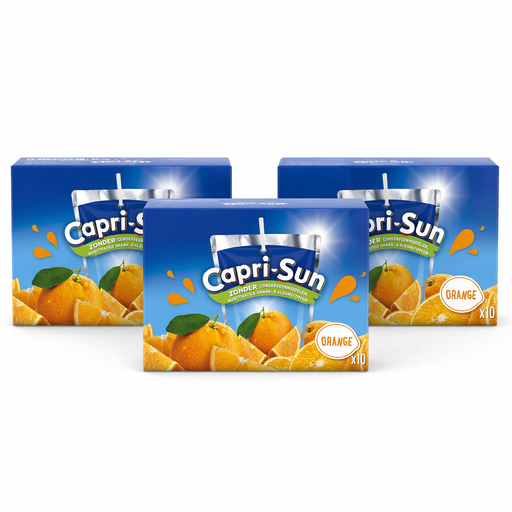
Why it suits this profile: The individual portions are convenient for days out, treats or keeping a supply for when you are on the go, without having to store a large pack once opened.
The product information clearly states 10% concentrated fruit juice. This means you will not accidentally buy it expecting 100% orange juice.
3 packs of 10 portions; 19 kcal and 4.4 grams of sugar per 100 ml according to the nutrition label.
We have put together a complete, up-to-date list of products that fully meet these strict selection criteria and the applicable European safety regulations.
No. In orange juice with no added sugar, the sugars generally occur naturally in oranges. Check the nutrition table for the number of grams of sugar per 100 ml. “No added sugar” means that, according to the label, no extra sugar has been added; it does not mean that the juice contains no natural sugars.
This varies by product. Store opened juice in the fridge and follow the storage period stated on the packaging. Close the carton or bottle securely. With small portion packs, this is less of a concern because you will usually use the contents straight away.
That depends on what you are looking for. 100% orange juice consists entirely of fruit juice according to the product description, whereas an orange drink may also contain water, sugar, sweeteners or other ingredients. If you are looking for a fruity flavour and a high fruit percentage, compare the ingredients first. If you prefer a lighter drink or individual portions, a fruit drink may be the better option. These are different choices, not an automatic ranking of quality.
