
Vandaag of morgen in huis

Kwaliteit gegarandeerd

Welkomstaanbiedingen ontgrendelen: GRATIS bezorging | Tot 80% korting | Gratis 30 dagen JoyPlus-proefperiode
Download de app
A carton of orange juice might seem simple to pick, but the differences between 100% pure orange juice, fruit drink and cordial are significant. The front of the pack often boasts words like "natural", "vitamin" or "no sugar". These terms don't always tell you how much orange is actually inside the carton.
As a Joybuy Product Recommendation Officer, I filter the most important information from product labels and specifications. This way, you can see more quickly which drink suits your breakfast, family, guests or on-the-go use.
With orange juice with no added sugar, the sugars come naturally from the fruit. A product can therefore still contain around 8 to 9 grams of sugar per 100 ml. For example, Appelsientje 100% pure orange juice states 8.6 grams of sugars per 100 ml, even though according to the product information no sugar has been added.
Always check the nutritional information table. Don't just look at the front of the carton.
A fruit drink can contain water, sweeteners, flavourings, milk constituents or a limited percentage of fruit juice. That doesn't automatically make the drink wrong, but it is different from 100% pure orange juice.
According to the ingredients list, Capri-Sun Orange contains 10% concentrated fruit juice, of which 6% is orange juice and 4% is lemon juice. As a result, the product is more suitable as a portion pack for on the go than as an alternative to pure orange juice at breakfast.
A multivitamin drink can contain added vitamins, but also several types of fruit concentrates, sweeteners or flavourings. So read the full ingredients list. Wicky Original Fruit lists, among others, apple, orange, passion fruit, mandarin and other fruit types. According to the product information, the drink contains vitamin A and C, but it is not 100% orange juice.
Also, "no artificial colours" does not automatically mean that no sweeteners or preservatives are present. The ingredients list provides a clearer answer to that.
Use this simple classification:
With concentrated juice, pay attention to the exact wording on the label. "From concentrate" means the juice was concentrated before processing and later topped up with water. In itself, it doesn't mean the product is less suitable.
Always compare nutritional values per 100 ml. A large glass can easily contain 200 ml, while an on-the-go pack often contains 200 ml. A drink with 5.7 grams of sugar per 100 ml can therefore provide over 11 grams of sugar per glass.
With pure orange juice, the energy value in the supplied product information is around 39 to 43 kcal per 100 ml. Fruit drinks can be lower, but may then contain less fruit. A low energy value is therefore not proof of a higher fruit percentage.
An orange juice 1 litre is practical for a household with limited daily use. For a family or guests, 1.5 litres can be more convenient. Portion packs like Capri-Sun are suitable for bags, school or outings, while a bottle or carton can be more economical for home use.
After opening, orange juice generally needs to be stored in the fridge. The product information for several of the drinks mentioned advises closing the packaging well and using it within the period stated on the label. The Hui Yuan product specifically states that it must be refrigerated after opening and consumed within 12 hours for the stated quality. Always check the packaging, as storage advice can vary per product.
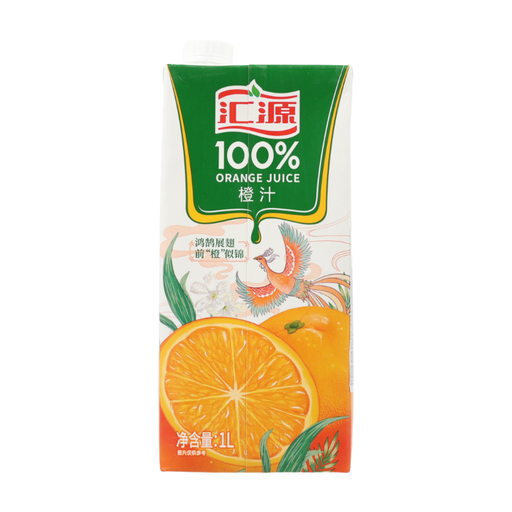
Why this fits the profile: A straightforward choice for anyone looking for a 1-litre carton with a short ingredients list: water and concentrated orange juice.
The product description states no added sugar, preservatives or artificial colours. Do check the current label before purchase.
1 litre volume, 38.7 kcal per 100 ml according to the supplied nutritional information, and ready to drink.
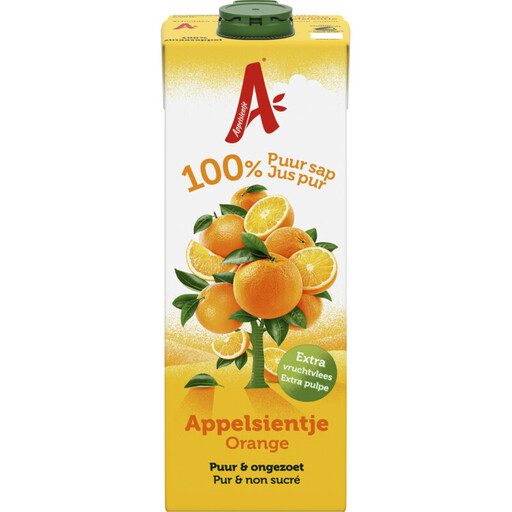
Why this fits the profile: Ideal for fans of 100% pure orange juice with extra pulp at breakfast.
The ingredients list states 100% fruit content, orange juice from concentrate and extra pulp. According to the product information, no sugar has been added.
Extra pulp, 41 kcal and 8.6 grams of sugar per 100 ml; the packaging also mentions vitamin C, folic acid and potassium.
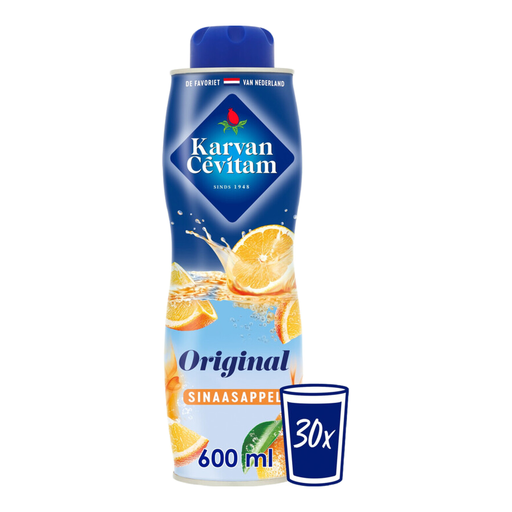
Why this fits the profile: Handy for families, guests or households that want to control the strength of their orange drink themselves.
It is clearly a cordial and not a ready-to-drink juice. The recommended ratio is 1 part cordial to 9 parts water, so you make the drink yourself.
According to the product description, one bottle is enough for up to 6 litres of squash; the cordial contains vitamin C and no artificial colours.
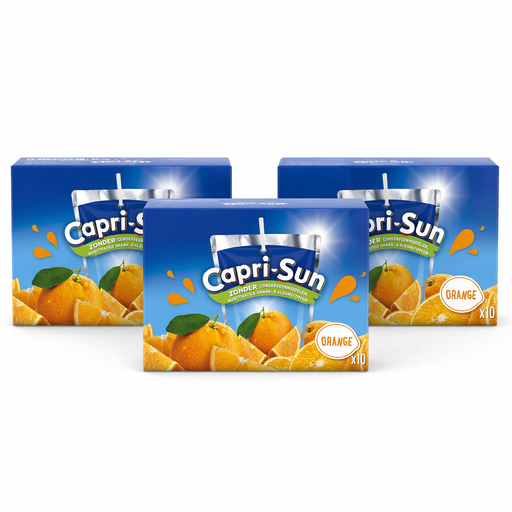
Why this fits the profile: The small packs are practical for outings, treats and moments when a large carton isn't convenient.
The product is described as a drink with fruit juice and mineral water, not as 100% pure orange juice. This makes the product choice clearer.
Per 100 ml the product information states 19 kcal and 4.4 grams of sugar; the packaging contains no artificial colours or preservatives according to the description.
We've put together a full, up-to-date list of products that fully meet these strict selection criteria and current European safety regulations.
No. No added sugar means the sugars come from the fruit. Check the nutritional value per 100 ml and pay attention to the portion size. Pure orange juice naturally contains sugars, even if no sugar has been added to it.
This varies per packaging. Store opened juice in the fridge, close the carton well and follow the period stated on the label. Some products mention a specific usage period, such as within 12 hours. Use the smell, taste and packaging as extra signals, but don't deviate from the official storage advice.
That depends on your taste. Orange juice with pulp has a thicker texture and visible pulp particles. If you prefer a smooth drink, you're better off choosing juice without pulp. With both variants, check the fruit percentage, ingredients and nutritional value before you buy orange juice.
