
Vandaag of morgen in huis

Kwaliteit gegarandeerd

Welkomstaanbiedingen ontgrendelen: GRATIS bezorging | Tot 80% korting | Gratis 30 dagen JoyPlus-proefperiode
Download de app
Condensation on windows, a musty smell in the cellar or laundry that takes ages to dry indoors: a home dehumidifier can be a practical solution. Even so, it’s unwise to look only at the largest number of litres per day. The stated capacity often comes from tests in warm and very humid conditions. In a cooler Dutch bedroom, bathroom or cellar, the real-world extraction rate may be lower.
Claims such as “quiet”, “energy efficient” and “suitable against mould” also warrant a critical eye. Below, you’ll find which specifications matter and which models suit different living situations.
A model rated at 16 litres per day might appear more powerful than one rated at 12 litres. However, check the temperature and relative humidity at which that figure was measured. For example, the ELECCI 16L states up to 16 litres per day at 30 °C and 90% relative humidity. In a cooler Dutch home, the amount of moisture removed will typically be different.
Also look at the recommended floor area. For a room of 20 to 25 m², a 12L dehumidifier may be a good fit. For larger or persistently damp spaces, a 16L or 20L model is likely the better choice.
An electric dehumidifier with a 1.35 or 1.4 litre tank needs emptying more often than a unit with 3.1 or 3.8 litres. That’s especially inconvenient in a cellar, utility room or holiday home you don’t visit regularly.
A dehumidifier with a drain hose can be plumbed directly into a suitable drain. Check in advance that the hose can run with a sufficient fall and that the connection is secure. Automatic shut-off when the tank is full remains important, even if you mostly use continuous drainage.
Noise level depends on the fan speed and the compressor. A sleep mode can be quieter, but dehumidification may then be slower. Pay attention to the stated value in dB(A) and check whether it refers to sleep mode or normal use.
For a bedroom dehumidifier, a timer, dimmed lighting and auto restart or auto shut-off are also practical features.
Use the stated floor area as a guideline, not a guarantee. An open-plan lounge with multiple moisture sources needs more capacity than an enclosed bedroom of the same size. Compact models are often easier to place in a bathroom or small bedroom. A dehumidifier for a cellar, garage or utility room benefits from higher capacity and continuous drainage.
The models in this selection range from 7.5 to 20 litres per day. The De’Longhi DNS80 states 7.5 litres per 24 hours and a recommended space up to 34 m². The VINO 20L states up to 20 litres per day and a space up to 40 m², under the conditions listed on the product page.
A larger tank means less frequent emptying, but it also makes the unit heavier when full. Castors and a carry handle are therefore useful if you move the unit between the bathroom, bedroom and utility room.
Check whether a drain hose is included. For the VINO 12L, for example, the hose is not included. According to the product description, the ELECCI 12L and ELECCI 16L do come with a hose.
Compare the nominal power in watts. The ELECCI 16L states 182 watts nominal power, the ELECCI 12L 200 watts and the VINO 20L 365 watts. Actual consumption depends on runtime, target humidity, room temperature and the mode you choose.
A dehumidifier with a timer can prevent unnecessary operation. With automatic humidity control, the unit switches on or off around the set value according to the product description. A target between roughly 40% and 60% relative humidity is a useful starting point for many household situations. A separate hygrometer can help you compare readings from different devices.
Several models use R290 as the refrigerant. This is listed in the product specifications and requires careful use as directed in the manual. Place the unit upright on a level surface, keep the air inlet and outlet clear, and allow sufficient space around it.
Clean the filter regularly. A dirty filter can restrict airflow. Switch the unit off and unplug it before emptying, moving or cleaning. A dehumidifier is no substitute for ventilation, fixing leaks or a structural approach to a damp problem.

Why this suits the profile: The maximum capacity of 12 litres per day and the stated coverage up to 25 m² match smaller bedrooms, bathrooms and flats.
The product specs state both the nominal power of 200 watts and automatic shut-off when the tank is full. That lets you compare capacity and safety features in concrete terms.
Up to 12 L/day, 3.8 L tank, drain hose, drying mode, timer and auto defrost according to the product description.
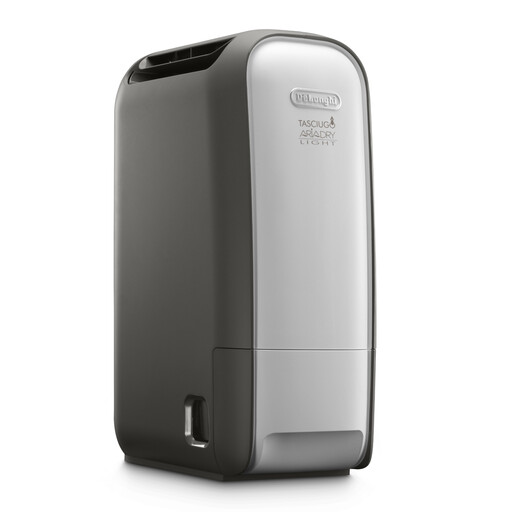
Why this suits the profile: According to the product details, this compact model has a noise level of 34 dB, three fan speeds and a stated coverage up to 34 m².
The noise figure and energy label A++ are listed in the product information. Do check whether the label relates to the current European product classification.
7.5 L per 24 hours, 2.8 L tank, timer, laundry drying function and a folding carry handle.
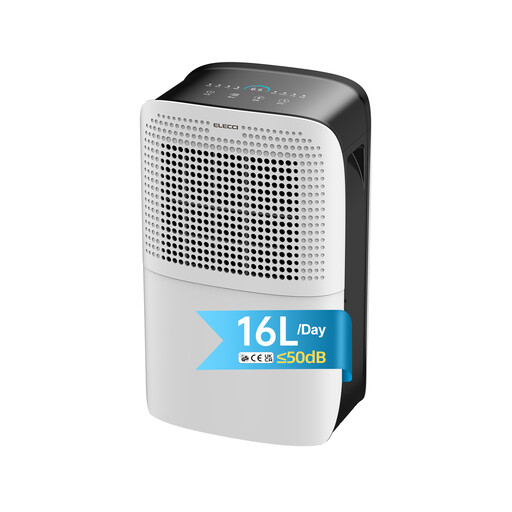
Why this suits the profile: The combination of up to 16 L/day, four modes and continuous drainage suits utility rooms, cellars and households where the unit runs for long periods.
The capacity is tied to test conditions and the product has a 3.1 L tank with automatic shut-off. That makes the specs more verifiable than a marketing claim alone.
Four modes, adjustable RH from 40% to 80%, 24-hour timer, automatic defrost and supplied drain hose.

Why this suits the profile: If app control and scheduling remotely matter to you, this model offers touchscreen and app control with coverage up to 24 m² according to the product information.
Besides sleep mode, the product page also lists the normal noise level of 38 dB(A). This lets you evaluate quiet operation in the correct mode.
12 L/day, sleep mode of 32 dB according to the product description, 24-hour scheduling, drying function and child lock.
We’ve compiled a complete, up-to-date list of products that fully meet these stringent selection criteria and current European safety regulations.
Place the unit upright on a level surface with clear space around the air inlet and outlet. Don’t position it directly next to a radiator, in direct sunlight or where it may be exposed to splashes. After transport or tilting, leave a compressor unit standing upright for the period specified in the manual. For continuous drainage, connect the hose with a constant downward fall.
Service life depends on usage frequency, ventilation, maintenance and compressor quality. Clean the filter as per the manual, empty the tank in good time and only move the unit when it’s switched off and empty of water. Any unusual odour, smoke or damage to the cable are reasons to switch the unit off and contact the retailer or manufacturer.
Multiply the power in kilowatts by the number of hours run and your electricity tariff. A 200-watt unit running for five hours theoretically uses 1 kWh. In practice, a model with humidity control may switch off once the target value is reached. A timer, sleep mode and appropriate capacity can therefore help limit unnecessary operating hours.
