If you dry your washing in a bedroom that is usually warmer than 15 °C, start by comparing compressor dehumidifiers based on their capacity under the stated test conditions, noise levels and controls. If the room is consistently cool, a desiccant model may be more suitable, although the Consumentenbond says this type uses more electricity. A dedicated laundry mode isn’t essential, and the most powerful setting may not be comfortable while you sleep. Keep ventilating the room: a dehumidifier doesn’t supply fresh air or replace ventilation.
Who is this advice for?
Regular indoor clothes dryer
If you often hang a full load of washing in the bedroom, consider moisture removal and airflow around the clothes airer. The stated capacity depends on the test conditions; a maximum number of litres alone won’t tell you how quickly your washing will dry.
Light sleeper
If the appliance will be in the same room as your bed, weigh the noise level of each setting and the adjustable run time against the drying speed you need. The Consumentenbond recommends checking how easy each setting is to use and how noisy it is.
Someone with a cool bedroom
If you dry your washing in a room that stays cool, compare compressor and desiccant models. According to the Consumentenbond, compressor dehumidifiers work best above 15 °C, while desiccant models are an option for cold or unheated spaces.
What should you look for when buying?
First, consider how warm the bedroom usually is while you’re drying clothes. This will help you choose between compressor and desiccant technology. Then compare noise levels, controls and running costs for the times you’ll use the appliance.
| What to consider |
What to look for |
Who should pay particular attention? |
| Moisture removal around the clothes airer |
Compare capacity at the same temperature and relative humidity. Also consider airflow and the space between garments. |
If you often dry a full load in the bedroom, you’ll want to remove the moisture released into the air. Around 36% of consumers say drying performance is their top purchase priority. |
| Noise and controls |
Check the noise level for each setting, the timer and whether the settings also apply in laundry mode. |
If you share the room with the appliance while you sleep, you’ll want to balance noise and run time against drying speed. For around 29% of consumers, a good night’s sleep comes first. |
| Bedroom temperature |
Compare your usual room temperature with the model’s operating range and performance conditions. Maximum capacity isn’t achieved at every temperature. |
If your bedroom stays consistently cool, look for technology suited to those conditions. Temperature is the top purchase priority for around 21% of consumers. |
| Energy use and maintenance |
Compare energy use under the same conditions and factor in how long you’ll use the appliance. Also check the tank, drainage options and access to the filter. |
If you use the appliance often, you’ll want to keep both its run time and the effort involved in emptying and cleaning it manageable. Around 14% of consumers put these running costs and tasks first. |
A dehumidifier removes moisture from the room air, but it doesn’t supply fresh air. Milieu Centraal stresses that ventilation is still needed to bring in fresh air and remove stale air.
Common mistakes
-
Assuming the maximum capacity reflects drying performance in every bedroom
Manufacturers may state capacity based on warm, humid test air. Results can differ in a cooler or drier room.
Compare the stated temperature and humidity with the conditions in your bedroom, and consider the airflow around the clothes airer.
If your conditions differ from the test conditions, the appliance may need to run for longer than you’d expect from its maximum capacity.
-
Assuming laundry mode is the same as a quiet sleep setting
An intensive setting may use a faster fan or run for a long time, which can be noticeable in the bedroom.
Check the noise level of each setting and whether the timer works in the selected drying mode. You could also schedule intensive drying for before bedtime.
If a setting keeps running, it could mean extra operating time and more noise.
-
Using a dehumidifier instead of ventilating or tackling the source of damp
A dehumidifier removes moisture from the air, but it doesn’t remove stale indoor air or fix a leak.
Check your ventilation, and investigate the cause if the room stays damp even when there’s no washing in it.
A persistent damp problem may need further investigation or repairs.
-
Choosing a small Peltier dehumidifier for a clothes airer full of washing
According to the Consumentenbond, this type has limited capacity and is mainly intended for small spaces such as a cupboard or caravan.
First, consider how much washing you have and the size of the room. For a clothes airer, compare compressor models and, in a cool bedroom, desiccant models.
Brands to compare
Meaco
The Arete One 12L is a compressor model worth considering when comparing dehumidifiers for a bedroom.
- Meaco lists a removable collection tank, wheels and a five-year manufacturer’s warranty for this model.
- These manufacturer’s specifications alone don’t tell you how quickly it will dry clothes or how comfortable it will be to use while you sleep.
Qlima
The range includes compressor models such as the D 612 and desiccant models such as the DD 808. Match the technology to the room temperature.
- For the D 612, Qlima lists features including a humidistat, timer and option to drain through a hose. For the DD 808, the brand mentions use in cold rooms.
- The Qlima product page gives two noise figures for the D 612: 34 dB in the description and 38 dB(A) at 1 m in the specifications. Don’t treat these as a single, definitive figure for sleeping.
Wood’s
Wood’s describes the MDK11 as a model for smaller spaces and smaller amounts of washing.
- Wood’s lists a top outlet, timer and drainage option. Its stated maximum capacity is 10 l/24 hours at 30 °C and 80% relative humidity.
- The manufacturer states a noise level of 44 dB. Neither this figure nor the maximum capacity is based on independent testing in your bedroom.
Products at Joybuy
This selection includes electric dehumidifiers for removing moisture while drying clothes indoors, as well as a moisture absorber for enclosed living spaces. For an electric appliance, check the CE mark and product information for the specific item. The NVWA states that CE marking is mandatory for electrical consumer products covered by the relevant rules.
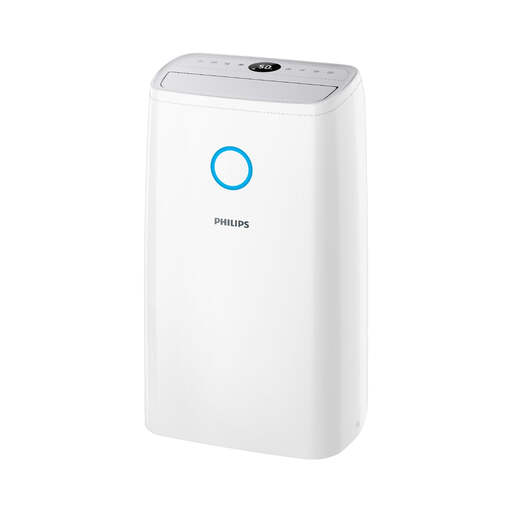 Image unavailable
Philips 3000 Series DE3306/11
The product description mentions a laundry-drying function and automatic humidity control, making it an option if you dry clothes indoors and want to schedule the settings.
Features include three fan speeds, a 1–9-hour timer and a tank that switches the appliance off automatically when full.
View at Joybuy
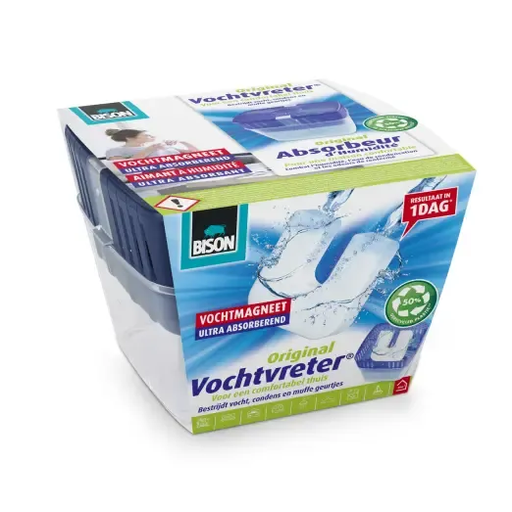 Image unavailable
Bison Vochtvreter Original, 450 g
The description focuses on moisture absorption in living spaces. Consider this as a moisture absorber, not an electric dehumidifier for use with a clothes airer.
The description mentions a refillable moisture absorber, a transparent reservoir and operation without electricity.
View at Joybuy
 Image unavailable
CONOPU 16L, 2.5 L tank
The product description mentions a drying mode and adjustable humidity, which may suit you if you dry clothes indoors and want to schedule how it runs.
The product name specifies a 2.5 L tank and a 24-hour timer. The description also mentions a sleep mode, drainage hose and washable filter.
View at Joybuy
 Image unavailable
ELECCI 12L/D, 3.8 L tank
The product description mentions a drying mode and adjustable humidity, making it an option if you’re looking for a laundry function and scheduled run time.
The product name specifies a 3.8 L tank. The description mentions a 24-hour timer, continuous drainage via a hose and automatic shut-off when the tank is full.
View at Joybuy
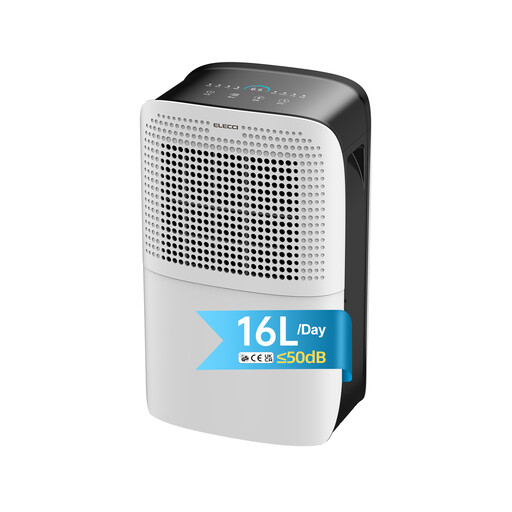 Image unavailable
ELECCI 16L/D, 3.1 L tank
The product description mentions a drying mode and sleep mode, so you can weigh up its clothes-drying features and bedroom use.
The product name specifies a 3.1 L tank and four modes. The description mentions a 24-hour timer, wheels and continuous drainage.
View at Joybuy
Frequently asked questions
Does a dehumidifier need a special laundry mode?
No. According to the Consumentenbond, you can dry washing without a special mode if you set the appliance appropriately and leave space between the garments you hang up. If you use an intensive drying mode, check whether the timer works so the appliance doesn’t keep running unnecessarily.
Is a dehumidifier quiet enough to use while I’m asleep?
It depends on the noise level of the setting you choose and what you find acceptable in the bedroom. Compare noise figures measured on the same basis, and check whether the timer and sleep mode still work when laundry mode is on.
Should I keep ventilating when the dehumidifier is on?
Yes. A dehumidifier doesn’t replace ventilation. Milieu Centraal describes ventilation as bringing in fresh air and removing stale air; follow the guidance for ventilation in your home.
How can I check the running costs of a dehumidifier?
Multiply the power rating in kW by the number of hours the appliance actually runs and your own price per kWh. Only compare energy-use figures if the test conditions are the same; the moisture load also affects how long the appliance needs to run.
Which marking should I check on an electric dehumidifier?
The NVWA states that CE marking is mandatory for electrical consumer products covered by the relevant rules. Check the marking and product information for the specific appliance. CE marking isn’t an independent test result for drying clothes.


