
Vandaag of morgen in huis

Kwaliteit gegarandeerd

Welkomstaanbiedingen ontgrendelen: GRATIS bezorging | Tot 80% korting | Gratis 30 dagen JoyPlus-proefperiode
Download de app
An electric heater may seem simple: plug it in and the room gets warmer. However, models vary considerably in heat distribution, noise levels, controls and safety features. A cheap fan heater, for example, can provide heat quickly, but may be less comfortable when you are sleeping. A convection heater often warms a room more evenly, but takes up more space.
For households, tenants and homeworkers in the Netherlands, the right choice mainly depends on your situation: do you want to heat a bedroom temporarily, keep a home office comfortable or provide extra warmth in a larger living room? Do not focus solely on wattage or a prominent marketing label.
A 2000W heater sounds more powerful than a 1500W heater, but wattage does not tell you everything about the experience. A fan heater actively distributes heat using a fan. A convection heater warms the air through natural air circulation. Insulation, ceiling height, outdoor temperature and the desired room temperature also make a difference.
Higher wattage also means higher maximum electricity consumption when the heating element remains switched on continuously. At 2000 watts, this is theoretically 2 kWh per hour at full power. Actual costs depend on the selected setting, thermostat and your electricity tariff.
Terms such as energy-efficient heater, ECO mode and intelligent temperature control can be useful, but they do not change the basic principle: electric heating converts electricity into heat. A thermostat or timer can prevent the appliance from heating unnecessarily.
Therefore, check whether a model has:
Based on their own research, some brands may claim that specific ECO functions can save a certain percentage of energy. Treat such percentages as brand claims, not as a guaranteed result in every Dutch home.
A heater with overheat protection or tip-over protection provides an additional layer of safety. It is not a reason to cover the appliance, place it against curtains or leave it running unattended. Ideally, keep flammable materials at least one metre away, use a stable, hard surface and plug the heater directly into a suitable wall socket.
Do not use a standard electric heater in a bathroom or other damp area unless the product information explicitly states that it is suitable and the IP rating matches the intended location. According to the product information, a bathroom heater such as the Camry CR 7747 has an IPX2 rating, but installation, earthing and distance from water remain important.
A ceramic heater generally uses a PTC heating element and a fan. This type is compact, portable and suitable when you want quick heat in one particular spot, such as under a desk or in a bedroom.
A fan heater actively distributes warm air. This produces results quickly, but the noise may be distracting. If you are looking for a quiet electric heater, check the stated noise level in dB. The Philips CX2120/01, for example, lists 24 dB(A), while the PELONIS 2000W PTC Ceramic Fan Heater lists a noise level of 50 dB. These figures can only be compared reliably when measured under the same conditions.
A convection heater such as the Mill SG2000LED warms the air without a continuously running fan. According to the product specifications, this model operates quietly, has three settings and an electronically adjustable thermostat. The built-in fan can provide additional heat distribution when required.
An oil-filled radiator releases heat more gradually and remains warm for some time after being switched off. The Mill AB-H1000DN has three settings of 400, 600 and 1000 watts, plus a day/night thermostat. This may suit an office or medium-sized room where even heat is more important than immediate warmth.
Use the stated floor area as a guide, not a guarantee. Product pages may quote 10, 15, 18, 20 or 30 m², but the required capacity depends on insulation and draughts.
A heater with a thermostat switches the heating element off once the set temperature has been reached. This is more practical than allowing an appliance without temperature control to run continuously at full power.
A portable heater benefits from a handle, low weight and a cable of sufficient length. A remote control or display is useful when you want to adjust the temperature from bed or an office chair. WiFi control offers extra convenience, but check whether an app, account and stable connection are required.
According to the product information, the Xiaomi Smart Tower Heater Lite has app and voice control, a thermostat, timer and tip-over protection. The Mill CO1200WIFI3 is a 1200-watt convection heater for rooms of up to 18 m², with app control and weekly programmes. Smart features are particularly useful if you follow set routines; for occasional supplementary heating, a physical thermostat is often sufficient.

Why it suits this profile: A compact model for a bedroom, home office or study, with a choice of fan, 750W, 1500W and ECO modes.
The different settings prevent you from always using maximum power. A 1–12-hour timer limits unnecessarily long heating.
1500W maximum power, LED display, remote control, oscillation, tip-over protection and overheat protection.

Why it suits this profile: A compact ceramic heater for users who value low noise, portability and multiple safety features.
The product specifications state 24 dB(A), allowing you to take noise into account rather than simply relying on the word “quiet”.
600W and 1500W settings, temperature selection from 20–30°C, handle, tip-over protection and overheat protection.
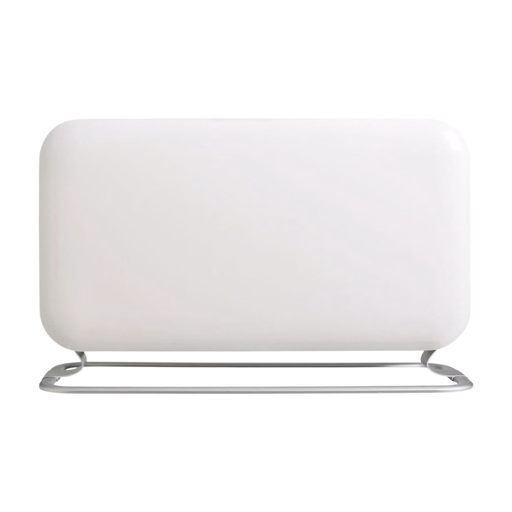
Why it suits this profile: A permanent solution for a room of up to around 20 m², such as an office or living room where quiet convection heating is preferred.
The electronic display and thermostat make the settings easy to check. The stated wattage and recommended room size are clearly specified.
2000W, three settings, LED display, electronic thermostat, steel panels and an additional fan for heat distribution.
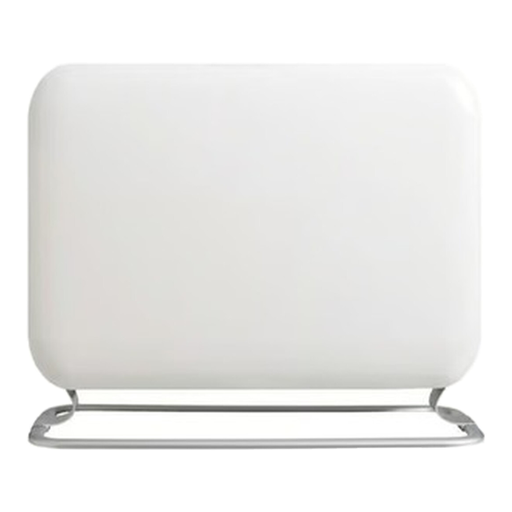
Why it suits this profile: For anyone who values remote heating control, a weekly programme and different comfort settings.
A scheduled programme prevents the heater from being switched on unnecessarily. However, check beforehand whether you want to use the app and WiFi connection.
1200W power, suitable according to the product information for around 18 m², WiFi control, weekly programmes and overheat protection.
We have compiled a complete, up-to-date list of products that fully meet these strict selection criteria and the applicable European safety regulations.
Use this calculation: power in kW × usage time in hours × your electricity tariff. A 1500W model running continuously at full power theoretically uses 1.5 kWh per hour. A thermostat, lower setting or timer can reduce actual consumption.
Ideally, choose a model with a verifiable noise level, thermostat, timer, tip-over protection and overheat protection. A ceramic heater is compact and fast, while a quiet convection heater is a better choice if you do not want fan noise. Only leave a heater running while you sleep if this is permitted by the manual, and position it away from bedding and curtains.
Service life depends on frequency of use, dust, storage and maintenance. Check the cable, plug and casing regularly. Stop using the heater immediately if you notice damage, sparks, a burning smell or unusual noise. Keep the manual and proof of purchase for warranty and servicing.
