
Vandaag of morgen in huis

Kwaliteit gegarandeerd

Welkomstaanbiedingen ontgrendelen: GRATIS bezorging | Tot 80% korting | Gratis 30 dagen JoyPlus-proefperiode
Download de app
An electric heater can be handy if you only need to warm up a home office, bedroom or student room. However, it’s not wise to rely solely on wattage or the term “energy-efficient”. A powerful fan heater can heat a small space quickly, but it also uses a lot of electricity when running at full power. A quiet heater can be pleasant in the bedroom, whereas a convector heater takes up more space and is slow to warm up.
The right choice depends on the room, how long you’ll use it, and the type of heat you need. Below are the key points to consider, along with some product recommendations based on verifiable specifications.
A 2000 W electric heater delivers more heat per hour than a 600 W or 1000 W model, but it also uses more electricity when running continuously at maximum power. For a small workspace, a compact heater of 600 to 1500 W may be sufficient. For a larger room, it’s the combination of power, thermostat and air distribution that matters.
Also watch out for marketing claims. According to some brands’ own information, an eco function can reduce energy consumption, but the exact result depends on the set temperature, insulation, outdoor temperature and usage time. So don’t treat “energy-efficient” as a fixed consumption level.
A ceramic fan heater usually makes noise due to the airflow. So check the stated noise level in decibels. The DREO Atom 416, for example, states a range of 25–42 dB and a specific operation of 34 dB. The Philips 2000 Series Compact Ceramic Heater states 24 dB(A). These figures come from the brands’ product information and may vary depending on the selected setting.
An oil-filled radiator or convector heater without a fan can be quieter, but often heats a room differently to a fan heater.
A heater with a timer or automatic shut-off is practical, but always place the appliance on a stable, dry surface. Never cover an electric heater and keep curtains, bedding and paper at a distance. Features like tip-over protection and overheat protection are useful, but they are not a reason to leave a switched-on appliance unattended.
First, look at the stated application area. Product information mentions, for example:
These areas are guideline values from the product descriptions. A poorly insulated room, high ceilings or lots of windows may mean you need more power. Where possible, only heat the room you are actually using.
A heater with a thermostat doesn’t keep the heating element running at maximum power constantly. Once the set temperature is reached, the appliance can reduce output or switch off temporarily. That’s more practical than just an on/off button.
Check the number of settings. A model with 600 W, 1200 W and 2000 W offers more choice than a heater that only works at 2000 W. An eco function can automatically adjust the heat output. According to DREO, Pelonis and other brands’ own information, this can reduce consumption by a certain percentage; always check the manual and usage conditions before relying on such a claim.
At a minimum, check for:
A CE marking is a manufacturer’s declaration of conformity with applicable EU requirements. It is not a guarantee that a product is used safely in every situation. Always follow the instructions for use.

Why this fits the profile: Compact size, a built-in handle and two power settings make this model suitable for a home office, bedroom or small student room.
The 600W and 1500W settings mean you don’t need maximum power for every situation. The product information also mentions tip-over and overheat protection.
1.51 kg, 3 temperature settings and, according to Philips’ own information, a noise level of 24 dB(A).
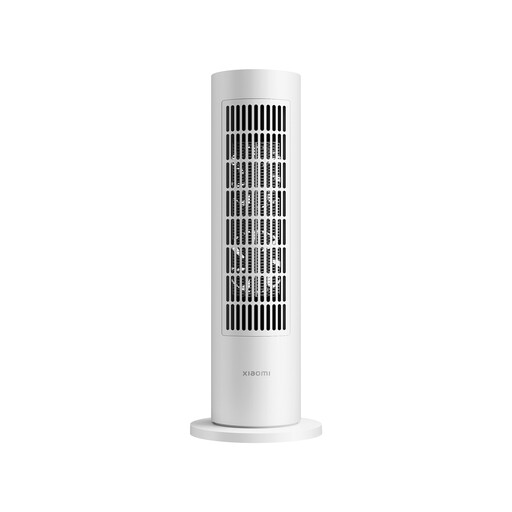
Why this fits the profile: Handy for users who value app control, thermostat regulation and a tower design.
The app is needed for full functionality; this is clearly stated in the product information. So you know in advance that smart control depends on installation and connection.
2000 W, 70° oscillation, thermostat, timer and, according to the product data, tip-over and overheat protection.
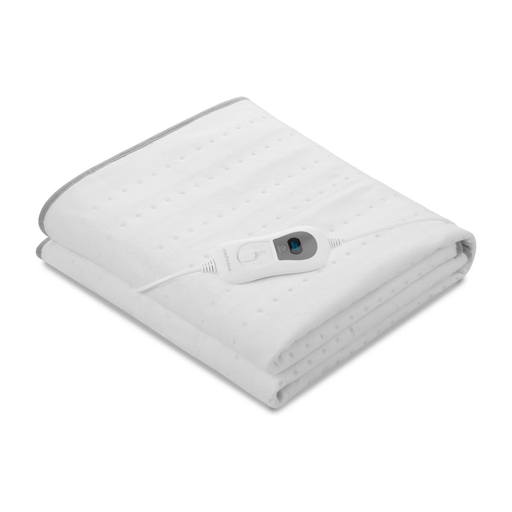
Why this fits the profile: This electric underblanket is designed for a mattress measuring 200 × 90–100 cm and heats the bed directly rather than the whole bedroom.
You heat a defined area with 60 W instead of a whole room. The blanket has automatic shut-off after 180 minutes and overheat protection.
3 heat settings, detachable control and washable according to the product description.

Why this fits the profile: The compact model is designed for rooms of 10–20 m² and offers remote control, timer and thermostat regulation for an office or bedroom.
The stated settings of 900, 1300 and 1500 W give more control than a single fixed heat level. The timer and automatic safety features limit unnecessarily long use.
Temperature setting from 5–35 °C, 12-hour timer and, according to DREO’s own information, a noise level from 34 dB.
We’ve put together a full, up-to-date list of products that fully meet these strict selection criteria and current European safety regulations.
Use this simple calculation:
power in kW × usage time in hours × your electricity rate = cost
A 2000 W heater theoretically uses 2 kWh per hour when the heating element runs continuously at full power. A 1000 W model then uses 1 kWh per hour. A thermostat can lower the average consumption because the appliance doesn’t heat non-stop. For a realistic estimate, look at your own usage pattern and energy tariff.
A ceramic heater converts electricity into heat, just like other electric heaters. The ceramic element can heat up quickly and is often combined with a thermostat or eco function. The actual consumption is mainly determined by the power, the set temperature and the usage time.
This is generally not recommended. Instead, choose a heater with a timer and automatic shut-off, place it away from bedding and curtains, and follow the manual. An electric underblanket often has its own automatic shut-off function, but it must not be folded, covered or used when wet.
Look for a low noise level, thermostat, timer and tip-over and overheat protection. A quiet fan heater is suitable for quick, temporary warmth. For just the bed, an electric underblanket with a lower power output can be more practical than a portable heater that warms the whole room.
