
Vandaag of morgen in huis

Kwaliteit gegarandeerd

Welkomstaanbiedingen ontgrendelen: GRATIS bezorging | Tot 80% korting | Gratis 30 dagen JoyPlus-proefperiode
Download de app
An electric heater seems simple: plug it in and switch on the heat. Yet many households buy a model that isn’t right for the room, makes too much noise or is difficult to control comfortably. Online, terms such as “fast heating”, “energy-efficient” and “quiet” can give an incomplete picture.
Watch out for these three common pitfalls:
A ceramic fan heater usually uses a PTC ceramic element. PTC stands for Positive Temperature Coefficient: the electrical behaviour of the element changes as its temperature rises. Manufacturers often present this as a fast and consistent way to heat a room. According to information from the brands themselves, some models can produce warm air within seconds. However, how long a room takes to warm up depends on its size and insulation.
A fan heater is handy for a home office, bedroom or seating area where you want quick, localised warmth. However, the airflow can create noise and stir up dust. Check whether the manufacturer provides a measured noise level, such as 34, 42 or 50 dB.
A convector heater warms the air, which then rises through natural convection. Some models also have a fan to circulate the heat more quickly. This type is often better suited to a living room, office or other space where you want warmth to reach beyond the area directly in front of the heater.
A convector is generally larger than a portable heater. Check its dimensions, how it needs to be positioned and the length of its power cable. A model with a thermostat can help regulate the set temperature automatically, but the appliance still uses electricity when it switches back on.
An oil-filled radiator works without a fan, making it a practical choice when a quiet heater is important. It usually takes longer to warm up than a fan heater. A compact 1000-watt model may suit a smaller room, but always check the stated coverage area and available heat settings.
Don’t use just any electric heater in the bathroom. Water, condensation and electricity call for extra care. Check that the product is specifically intended for use in a damp room and note its IP rating. The Camry CR 7747 is listed as IPX2 and intended for bathroom use, according to its product description. This doesn’t mean the appliance can be submerged or come into direct contact with water. Always follow the instructions and positioning requirements.
A 1500-watt or 2000-watt model isn’t automatically suitable for every living room. Product pages sometimes state a coverage area, for example 10, 15, 20 or 25 m². Treat this as a guide and take the following into account:
For a desk or small bedroom, 600 watts may be enough for localised supplementary heating. A larger, poorly insulated room may need more power. Use a thermostat or ECO setting to avoid running the heater constantly at maximum power.
A heater with a thermostat means you don’t have to choose between simply switching it on or off. A timer is useful if you want the heater to switch off after a set period. Some models come with a remote-controlled heater, app controls or voice control. These features can be handy, but check whether you need an app to access all the functions and whether your Wi-Fi connection is stable enough.
An oscillation function spreads warm air across a wider angle. Check the stated angle, such as 70° or 90°, and make sure the air outlet isn’t blocked.
For a portable model, look for at least overheat protection and tip-over protection. Also check whether the product information lists a CE mark and names a responsible party in the Netherlands or EU. A CE mark doesn’t guarantee that every use is safe; the positioning and usage instructions remain essential.
Where possible, plug the heater directly into a wall socket. Don’t connect a powerful heater to an overloaded extension lead or an unsuitable power strip. Leave enough space around the air intake and outlet, and place the appliance on a flat, stable, dry surface.
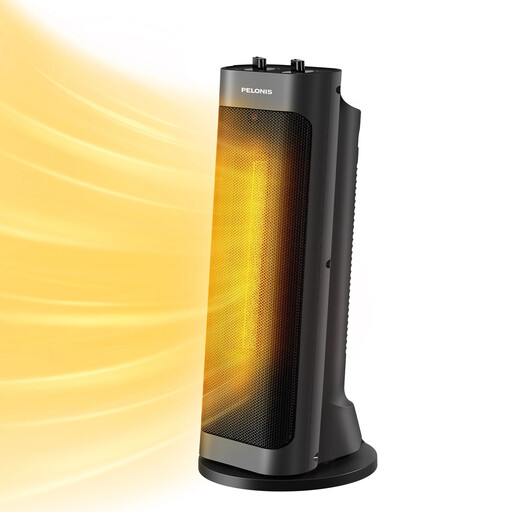
Why it suits this buyer: A compact ceramic fan heater for anyone who wants quick extra warmth in a bedroom, home office or office.
The product information lists four settings, an adjustable thermostat, 70° oscillation, and tip-over and overheat protection.
Maximum power of 2000 watts, carry handle and a stated noise level of 50 dB.

Why it suits this buyer: Designed for people who value precise temperature control, quiet operation and multiple safety features.
The specifications state a noise level of 25–42 dB, a thermostat range of 5–35 °C, and tip-over and overheat protection.
2000 watts, 70° oscillation, remote control, 12-hour timer and a stated coverage area of 15–25 m².

Why it suits this buyer: For anyone looking for a fixed bathroom heater with wall mounting, a timer and a towel rail.
The product description lists IPX2, overheat protection and a function that, according to the manufacturer, switches the heater off if the temperature suddenly drops.
1400 and 2000 watts, adjustable from 10–49 °C, and a programmable weekly timer with up to six periods per day.
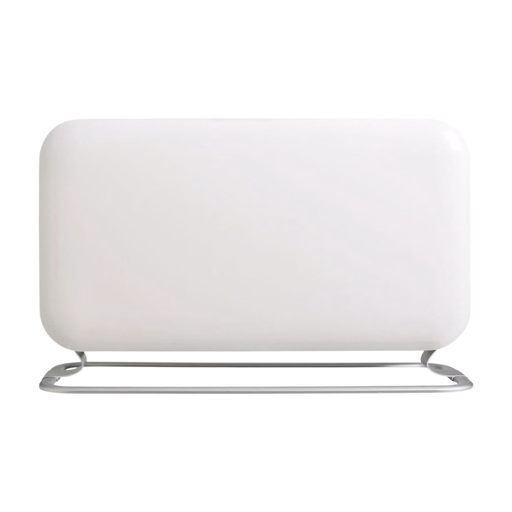
Why it suits this buyer: A freestanding model for an office or living room where quiet convector heating and a thermostat are important.
The product information distinguishes convector heating from the fan function, and lists an electronic thermostat and three heat settings.
2000 watts, LED display, electronic thermostat and quiet operation according to the product description.
We’ve put together a complete, up-to-date list of products that meet these strict selection criteria and the applicable European safety regulations.
It depends on the heater’s power and your electricity tariff. A 2000-watt heater running continuously at full power uses 2 kWh per hour in theory. Multiply this by your current price per kWh. A thermostat, lower setting or ECO mode can reduce average energy use, as the heating element won’t run constantly at maximum power.
Its lifespan depends on how it’s used, stored and ventilated, as well as how well it’s maintained. Keep the air vents free of dust as instructed in the manual, don’t use the appliance if its cable or casing is damaged, and let the heater cool down before moving it. The warranty period is useful information, but it doesn’t predict exactly how long the heater will last.
Check the manual first and, where possible, use a timer and overheat protection. Make sure the appliance is stable, keep textiles at least one metre away and never cover the heater. In a bedroom or child’s room, it’s still important to keep an eye on it and leave it clear of obstructions, even if the model switches off automatically.
