
Vandaag of morgen in huis

Kwaliteit gegarandeerd

Welkomstaanbiedingen ontgrendelen: GRATIS bezorging | Tot 80% korting | Gratis 30 dagen JoyPlus-proefperiode
Download de app
An electric heater seems simple: plug it in and switch on the heat. Yet many people buy a model that isn’t right for their room, uses too much electricity or proves awkward in everyday use. People working from home, students, households and DIY enthusiasts often focus only on the wattage. But that’s just one part of the decision.
The three most common pitfalls are:
Power is measured in watts. Many compact models have settings of 800, 1200, 1400 or 2000 watts. A 2000W model can bring a room up to temperature more quickly, but it also uses more electricity when running continuously at its highest setting.
As a rough guide:
A fan heater circulates warm air quickly using a fan. A ceramic fan heater often uses a PTC ceramic element. That doesn’t automatically mean the appliance uses less electricity, but it can offer a practical combination of fast heat, multiple settings and a compact design.
A heater with a thermostat switches the heating element on or off to maintain the set temperature. This can be more comfortable than continually adjusting it by hand. A heater with a timer is useful when you want to set a time for it to switch off, for example while working from home or before bed.
Look out for the difference between:
Oscillation, for example 70° or 90°, moves the warm air across a wider angle. This is useful when several people are in the room. It doesn’t replace good insulation or automatically increase the area being heated.
Where possible, choose a model with overheating protection and, for a portable electric heater, tip-over protection too. Place the appliance on a stable, level surface and keep curtains, clothes, paper and furniture clear of the air outlet. Many manufacturers recommend keeping it at least one metre away from flammable materials.
A bathroom heater should have a suitable IP rating. IPX2 or IP44 indicates protection against moisture, but doesn’t make an appliance suitable for positioning next to a shower or bath. Check the manual and the permitted safety zones. Never use an ordinary portable heater with wet hands or close to splashing water.
For a garage or building site, a robust electric space heater may be more practical. Check its power rating, cable and ventilation requirements, and whether the model is intended for domestic use only. If product specifications are missing, ask for the manual or product information before buying.
Calculate energy use as follows:
power in kilowatts × usage time in hours = kilowatt-hours
A 2000-watt heater running at full power uses around 2 kWh per hour. The actual cost depends on your energy tariff and how long the heating element is actively heating. A thermostat or ECO mode can reduce the time the heater is on, but won’t guarantee a fixed percentage saving.
An infrared heater works differently from a fan heater: infrared mainly warms people and surfaces nearby. This can be suitable for a workspace, patio or small area, but it isn’t always the most practical choice if you want to heat a whole room quickly.
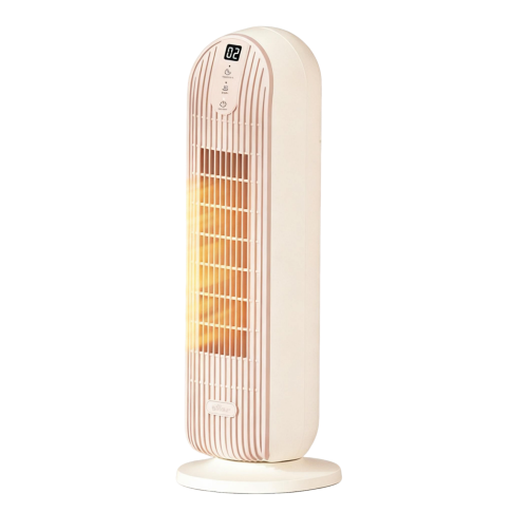
Why it suits this profile: This compact model is designed for bedrooms, living rooms and offices. The concealed handle makes it easy to move between, for example, a desk and a seating area.
The product information lists two power settings, 1200W and 2000W, a timer of up to 12 hours and 90° oscillation. So you don’t always have to heat at maximum power.
PTC ceramic element, digital display, 90° oscillation and a claimed low-noise operation.
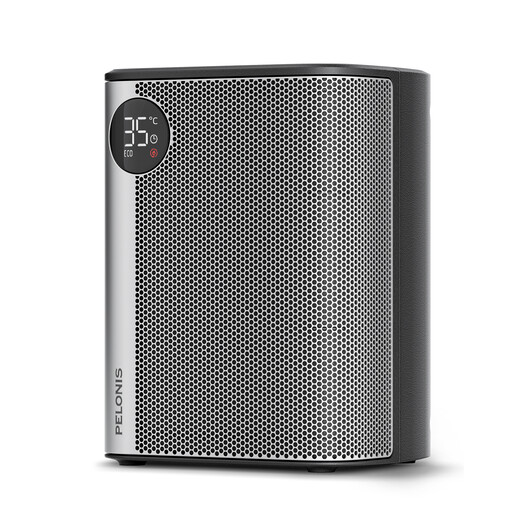
Why it suits this profile: For anyone who wants precise control in a bedroom, office, student room or living room.
The ECO mode, adjustable thermostat and 24-hour timer give you more control over how long the heater runs. According to the product information, ECO mode adjusts its operation to the ambient temperature; actual energy use will still depend on the circumstances.
2000W maximum power, five modes, temperature display, thermostat, timer, and tip-over and overheating protection according to the product description.
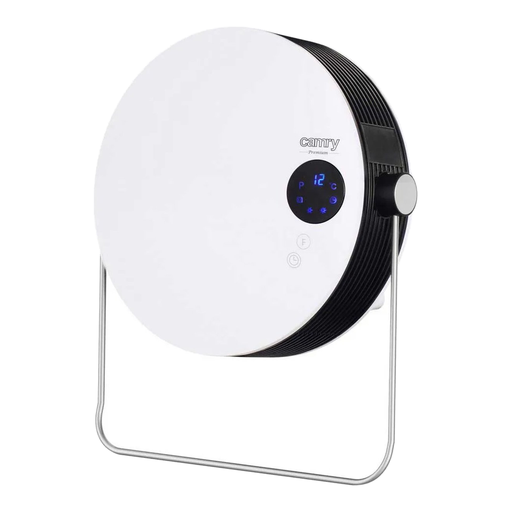
Why it suits this profile: This wall-mounted model is designed specifically for bathrooms and has an integrated towel rail. It’s a good fit for anyone looking for fixed installation and programmable heating.
The stated IPX2 rating and overheating protection provide useful information, but you must still install the heater in accordance with the manual. Don’t place it directly beside a shower or bath.
Two settings of 1400W and 2000W, a thermostat adjustable from 10°C to 49°C, and a programmable weekly timer with up to six periods per day.
We’ve put together a complete, up-to-date list of products that meet these strict selection criteria and the applicable European safety requirements.
That depends mainly on its power, how long you use it and your electricity tariff. A 2000W model running continuously at full power uses around 2 kWh per hour. A thermostat, lower setting and timer can reduce the time it’s switched on. So consider not only the purchase price, but also how long you’ll use the heater and which setting you’ll use.
Only if the manufacturer explicitly permits it and the IP rating is suitable for the intended position. Keep it away from water, follow the installation instructions and don’t use an ordinary fan heater next to a shower or bath. If in doubt, a model that isn’t specifically designed for bathroom use isn’t a suitable choice.
Its lifespan depends on use, dust, storage and maintenance. Switch the heater off and unplug it before cleaning. Never block the air inlet or outlet, cover the appliance or use it if the cable, casing or plug is damaged. A clear manual, verifiable specifications and available safety features can help you make the right choice.
