
Vandaag of morgen in huis

Kwaliteit gegarandeerd

Welkomstaanbiedingen ontgrendelen: GRATIS bezorging | Tot 80% korting | Gratis 30 dagen JoyPlus-proefperiode
Download de app
An electric heater seems simple: plug it in and switch on the heat. Yet many households buy a model that later disappoints. One heater is too noisy for the bedroom, while another takes a long time to warm a large living room. Terms such as “fast”, “quiet” and “energy-efficient” only tell you so much unless you check the technical specifications.
This buying guide helps you compare electric heating by power, controls, noise level, safety and running costs.
A 2000W heater delivers more power than a 1000W or 1500W model, but that doesn’t automatically mean it will heat every room evenly. Insulation, ceiling height, draughts and placement also play a part. A heater described as suitable for 20 m² may be less effective in a poorly insulated room.
With electric resistance heating, the maximum power is converted almost directly into heat. A 2000W model running at full power uses around 2 kWh per hour. An ECO mode, thermostat or timer can limit how long it runs and its average power use, but the heat itself isn’t free.
So check whether an energy-efficient heater has a thermostat, several heat settings or an automatic shut-off. These are features you can verify; broad marketing claims about savings deserve closer scrutiny.
Overheat and tip-over protection are useful, but they don’t make a heater safe to cover or leave running unattended among textiles. Follow the product instructions and leave enough space between the heater and curtains, furniture and bedding. It’s best to plug an electric heater directly into a suitable wall socket, rather than using an extension lead or multi-socket adaptor.
Use the wattage as your first filter:
A portable electric heater is handy if you want to heat one room at a time. As well as the power, check the weight, whether it has a handle and the length of the cable.
A fan heater blows warm air directly into the room. This usually means you feel the heat quickly, but the fan can be noisy. A ceramic heater often uses a PTC element; check the exact settings and safety features in the product information.
A convector heater warms the air without necessarily using a fan. This can be a good choice for a quiet workspace. The Mill SG2000LED, for example, has 2000W of power, three heat settings, an electronic thermostat and an extra fan to distribute the heat. The product description says it runs quietly, but always check whether an independently measured noise level is available.
An oil-filled radiator takes longer to warm up and continues to give off heat for a while after it is switched off. The Mill AB-H1000DN has three heat settings of 400W, 600W and 1000W and, according to the product information, is designed for rooms up to 16 m².
A heater with a thermostat switches the heating element on and off to maintain the temperature you set. A heater with a timer can stop the appliance running for longer than necessary. For a bedroom or office, the stated noise level, a dimmable display and a quiet mode are also worth considering.
Look for the difference between specific figures and vague claims. Philips, for example, gives a noise level of 24 dB(A) for the CX2120/01, while DREO lists a range of 25–42 dB. Other models don’t specify a noise level. So “quiet” doesn’t always make it easy to compare products directly.
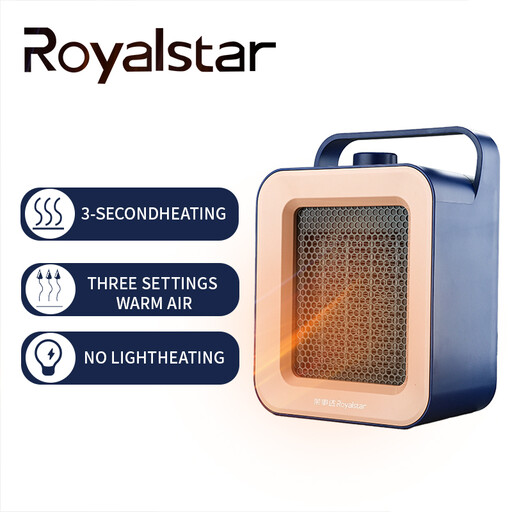
Why it suits this profile: This compact model offers fan-only, low-heat and high-heat settings, making it easy to use in a bedroom, office or small living space.
The product information lists three operating modes, so you don’t have to use the maximum power setting all the time. The instructions also warn against covering the heater or using it near water.
1500W of power, three settings and fast warm air according to the product description.

Why it suits this profile: A lightweight ceramic heater with a built-in handle, several settings and a stated noise level of 24 dB(A), making it a good fit for a bedroom or home office.
The product details list tip-over and overheat protection, and give the noise level in dB(A). This makes key expectations clearer than they are for a model without a stated noise rating.
600W and 1500W settings, a temperature range of 20 to 30°C and a stated weight of 1.51 kg.
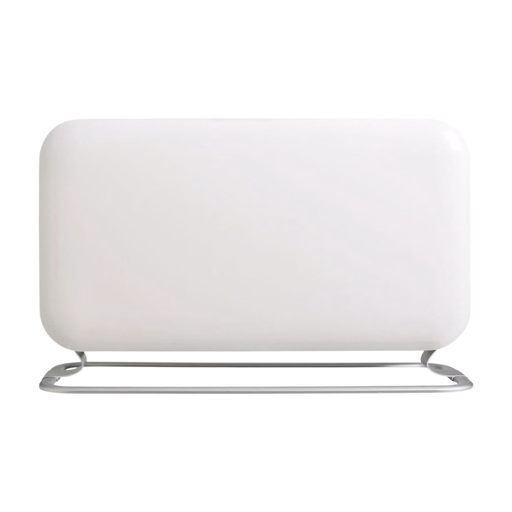
Why it suits this profile: This convector heater is designed for larger indoor spaces of up to 20 m². It combines an electronic thermostat with three settings and an extra fan.
The power, recommended room size and thermostat are all clearly specified. The extra fan can help distribute the heat, but make sure the heater has space around it and never cover it.
2000W of power, an LED display, an electronic thermostat and a 160 cm cable.
We’ve put together a complete, up-to-date list of products that meet these strict selection criteria and the applicable European safety requirements.
A 2000W heater uses around 2 kWh per hour at full power. Multiply this by your current electricity rate. A thermostat, lower heat setting and timer can reduce average energy use by stopping the appliance from running continuously at full power.
Look for a low noise level, thermostat, timer and tip-over protection. A ceramic fan heater can provide warmth quickly, while a convector heater without a constantly running fan may be quieter. Always check whether the stated noise level is given in dB(A).
Its lifespan depends on how it is used and stored, as well as dust and ventilation. Keep the grilles clean, make sure nothing is blocking them and only move the appliance once it has cooled down. If you notice smoke, sparks, damaged cables or a burning smell, switch the appliance off, unplug it and don’t use it again until it has been checked.
