
Vandaag of morgen in huis

Kwaliteit gegarandeerd

Welkomstaanbiedingen ontgrendelen: GRATIS bezorging | Tot 80% korting | Gratis 30 dagen JoyPlus-proefperiode
Download de app
An electric heater can be handy when you need a little extra warmth quickly in a bedroom, living room, home office or garage. However, models differ in more ways than just wattage. A compact 600-watt heater is suited to a desk, while a 1,800- or 2,000-watt model moves more air and may be suitable for a larger room.
When comparing models, look beyond claims such as “heats up quickly” or “energy efficient”. Above all, check the technical specifications, controls and safety features.
A 2,000-watt electric heater can deliver heat quickly, but at full power it also uses 2 kilowatt-hours per hour. The actual cost depends on your electricity tariff, the setting you choose and how long the heater runs.
A simple calculation is:
consumption in kWh = power in kW × usage time in hours
A heater with a thermostat, timer or ECO mode can help prevent unnecessary heating for too long. This does not automatically mean the appliance will use less electricity in every situation. The set temperature and the room’s insulation still matter.
A compact portable electric heater is practical for a desk, bedside or small home office. However, a low-powered model may take longer to provide the comfort you want in a large living room. So check the wattage, air distribution and whether the heater oscillates.
A ceramic fan heater with a PTC element warms the air using a ceramic heating element. According to the product descriptions from the brands mentioned, these elements are designed to deliver heat quickly. Treat this as a technical product feature, not a guarantee that every room will warm up at the same speed.
A heater with tip-over protection can switch off if the appliance tips over. A heater with overheat protection can stop operating if its internal temperature gets too high. These features are useful, but they don’t make unsafe use risk-free.
Always place an electric heater on a flat, stable and dry surface. Don’t cover the appliance, and keep curtains, bedding, paper and furniture at a safe distance. Don’t use the heater in a bathroom or near water. Also follow the instructions and, where possible, plug a high-powered model directly into a suitable socket.
For personal supplementary heating under a desk or beside a bed, a lower wattage may be enough. According to its product information, the Xiaomi Desktop Heater has a power rating of 600 watts, measures 142 × 132 × 188 mm and weighs 930 grams. This type is particularly practical for heating a small area.
Models rated between 1,500 and 2,000 watts offer more capacity. For example, a 2,000-watt electric fan heater may suit anyone looking to warm a living room, home office or bedroom more quickly. However, check that the socket and circuit can handle the combined power of all the appliances you use at the same time.
A heater with a thermostat doesn’t necessarily run at full power all the time. Depending on the model, the thermostat helps maintain the set temperature. A heater with a timer can switch off automatically after a set period. This is useful if you don’t want to leave the heater running without switching it off yourself.
Also check how many settings it has. A low setting is useful for gentle supplementary heating; a high setting delivers more warmth but increases hourly consumption. On some models, “ECO” means automatic adjustment based on the ambient temperature. According to PELONIS’s product description, ECO mode adjusts the operation automatically. In practice, any savings depend on how you use it and the conditions.
Oscillation moves the airflow from side to side, so the heat isn’t directed at just one spot. A model with 45° or 70° oscillation may be more useful in a shared room than a stationary appliance.
For a bedroom heater or home office, noise levels are worth considering. Some product information describes certain models as quiet, but noise levels aren’t always measured in the same way. So compare the stated dB rating with care, and also consider fan noise at the setting you plan to use.

Why it suits this profile: Its compact size and lower power rating make it a good fit for a desk, small bedroom or personal workspace where targeted supplementary heating is needed.
Its clearly stated 600-watt power rating helps you avoid choosing a heavy-duty 2,000-watt model for a small area. The product information also lists tip-over and overheat protection.
600 watts, 45° oscillation, thermostat, compact size and a weight of 0.93 kg.
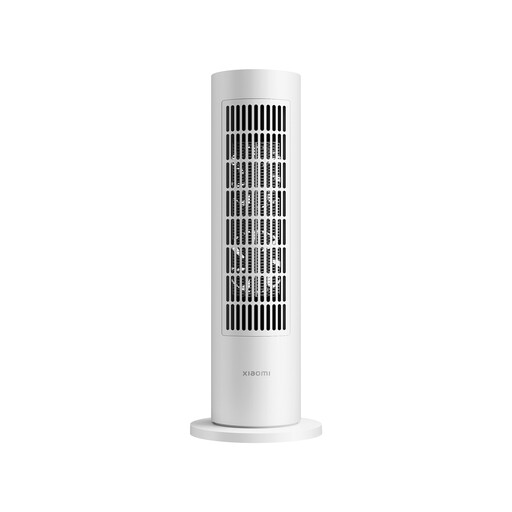
Why it suits this profile: This tower model is a good fit for anyone who values temperature control, oscillation and app or voice control.
The stated controls and smart thermostat make it easier to manage the settings. Before buying, check whether you’re happy to use the associated app and an internet connection to access all the features.
2000 watts, 70° oscillation according to the product name, multiple settings, timer, and tip-over and overheat protection.
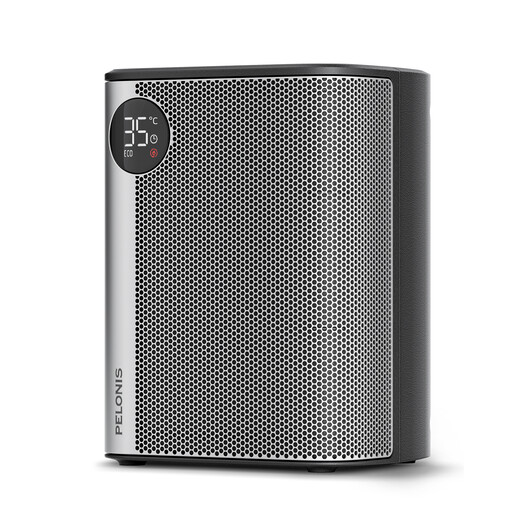
Why it suits this profile: The five settings, 24-hour timer and carry handle make it practical for regular use in a living room, home office, bedroom or garage, for example.
The thermostat and timer give you more control than a simple on/off switch. According to the brand description, ECO mode adjusts operation to the ambient temperature; actual consumption still depends on the situation.
2000-watt PTC heating, ECO mode, five heat settings, 24-hour timer and adjustable thermostat.
We’ve put together a complete, up-to-date list of products that meet these strict selection criteria and the applicable European safety requirements.
That depends on the power rating, how long you use it and your electricity tariff. A 2,000-watt model uses 2 kWh at full power for one hour. A thermostat, timer and lower heat setting can reduce the number of hours it runs or its average power consumption, but they won’t automatically make the heater energy efficient in every situation.
For a small bedroom or personal space, look for a compact model with a thermostat, timer and overheat protection. A ceramic fan heater with oscillation spreads warm air more widely. Check the noise level and use the timer if you want to stop the appliance from running unnecessarily.
Its lifespan depends on how often you use it, dust, storage and the quality of its components. Keep the air vents clear, use the appliance according to the instructions and store it somewhere dry. A warranty period gives you rights if something is faulty, but it doesn’t say exactly how long a heater will last in every situation.
