
Vandaag of morgen in huis

Kwaliteit gegarandeerd

Welkomstaanbiedingen ontgrendelen: GRATIS bezorging | Tot 80% korting | Gratis 30 dagen JoyPlus-proefperiode
Download de app
A 1500W ceramic heater is useful when you want to warm up a bedroom, home office or sitting area quickly without turning up the central heating. However, many models look very similar. A low price tag, “fast heating” or “energy efficient” claim alone tells you little about everyday use.
Pay particular attention to these three common pitfalls:
A PTC ceramic heater uses a ceramic heating element together with a fan. PTC stands for Positive Temperature Coefficient. Product descriptions often associate this type of element with fast, stable heat output. According to the product information provided by the relevant brands, the element is designed to regulate heat production as the temperature changes. This does not guarantee lower energy consumption: usage is mainly determined by the selected power level and how long the heater is switched on.
For a personal indoor space, several settings are useful:
An energy-efficient ECO heater does not automatically use very little electricity. Check how the ECO function works and whether the thermostat actually switches the heating off or reduces the power.
A thermostat means you do not have to keep switching between settings manually. Pay attention to the adjustment range and how the temperature is controlled. According to the product specifications, the OmniHeat has an adjustable range from 5 to 35 °C. This gives you more control than a heater with only low and high settings.
A heater with a timer is practical in a bedroom or home office. Check whether the timer offers a switch-off time or a fully programmable schedule. A timer of 1 to 12 hours is sufficient for temporary use, while some models offer a longer programming period.
A heater with a remote control is particularly convenient when the heater is beside the bed or under a desk. Also check the controls on the appliance itself. If the remote goes missing or its battery runs out, you should still be able to operate the basic functions.
Where possible, choose an electric heater with tip-over protection and overheat protection. The tip-over switch should turn the appliance off if it falls over, while overheat protection is designed to interrupt the power supply if the internal temperature becomes too high. Always check the instruction manual for the exact operation.
Position a space heater:
Use a socket suitable for the appliance’s power rating. Avoid multi-plug adaptors and extension leads if the instruction manual advises against them. Allow the heater to cool down before moving or storing it.
Oscillation helps distribute warm air more widely around the room. A heater with oscillation is therefore a more logical choice for a sitting area or small living room than a model that blows exclusively forwards. For a fixed position under a desk, a simple fan setting may be sufficient.
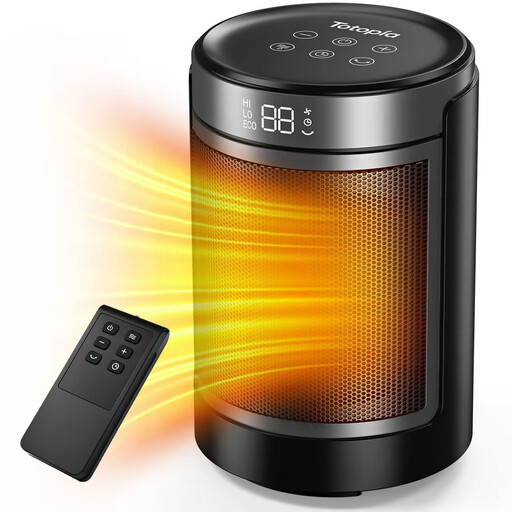
Why it suits this profile: This compact model offers a clear choice between fan, 750W, 1500W and ECO settings. It is suitable for anyone looking for a straightforward electric heater for a bedroom, study area or personal space.
The four settings make it possible to avoid heating at full power all the time. The timer, tip-over protection and overheat protection are clearly listed in the product specifications.
1500W maximum power, ECO setting, 1–12-hour timer, LED display, remote control and wide oscillation.
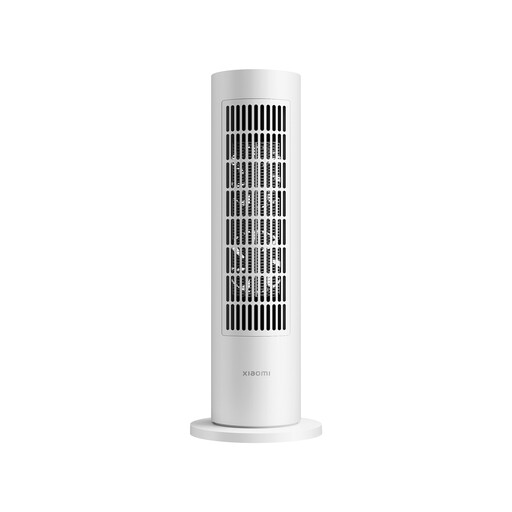
Why it suits this profile: Suitable for households that value app control, thermostat regulation and high heat output in a living room or larger workspace.
The product specifications list automatic switch-off and tip-over protection. The app is required for full smart control, so this is clear from the outset.
2000W PTC heating, 70° oscillation, smart thermostat, four settings, timer, plus app and voice control.

Why it suits this profile: A suitable choice for anyone who wants to combine temperature control, wide heat distribution and a longer timer in a bedroom, office or living room.
The thermostat can be adjusted from 5 to 35 °C and the timer runs for up to 24 hours. Overheat and tip-over protection are listed as features, but keeping the heater clear remains essential.
1800W power, four settings, ECO mode, remote control, oscillation, 24-hour timer and three specified noise levels.
We have put together a complete, up-to-date list of products that fully meet these strict selection criteria and the applicable European safety regulations.
That depends on the room size, insulation and desired temperature. A 1500W ceramic heater is mainly intended as supplementary local heating. Keep doors and windows closed while it is in use, and do not place the appliance directly next to the bed or beneath curtains.
When used continuously at full power, consumption is approximately 1.5 kWh per hour. Calculate the cost using this formula: 1.5 × your electricity tariff × the number of hours used. A thermostat or ECO setting can limit the length of time the heating is active, but actual consumption varies according to the room and settings.
Only use a model whose instruction manual allows overnight use, and use the timer as an additional limit. Keep the heater clear of bedding and furniture, never cover it, and check that tip-over and overheat protection are present. Switching it off and removing the plug when you leave the room remains the safest basic practice.
