
Vandaag of morgen in huis

Kwaliteit gegarandeerd

Welkomstaanbiedingen ontgrendelen: GRATIS bezorging | Tot 80% korting | Gratis 30 dagen JoyPlus-proefperiode
Download de app
An electric heater seems simple: plug it in and the room gets warmer. However, models vary considerably in power, noise, controls and safety features. A compact heater for under your desk has different requirements from a bathroom heater or patio heater.
Most poor purchases come down to three common pitfalls:
Power is measured in watts. A model rated at 600 to 800 watts is best suited to personal heating, for example at a desk or in a small home office. A 1500W or 2000W heater is more suitable for a larger bedroom, living room or office, but its actual heating range depends on insulation, ceiling height and the outdoor temperature.
Also consider the dimensions. A compact heater is easy to move around, but it often has a smaller airflow range. A tower model takes up little floor space, while a low-profile model may fit under a desk.
A ceramic heater, also known as a PTC heater, uses a ceramic heating element. Many models combine this with a fan to circulate warm air quickly. As well as checking for PTC, look at:
An infrared model works differently. According to its product description, the Alpina Heater infrared 800W carbon is designed to provide targeted heat and has a stated coverage area of 5 m². It also has an IP44 rating and is described as suitable for indoor and outdoor use. Always check the instructions and conditions before using a patio heater outdoors.
A heater with a thermostat switches off or reduces its heat output when it reaches the set temperature. A heater with a timer can switch off automatically after a set period. This is useful in a bedroom or office, but it is no substitute for supervision.
At a minimum, check for:
A standard electric fan heater is not automatically suitable for use in a bathroom. The Camry model below lists IPX2 and bathroom use in its product specifications. Other models in this selection specifically state that they must not be used in damp rooms.
You can work out electricity consumption easily:
power in kW × hours of use = consumption in kWh
A 2000-watt heater uses a maximum of around 2 kWh when heating continuously for one hour. A 1000-watt setting uses around 1 kWh over the same period. A thermostat or ECO mode can reduce the actual running time, but it does not make the appliance free to use.
So, choose a suitable power rating rather than automatically going for the highest wattage. For short bursts of targeted heat, a compact 600W or 800W heater may be enough. For a larger room, 1500W or 2000W may be more practical, particularly if oscillation helps the model distribute heat more evenly.

Why it suits this profile: Its low power rating and compact size make it practical for a desk, bedside table or small home office. According to the product specifications, the heater weighs 930 grams.
The product specifications list 45° oscillation, thermostat control, overheat protection and tip-over protection. However, don’t expect a 600W model to heat a large living room.
PTC ceramic heating, compact design, 45° oscillation and automatic shut-off if tipped over.

Why it suits this profile: This model is aimed at people who value quiet operation, several settings and a portable design for use in different indoor spaces.
The stated specifications list 600W and 1500W settings, a thermostat range of 20°C to 30°C and a noise level of 24 dB(A). This lets you adjust the power to suit the situation.
1500W maximum power, compact design, carry handle, thermostat, and overheat and tip-over protection.
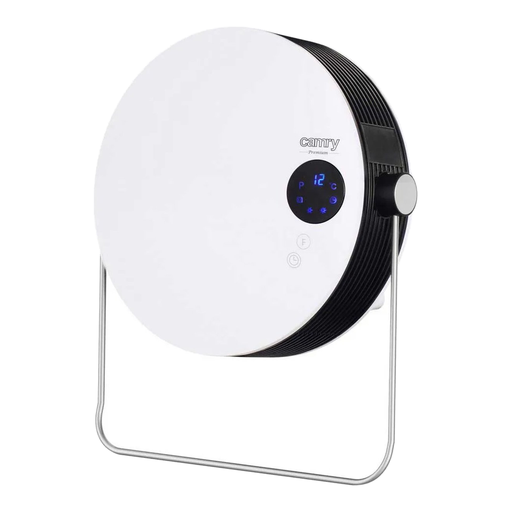
Why it suits this profile: This wall-mounted model is specifically described as suitable for bathrooms and has a built-in towel rail. Its programmable weekly timer is handy for setting regular heating times.
Rather than using a standard fan heater in a damp room, this model specifies IPX2, wall mounting and overheat protection. Follow the installation instructions carefully.
1400W and 2000W power settings, thermostat from 10°C to 49°C, LCD display and weekly timer with up to six periods per day.
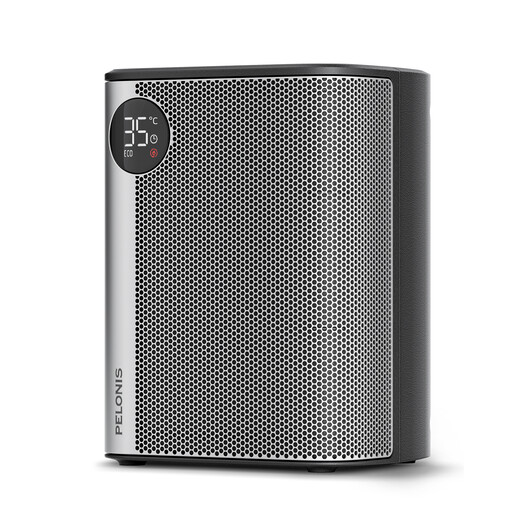
Why it suits this profile: This model is a good choice if you want to move an electric heater between the bedroom, living room, office or garage and automate its operation.
The product specifications list an adjustable thermostat, ECO mode, 24-hour timer and five settings. This gives you more control than a simple on/off switch, but the maximum power remains 2000W.
PTC ceramic heating, ECO mode, 24-hour timer, thermostat, touch controls, and tip-over and overheat protection.
We’ve put together a complete, up-to-date list of products that meet these strict selection criteria and the applicable European safety regulations.
It can be, provided the model is suitable for indoor use and quiet enough. Look for a thermostat, timer, overheat protection and tip-over protection. Keep the heater clear of bedding, curtains and furniture. Never cover it, and unplug it when you don’t need it.
That depends on its power rating and your electricity tariff. A 2000W model uses around 2 kWh per hour when running continuously; a 600W model uses around 0.6 kWh. Multiply this consumption by your current price per kWh. A thermostat can prevent the heating element from running continuously.
Only if the manufacturer says the model is suitable and specifies the correct IP rating. A standard electric fan heater should not be placed next to a shower or bath. Check the installation instructions, distance from water and electrical connection in the manual.
