
Vandaag of morgen in huis

Kwaliteit gegarandeerd

Welkomstaanbiedingen ontgrendelen: GRATIS bezorging | Tot 80% korting | Gratis 30 dagen JoyPlus-proefperiode
Download de app
An electric heater can quickly make a chilly bedroom, living room or workspace more comfortable. But there are big differences between models. A compact fan heater works differently from a convector heater, and a higher wattage doesn’t automatically mean a heater is suitable for every room.
When choosing, focus on the heating method, noise level, electricity consumption and safety features. This will help you avoid paying for features you won’t use or buying a heater that’s too noisy, too large or too powerful for your needs.
A 2000W heater delivers more power than a 1000W or 1500W model, but it also uses more electricity when running at full power. Maximum power also tells you little about how well the heat will stay in your room. Insulation, ceiling height, draughts and your preferred temperature all play a part.
A simple calculation can help:
energy used in kWh = power in kW × running time in hours
A 2000W heater running at full power for one hour uses up to 2 kWh. A thermostat, lower setting or timer can limit how long it runs, but won’t reduce its maximum power.
Marketing terms such as “whisper-quiet” are difficult to compare if no noise level in decibels is given. A PTC fan heater can warm a room quickly, but the fan noise may be distracting when you’re sleeping, on a video call or studying.
Check whether the product information gives a figure, such as 34 dB or a range of 25–42 dB. If it only says “quiet” or “low-noise”, it’s harder to make a reliable comparison.
Overheat protection and tip-over protection are useful, but they don’t replace safe use. Never cover an electric heater, and keep it clear of curtains, bedding, paper and furniture. For models with a warm air outlet, make sure the air intake and outlet are unobstructed.
A CE mark indicates that the manufacturer declares the product meets the applicable EU requirements. It isn’t a general rating of quality. Also check the manual, warranty, contact details for the responsible party in the EU and the recommended distance from flammable materials.
A PTC heater uses a ceramic heating element and a fan to distribute warm air. This type is usually compact and suitable for quick, targeted heating. A ceramic heater is often a practical choice for a bedroom, home office or student room.
A fan heater actively circulates warm air. Oscillation, for example 70° or 90°, can help direct the airflow across a wider area. This is useful when several people are in the same room.
A convector heater warms air as it rises past the heating element. Some models also have a fan to circulate the air more quickly. They’re often larger, but can be a good option for longer periods of heating in a living room or office.
Use the stated room size as a guide, not a guarantee. A model described as suitable for 15–25 m² may be less effective in a poorly insulated room than in a well-insulated one.
For a small personal workspace, 600W to 1500W may be enough. Models rated at 1800W or 2000W are often available for larger indoor spaces. Also look for multiple settings, such as 750W and 1500W, so you don’t always have to heat at maximum power.
A heater with a thermostat switches the heating element on and off according to the temperature you set. A display with temperature controls makes it easier to use. A heater with a timer can switch off automatically after a set period.
A remote control is especially handy in a bedroom or living room. If you want to set a regular heating schedule, look for a heater with remote control, Wi-Fi or app controls. Check whether you need the app to use all the features and whether it works with your Wi-Fi network.
The models below have been selected based on their listed specifications, features and intended uses. Claims about energy savings or heating speed, for example, come from the relevant brands’ product descriptions and are not presented here as independently verified results.
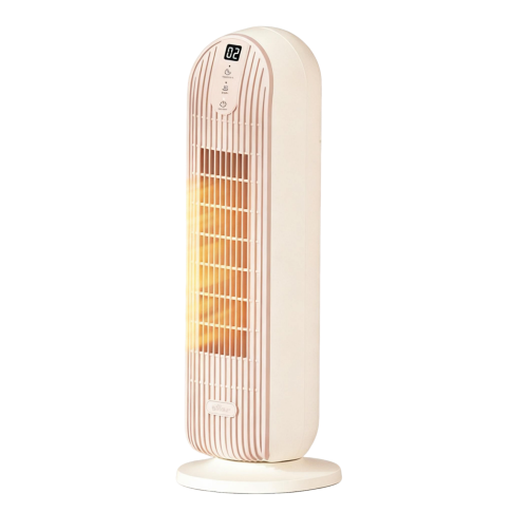
Why it suits this profile: This portable model offers 1200W and 2000W settings, 90° oscillation and a timer of up to 12 hours. It’s a practical choice for a bedroom, living room or home office where you want straightforward controls.
The two power settings mean you don’t always have to heat at 2000W. The product information describes it as low-noise, so you can check the noise level there, although no exact dB figure is given.
1200W/2000W, 90° oscillation, timer of up to 12 hours, digital display and concealed handle.

Why it suits this profile: According to DREO’s product description, this model is designed for rooms of 15–25 m² and features temperature control from 5–35°C, a remote control, oscillation and a timer of up to 12 hours.
The specifications give a noise range of 25–42 dB and list several safety features. That’s more specific than a general claim that a heater is quiet or safe to use.
2000W, temperature control from 5–35°C in 1°C increments, 70° oscillation, remote control, child lock, tip-over protection and overheat protection.
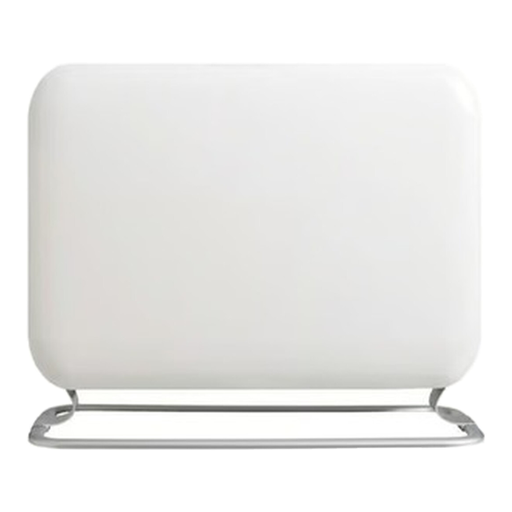
Why it suits this profile: According to the product information, this convector heater is suitable for rooms of up to 18 m². It features Wi-Fi controls, weekly programmes, and comfort, sleep and away modes.
With a 1200W output and programmable schedules, you can tailor how it runs to suit working from home, sleeping or being away. The stated noise level isn’t specified, so bear this in mind if you’re using it in a quiet bedroom.
Wi-Fi and app controls, weekly scheduling, 1200W output, overheat protection and a stated coverage area of up to 18 m².
We’ve put together a full, up-to-date list of products that meet these strict selection criteria and the applicable European safety requirements.
That depends on its power, how long you use it and your electricity tariff. A 2000W model uses up to 2 kWh per hour at full power. A thermostat, lower setting and timer can reduce the number of hours it runs. So compare more than just the wattage: check the controls too.
Look for a quiet heater with a thermostat, timer and tip-over protection. A PTC heater is compact and provides targeted heat. Always check the stated noise level, as “quiet” without a dB specification tells you little about what it will actually sound like.
Its lifespan depends on use, storage and maintenance. Keep the vents free of dust as instructed in the manual, don’t move the heater while it’s hot, and don’t use it if the cable, casing or plug is damaged. If it develops a fault, don’t open it yourself; contact the seller or the responsible manufacturer.
