
Vandaag of morgen in huis

Kwaliteit gegarandeerd

Welkomstaanbiedingen ontgrendelen: GRATIS bezorging | Tot 80% korting | Gratis 30 dagen JoyPlus-proefperiode
Download de app
An electric heater seems simple enough: plug it in and switch on the heat. But models can vary significantly in how quickly they heat a room, how they’re controlled, how much noise they make and which spaces they’re suitable for. Choose the wrong one and you could end up with a heater that doesn’t have enough power, uses more electricity than necessary or isn’t safe to use in your chosen room.
Look out for these three common pitfalls:
The technology used determines how the heat is distributed and how quickly you feel the difference.
A ceramic heater uses a ceramic heating element. Many models combine this with a fan to circulate warm air around the room quickly. This is useful for a home office, bedroom or any other space you want to heat for a short time.
A fan heater is usually compact and portable. The trade-off is that you may hear the fan running. If you’re using the heater in a bedroom, check its stated noise level. For example, the Xiaomi Smart Tower Heater Lite features a PTC ceramic element, thermostat, timer and oscillation. Find the full product details on the product page.
A convector heater warms the air, which then circulates around the room. This type is often suitable for longer periods of use in a living room or home office. A model with an electronic thermostat can help maintain your chosen temperature automatically.
According to its product specifications, the Mill SG2000LED has a power output of 2000 watts, three settings, an electronic thermostat and a fan for better heat distribution. It’s stated to be suitable for rooms up to 20 m². See the Mill SG2000LED for the latest details.
An oil-filled radiator generally takes longer to warm up and continues to give off heat for a while after you switch it off. This can be useful in a bedroom or home office where you want steady warmth. These heaters are usually heavier and less easy to move than compact portable models.
The Mill AB-H1000DN has three settings of 400, 600 and 1000 watts, an electronic thermostat and a day-and-night programme. It’s stated to be suitable for rooms up to 16 m². Treat any claim about potential savings from the programme as information from the brand; actual consumption depends on how and where you use the heater.
The power you need depends on the size of the room, ceiling height, insulation, outdoor temperature and how quickly you want it to warm up. A compact room usually needs less power than a poorly insulated living room.
Use the stated room suitability as a guide, not a guarantee. According to Mill’s product information, a 1200-watt electric heater may be suitable for rooms up to 18 m², while a 1800-watt Mill model is stated to be suitable for rooms up to 30 m². Also check whether you can adjust the power. Two settings, such as 1200 and 1800 watts, give you more control than one fixed setting.
A heater with a thermostat doesn’t simply run at full power non-stop. Once it reaches the temperature you’ve set, it can switch off and then turn back on later. This helps prevent unnecessary continuous heating, but it won’t automatically reduce the price you pay per kilowatt-hour.
Useful features include:
According to the product description, the Mill CO1200WIFI3 offers wifi control, comfort, sleep and away programmes, and a stated power output of 1200 watts for rooms up to 18 m². Take a look at the Mill CO1200WIFI3 if you’d like to control your heating remotely.
At a minimum, check for:
A bathroom heater must be specifically designed for use in that environment. According to its product specifications, the Camry CR 7747 has an IPX2 rating, wall mounting, a towel rail and two settings of 1400 and 2000 watts. Use the appliance only in accordance with its installation and safety instructions. See the Camry CR 7747.
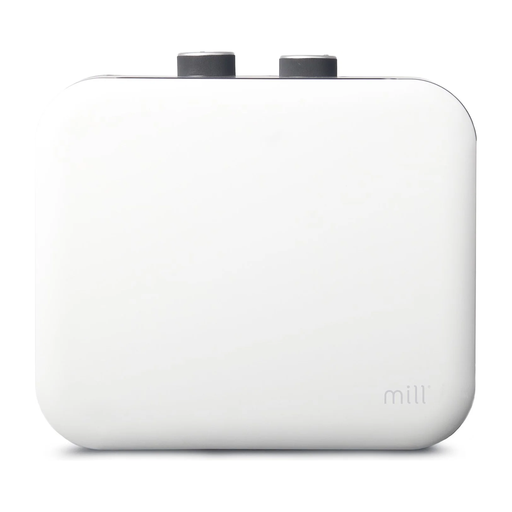
Why it suits this profile: This compact model is easy to move and has two settings for occasional use in a bedroom, home office or small living room.
The product information lists 1200 and 1800 watts, a mechanical thermostat, and tip-over and overheat protection. This means you’re not limited to a single fixed setting.
PTC ceramic element, 1800 watts, stated to be suitable for rooms up to 30 m² and easy to store away.
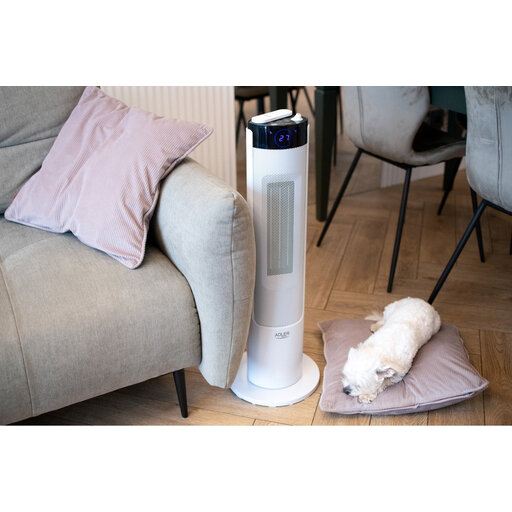
Why it suits this profile: Its tower design combines heating with a display, remote control and adjustable thermostat, making it a good choice if you want more control than a simple on/off switch offers.
The thermostat, 1–12-hour timer and tip-over protection give you more control than a basic model without these features.
2200 watts, LCD temperature control from 10–35 °C, 80° oscillation and a water reservoir for the stated humidifying function.

Why it suits this profile: This wall-mounted model is designed for bathroom use and combines heating with an integrated towel rail.
The stated IPX2 rating and wall-mounting design make it clearer what this model is intended for. Be sure to follow the installation and positioning instructions.
1400 and 2000 watts, a weekly timer with up to six periods per day, a thermostat from 10–49 °C and overheat protection.
We’ve put together a complete, up-to-date list of products that meet these strict selection criteria and the applicable European safety requirements.
You can work out consumption easily using:
power in kilowatts × hours of use = kilowatt-hours
So, a 2000-watt heater uses 2 kilowatts per hour when running continuously. A thermostat can reduce the actual running time by switching the heating element off when it isn’t needed. The exact cost depends on your energy tariff and contract. So, consider more than just the purchase price: factor in the power, timer and how you use the room.
An energy-efficient electric heater is primarily one that’s well suited to your room and isn’t left running for longer or at a higher temperature than necessary. All electric heaters convert electricity into heat, but a thermostat, timer or weekly programme can help reduce unnecessary running time.
Only if the manufacturer states that the model is suitable for bathroom use and its IP rating is appropriate for where you plan to install it. A standard portable heater or convector heater isn’t automatically suitable for damp rooms. Always keep it away from water and follow the installation instructions.
Its lifespan depends on how often you use it, dust, storage, ventilation and maintenance. Switch the appliance off and unplug it before cleaning. Stop using a heater if it’s damaged, gives off an unusual smell, gets abnormally hot or has a faulty cable.
