
Vandaag of morgen in huis

Kwaliteit gegarandeerd

Welkomstaanbiedingen ontgrendelen: GRATIS bezorging | Tot 80% korting | Gratis 30 dagen JoyPlus-proefperiode
Download de app
An electric heater can be a handy addition when you do not want to heat the whole house. Think of a chilly living room, bedroom, home office, bathroom or patio on a cool evening. However, the range often looks simpler than it really is. A higher wattage does not automatically mean that a heater is more economical or better suited to your needs.
A portable heater rated at 2,000 watts will generally heat up faster than a 600-watt model, but at full power it also uses more electricity. For a desk, small bedroom or seating area, 600 to 1,000 watts may be enough. For a living room, the size of the space, insulation and desired heat-up time require more consideration.
Therefore, always check:
A stated coverage area is only a guideline. A poorly insulated room with high ceilings may require more power than a well-insulated room with the same floor area.
An energy-efficient heater is not created simply by adding a marketing label. Electric heating converts electricity into heat, but consumption mainly depends on the power rating and how long the heater is used. A 2,000-watt heater running at full power for one hour theoretically uses 2 kWh. Calculate the actual cost by multiplying this consumption by your current electricity tariff.
Features that can help limit unnecessary use include:
A timer does not automatically save energy: it mainly prevents the heater from being left on for longer than planned.
A heater with overheat protection or tip-over protection offers additional safety, but it does not make incorrect use safe. Always place an electric radiator or fan heater on a stable, freestanding surface. Keep curtains, paper, bedding and clothing at a safe distance. Never cover the appliance, and do not use a standard electric heater in a bathroom unless the product information explicitly permits it.
When using a heater in damp areas, pay attention to the IP rating. According to the product description, an IP44 model is splashproof within the stated application. This does not mean it may be submerged or placed directly next to a bath or shower.
A convector heater warms the air, after which the warm air rises and circulates around the room. This type generally operates quietly and is suitable for longer periods of use in, for example, a living room or study. A built-in fan can distribute the heat more quickly, but check that the noise level is acceptable to you.
A ceramic heater with a PTC element usually heats up quickly and is compact. A fan heater is useful for short-term use, for example when you want quick warmth at a desk or in a small room. The trade-off is that the airflow can be audible. For a bedroom, quiet operation is more important than a high wattage alone.
An oil-filled radiator provides steady, even heat and remains warm for some time after being switched off. This type is relatively heavy and less suitable if you want to move the heater frequently. Check that tip-over and overheat protection are provided, and do not use an oil-filled radiator in a damp bathroom unless the manufacturer allows it.
An infrared heater directs heat more directly towards people and surfaces. This makes it suitable for a seating area, workspace or covered patio. Its heating range is often smaller than that of a convector heater. According to the product information, the Alpina model below is intended for approximately 2 to 5 m², depending on the product specification provided.
Power and settings
Do not automatically choose 2,000 watts. A model with 600/1,000 watts or 750/1,500 watts gives you more control in smaller rooms. Multiple settings are useful when the outside temperature varies.
Thermostat, timer and controls
A thermostat helps maintain the selected temperature. A timer is useful for temporary use. A smart heater with Wi-Fi is particularly appealing if you want to switch it on or off remotely or set a weekly schedule. Check in advance whether a separate app, account or Wi-Fi network is required.
Positioning, dimensions and connection
Measure the available space before ordering. A wall-mounted model requires secure installation; a portable heater must stand firmly on the floor. Where possible, plug the appliance directly into a suitable socket and follow the instructions regarding the distance from furniture and flammable materials.
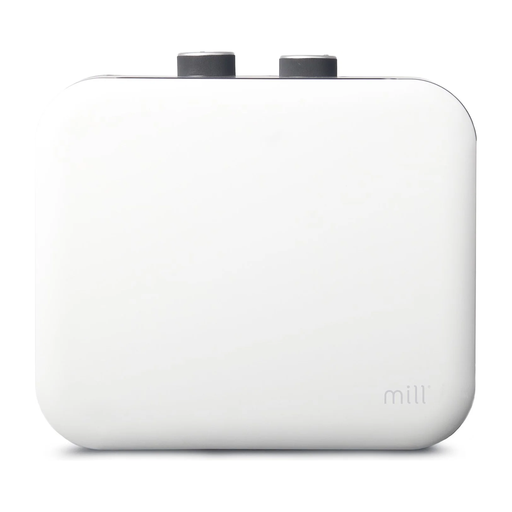
Why it suits this profile: This compact ceramic fan heater has two settings of 1,200 and 1,800 watts and, according to the product information, is suitable for rooms of up to 30 m².
The two power settings mean you do not always have to heat at maximum power.
PTC ceramic element, mechanical thermostat, tip-over protection and overheat protection.
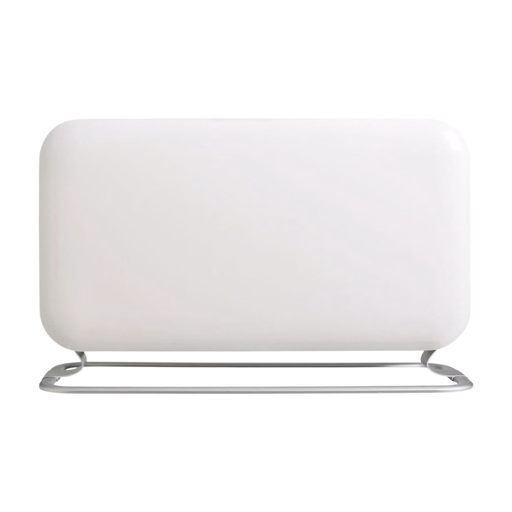
Why it suits this profile: This electric radiator is intended for rooms of up to 20 m² and combines an electronic thermostat with an LED display.
The stated room capacity, three settings and thermostat make it easier to match the power to the space.
According to the product description, quiet operation, 2,000 watts, fan and electronic temperature control.
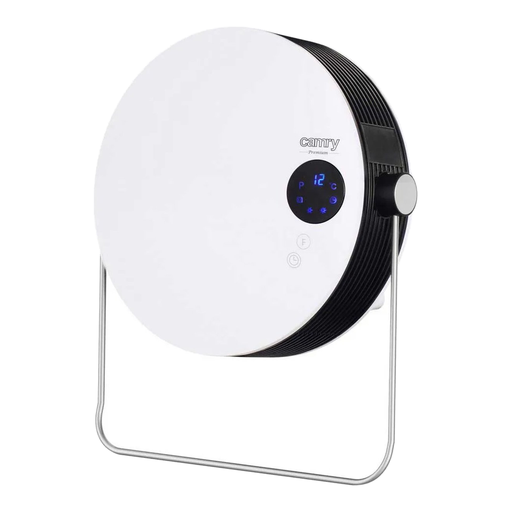
Why it suits this profile: According to the product information, this wall-mounted model is suitable for use in the bathroom and has a built-in towel rail.
The IPX2 rating and stated bathroom suitability provide more information than a general moisture-resistance label alone.
Adjustable from 10 to 49 °C, two settings of 1,400 and 2,000 watts, weekly timer and overheat protection.
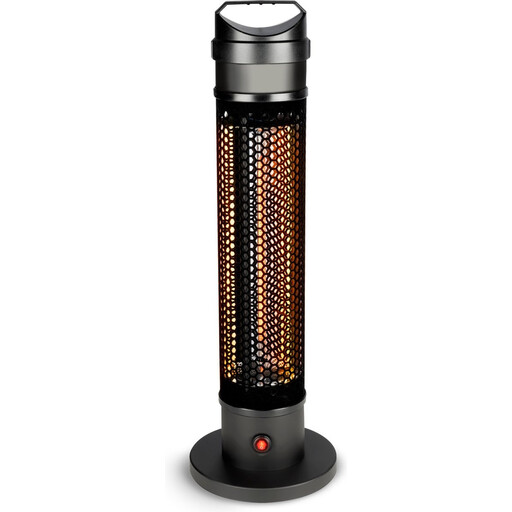
Why it suits this profile: Thanks to its handle and freestanding design, you can move this infrared heater between a study, seating area and patio.
The stated coverage makes it clear that this model is intended mainly for a limited area, not an entire living room.
800 watts, IP44 rating according to the product information, tip-over protection and 360° heat distribution.
We have put together a complete, up-to-date list of products that fully meet these strict selection criteria and the applicable European safety regulations.
This depends on the room, insulation and desired heat-up time. Use the stated heating area as a guideline and, preferably, choose a model with multiple settings and a thermostat. A small workspace often requires less power than a poorly insulated living room.
Calculate this using: power in kilowatts × usage time in hours × your electricity tariff. A 2,000-watt heater theoretically uses 2 kWh per hour at full power. A thermostat, eco mode or timer can limit the number of hours spent operating at full power, but actual consumption varies depending on the room and settings.
First check the instructions and safety features. Never use a heater under blankets, next to bedding or while covered. For a bedroom, quiet operation, a thermostat, timer, tip-over protection and overheat protection are important features to look for. Place the appliance on a stable surface and keep flammable materials away.
