
Vandaag of morgen in huis

Kwaliteit gegarandeerd

Welkomstaanbiedingen ontgrendelen: GRATIS bezorging | Tot 80% korting | Gratis 30 dagen JoyPlus-proefperiode
Download de app
An electric heater may seem simple: plug it in and turn on the heat. However, models vary considerably in heating speed, noise levels, controls and safety features. A compact fan heater can be useful in a cold workspace, while a convection heater may be better suited to providing supplementary heat in a living room over longer periods.
The most common poor purchases are caused by three misunderstandings:
An electric heater converts electricity into heat, but the way that heat is distributed varies.
A 2000-watt heater produces plenty of heat, but it also requires a relatively high maximum electrical output. At 1500 watts, maximum consumption is lower. A model with different settings, such as 900, 1300 and 1500 watts, gives you more control than a device that only operates at full power.
A simple calculation:
power in kW × number of hours used × your electricity tariff = estimated running cost
A thermostat can switch off the heating element once the set temperature has been reached. That does not automatically mean every product is energy-efficient. Claims such as “up to 40% energy saving” come from the manufacturer and depend on the settings and conditions of use. According to DREO’s own information, this saving is achieved through intelligent power control and thermostat regulation; treat this as a product claim, not a guaranteed result in every home.
For a heater for a bedroom or home office, noise is important. A convection heater without an active fan may be suitable if you are looking for a quiet heater. The Mill SG2000LED, for example, states that it operates quietly, but the supplied specifications do not give a dB value.
Fan heaters sometimes do include measured values. DREO states 25–42 dB for certain models, while PELONIS lists 50 dB. These figures can only be compared properly when they have been measured under the same conditions. Also consider oscillation: a rotating heater distributes heat more widely, but adds moving parts and potentially more noise.
At a minimum, look for:
A CE marking indicates that the manufacturer declares the product complies with relevant EU requirements. Also check the manual, warnings and details of the responsible manufacturer or importer. No safety feature makes it safe to cover the heater, use it in a damp room or place it close to flammable materials.
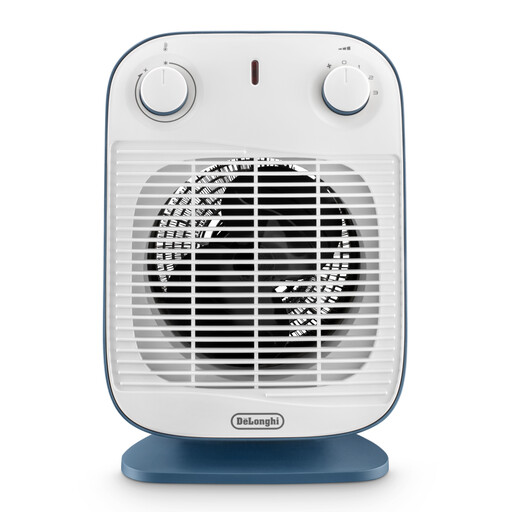
Why it suits this profile: This compact fan heater has 2000 watts, three heat settings and an adjustable thermostat, making it suitable for temporary use in a small room or at a desk.
The three settings help prevent you from always heating at maximum power. The description also states that it has overheating protection.
2000 watts, three settings, thermostat and IP21 according to the product specifications.

Why it suits this profile: The combination of thermostat control, remote control, timer and a stated noise level of 25–42 dB makes it suitable for bedrooms, home offices and longer-term use.
The manufacturer specifies settings of 900, 1300 and 1500 watts, as well as a temperature range of 5–35 °C. The claimed energy saving still depends on how the heater is used.
1500 watts, timer up to 12 hours, tip-over and overheating protection, remote control and CE+CB according to the product information.
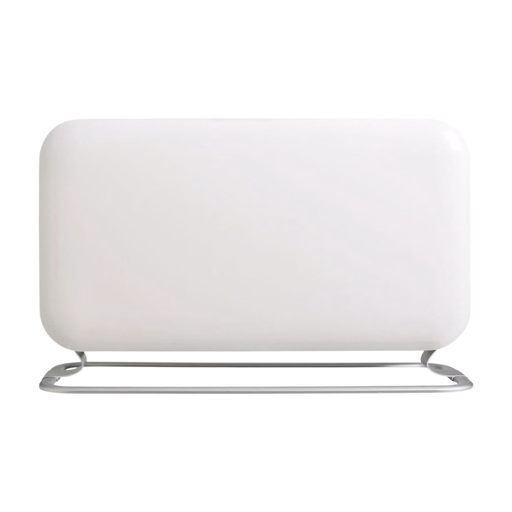
Why it suits this profile: According to the product description, this convection heater is designed for rooms of up to 20 m² and combines an electronic thermostat with an LED display and an additional fan.
The stated room capacity and power are clearly listed. It must be placed freestanding; covering it or positioning it near flammable materials is not permitted.
2000 watts, three settings, electronic thermostat, LED display and a fan for improved heat distribution.
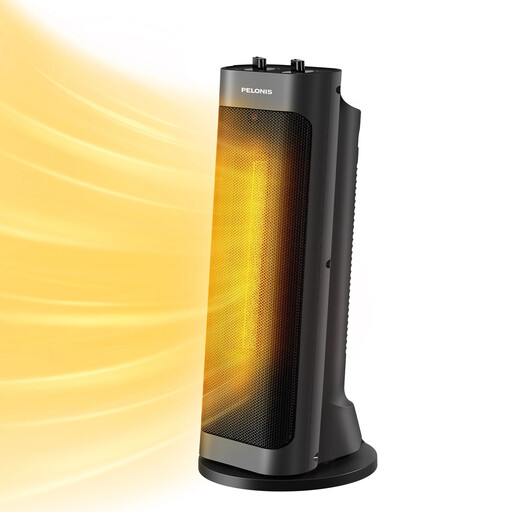
Why it suits this profile: The compact design, carry handle, four settings and 70° oscillation are practical when moving the heater between the bedroom, desk and living room.
The product specifications list both thermostat control and tip-over and overheating protection. The stated 50 dB makes it possible to consider the noise level in advance.
2000 watts, four heat settings, 70° oscillation, adjustable thermostat and carry handle.
We have put together a complete, up-to-date list of products that fully meet these strict selection criteria and the applicable European safety regulations.
This depends on the power, how long it is used and your electricity tariff. A 2000-watt device uses a maximum of 2 kWh per hour at full power. A thermostat and lower heat setting can reduce the number of hours it runs or the average power consumption, but they do not make electric heating free.
Use the stated room capacity as a guide only. A well-insulated bedroom needs less heat than a draughty living room with high ceilings. For a small home office, 600 to 1500 watts may be sufficient; larger or less well-insulated spaces are often offered heaters rated at 1800 to 2000 watts. Always check the manual and positioning instructions.
Ideally, choose a model with a thermostat, timer, tip-over protection and overheating protection. A quiet ceramic heater or convection heater may be more comfortable than a noisier fan heater. Keep the device away from bedding and curtains, and do not leave it running unattended.
