
Vandaag of morgen in huis

Kwaliteit gegarandeerd

Welkomstaanbiedingen ontgrendelen: GRATIS bezorging | Tot 80% korting | Gratis 30 dagen JoyPlus-proefperiode
Download de app
An electric heater may seem easy to choose: decide on the wattage, pick a colour and you’re done. In practice, models vary considerably in heat distribution, noise levels, controls and safety features. A compact 600-watt heater may be ideal on a desk but fall short in a living room. A 2000-watt model heats up more quickly, but may use more electricity during extended use.
For Dutch households, tenants and people working from home, three pitfalls are particularly important:
The technology mainly determines how the heat is distributed.
Power is expressed in watts. A 1500-watt model has several settings, while a 2000W heater is often intended for a larger or less well-insulated room. Do not look only at the maximum power, but also check:
For example, the DREO Atom 318 lists 1500W, three power settings of 900W, 1300W and 1500W, and a recommended area of 10 to 20 m². According to the product information, the DREO Solaris SH628 is a 2000W model for 15 to 25 m². Treat these figures as a guideline, not a guarantee for every home.
An energy-efficient electric heater is not simply one with a lower wattage. How long you use it determines the energy costs. The basic calculation is:
power in watts ÷ 1000 × number of hours used × your electricity tariff = estimated cost
A heater with a thermostat can switch off once the set temperature has been reached. A heater with a timer also prevents the appliance from running for longer than necessary. ECO modes can adjust operation automatically. According to DREO’s own information, its smart power control can deliver energy savings of up to 40%; the actual saving depends on the room, settings and usage.
A fan heater will always make some noise because of its motor. The stated decibel level is therefore relevant for a bedroom or office. The DREO models list 25 to 42 dB, while the PELONIS 2000W PTC Fan Heater lists 50 dB. An oil-filled radiator has no fan motor, making it a logical choice for anyone looking for a quiet heater.
Also check for at least:
A CE mark is no substitute for correct use. Place the heater on a flat, hard surface, keep textiles and curtains at a safe distance, and never block the air intake or outlet.
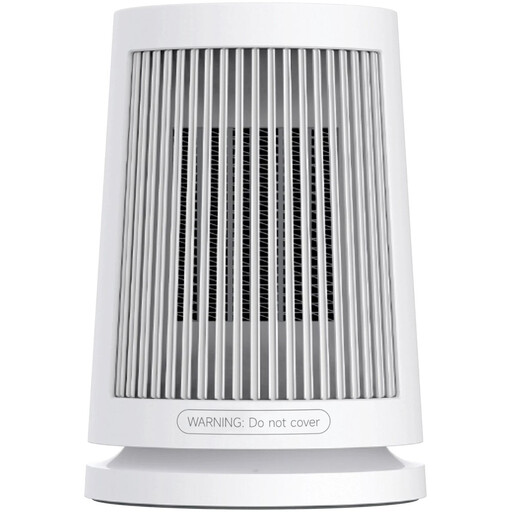
Why it suits this profile: Its low power and compact size make it suitable for a desk, small study or personal seating area.
The product information lists 600W, PTC ceramic heating, a thermostat, 45° oscillation, and tip-over and overheating protection. Do not expect it to heat an entire large living room.
930 grams, dimensions of approximately 14,2 × 13,2 × 18,8 cm, and a PTC element for fast, localised warmth.
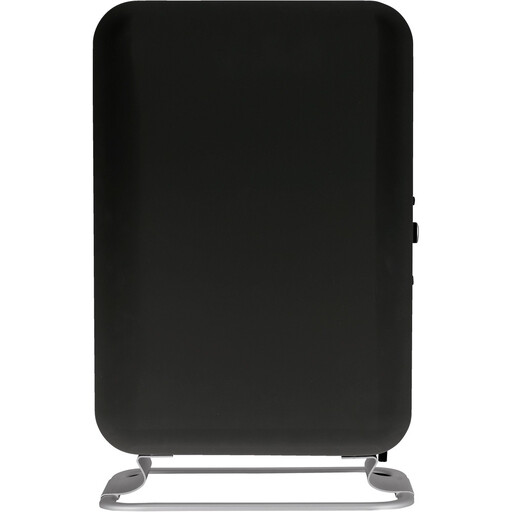
Why it suits this profile: This substantial model is designed for larger indoor spaces and users who value control via Wi-Fi and an app.
The three power settings of 800W, 1200W and 2000W offer more choice than simply switching the heater on or off. Its performance still depends on insulation and the selected temperature.
According to the product specifications, suitable for areas of up to 34 m², with Wi-Fi, Bluetooth connectivity, app control, and tip-over and overheating protection.

Why it suits this profile: A living room, spacious study or intensively used room calls for higher power, broad heat distribution and precise controls.
The stated heating area of 15 to 25 m², 70° oscillation and adjustable thermostat make the choice easier to assess than a claim about “fast heat” alone.
2000W, temperature settings from 5–35°C, a 12-hour timer and a stated noise level of 25–42 dB according to the product information.

Why it suits this profile: The compact design, remote control and stated low noise level make it suitable for a bedroom, office or study.
The specifications list 900W, 1300W and 1500W, along with a thermostat ranging from 5–35°C. This allows you to adjust the power instead of always using the highest setting.
Dimensions of approximately 15,8 × 15,4 × 25 cm, a weight of 1,44 kg, a 12-hour timer and a stated noise level of 25–42 dB.
We have put together a complete, up-to-date list of products that fully meet these strict selection criteria and the applicable European safety regulations.
That depends on the room and its insulation. For a small personal space, 600W may be sufficient. Models from 1000W to 1500W are often used for a bedroom or study. A larger living room may require an 1800W or 2000W model. Always check the stated area in m² and use a thermostat to avoid unnecessary continuous heating.
That depends on the electricity tariff, your heating requirements and the energy source used by your central heating system. An electric heater can be practical for temporarily heating one room without bringing the whole house up to temperature. Calculate the cost using the wattage, number of hours and your current electricity tariff. An ECO mode or timer can limit usage, but a high wattage does not automatically make a heater cheap to run.
Only use a heater overnight in accordance with the instructions, and position it away from bedding, curtains and furniture. Ideally, choose a model with a thermostat, timer, tip-over protection and overheating protection. Never leave a heater running while covered, and unplug it when you are not using it. Safety features support supervision and correct positioning; they are not a substitute for either.
