
Vandaag of morgen in huis

Kwaliteit gegarandeerd

Welkomstaanbiedingen ontgrendelen: GRATIS bezorging | Tot 80% korting | Gratis 30 dagen JoyPlus-proefperiode
Download de app
An electric ceramic heater can quickly make a cold bedroom, home office or student room more comfortable. However, not every model is suitable for the same space. A low purchase price says little about noise levels, controls, safety features or electricity consumption.
Pay particular attention to these three common pitfalls:
A PTC heater uses a ceramic heating element. PTC stands for Positive Temperature Coefficient: the electrical resistance changes as the element becomes warmer. In practice, this means a fast flow of air without an open flame.
Do not look only at the maximum power. Also check the available settings:
A model with several settings can adapt its power more effectively to the situation. This is often more useful than simply choosing the highest wattage.
A heater with a thermostat switches the heating element on or off around a set temperature. This means the appliance does not need to operate constantly at maximum power. Check the adjustment range and accuracy. Some models, for example, offer a range of 5 to 35 °C in 1 °C increments.
A heater with a timer is useful when you want to limit the operating time in advance. The models in this selection have 12- or 24-hour timers. Check whether the timer supports a switch-off time, a switch-on time or both.
With oscillation, the housing turns from side to side, distributing warm air across a wider area. An angle of 70° or 90° can be useful in a living room or office, but is less necessary if you only want to heat one fixed workspace.
Noise levels are important in a bedroom or home office. Manufacturers usually state these in decibels. A stated value of 25–42 dB sounds quieter than a 50 dB model, but the experience also depends on the selected fan setting.
Also check:
Place every electric supplementary heater on a flat, stable and dry surface. Keep curtains, bedding, furniture and other flammable materials at least 1 metre from the air outlet. Never cover the heater and do not use it in the immediate vicinity of a bath, shower or swimming pool.
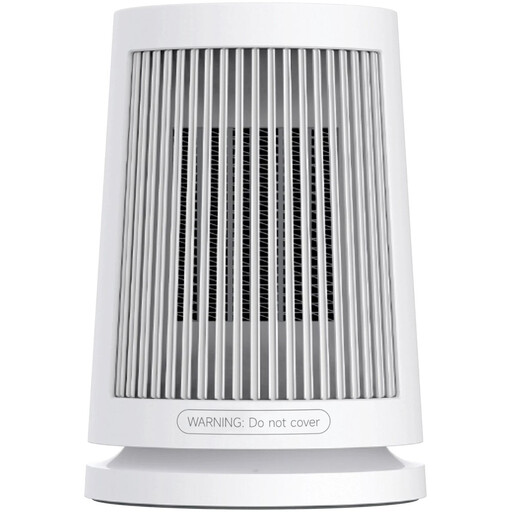
Why it suits this profile: The low power rating and compact size make it suitable for a desk, small bedroom or targeted supplementary electric heating.
The specifications state 600 W, making it clear that this is a model for targeted warmth rather than a large living room.
45° oscillation, thermostat, tip-over protection and dual overheat protection; weight approximately 0.93 kg.
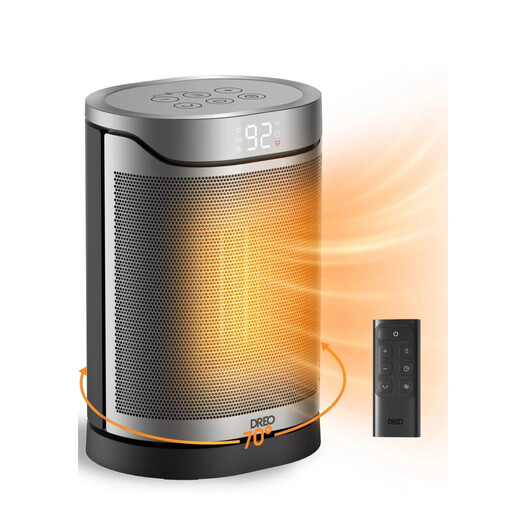
Why it suits this profile: For anyone looking for a quiet heater with precise temperature control, a remote control and wide air distribution.
The stated settings of 900, 1300 and 1500 W allow you to adjust the power to suit the room and the situation.
25–42 dB according to the product information, 70° oscillation, 5–35 °C thermostat, 12-hour timer and CE+CB marking.
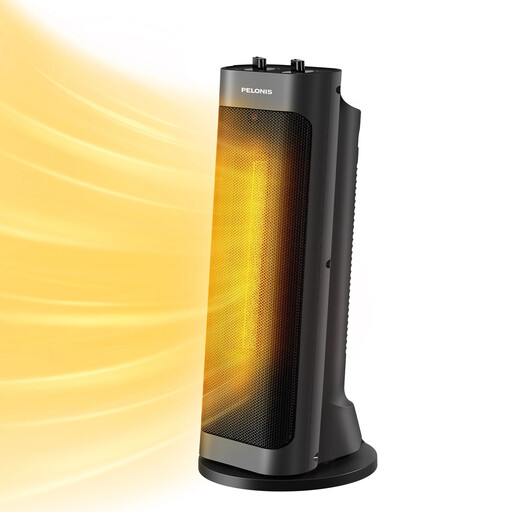
Why it suits this profile: A suitable choice for users who need extra power and wide air distribution in a small to medium-sized room.
The product description explicitly mentions overheat and tip-over protection, along with a thermostat and several heat settings.
2000 W maximum power, 70° oscillation, portable handle and stated noise level of 50 dB.

Why it suits this profile: Its stated low noise level and compact design make it suitable for use while working, reading or sleeping.
The specifications state a range of 25–42 dB, a 12-hour timer and several layers of protection. Check the instructions for details of how it operates.
1500/1300/900 W, temperature setting of 5–35 °C, remote control, tip-over protection and overheat detection.
We have put together a complete, up-to-date list of products that fully meet these strict selection criteria and the applicable European safety regulations.
Consumption depends on the selected power level and how long the heater is used. A 1500 W heater theoretically uses 1.5 kWh when it runs continuously at maximum power for one hour. A thermostat, lower heat setting or ECO mode can reduce the time the heating element is active. Always check your current electricity tariff to calculate the cost.
Use a timer if you want to limit the operating time and follow the model’s instructions. Place the heater on a stable surface, keep textiles at a safe distance and do not cover it. A heater with tip-over protection provides extra protection, but it is not a substitute for safe use and supervision.
Lifespan varies depending on the model, frequency of use, dust exposure and maintenance. Allow the appliance to cool down before cleaning it, keep the air inlet clear and do not use it if the cable, plug or housing is damaged. If you notice smoke, a burning smell or unusual noise, switch off the heater and unplug it.
