
Vandaag of morgen in huis

Kwaliteit gegarandeerd

Welkomstaanbiedingen ontgrendelen: GRATIS bezorging | Tot 80% korting | Gratis 30 dagen JoyPlus-proefperiode
Download de app
An electric heater may seem simple: plug it in and the room gets warmer. However, models vary considerably in heating method, noise level, controls and safety features. A small fan heater can provide quick warmth at a workstation, while a convector heater is better suited to even supplementary heating in a living room.
The biggest purchasing mistakes usually stem from three incorrect assumptions:
There are roughly three types:
Electric fan heater
A fan blows warm air into the room. This produces a noticeable effect quickly and is useful for a desk, bedroom or small living room. However, fan noise can be distracting when sleeping or working with concentration.
Ceramic heater
A PTC ceramic element electrically heats the air. Many models have several settings, oscillation and a thermostat. Please note: “ceramic” does not automatically mean that the appliance uses less electricity. The wattage has a significant impact on energy consumption.
Convector heater
A convector heater warms air as it rises past the heating element. This type generally works without a fan and may therefore be suitable as a quiet heater for a bedroom, office or living room. It is often larger than a portable fan heater.
Power is stated in watts. For a compact workstation, 600 to 1,500 watts may be sufficient, while a medium-sized room will more often require a model of 1,800 to 2,200 watts. The area quoted by manufacturers is a guideline. Ceiling height, draughts, insulation and outdoor temperature all affect the actual result.
Here is a simple example: a 2,000-watt heater uses 2 kWh per hour at maximum power. Multiply this by your electricity tariff and usage time to estimate the cost. A thermostat can limit how long the heater is switched on, but it does not change the maximum power consumption.
A heater with a thermostat switches the heating element on and off around a set temperature. This is more practical than an appliance that simply operates continuously on a low or high setting. Also check:
An app is particularly useful if you want to set regular schedules. For occasional supplementary heating, physical buttons are often simpler.
Look for overheating protection and a tip-over safety switch. These features can switch the appliance off if the temperature becomes too high or if it falls over. They are no substitute for safe use.
Place a portable heater on a flat, stable and dry surface. Following the product instructions, keep sufficient distance from curtains, bedding, furniture and paper; different models often specify a minimum of 1 metre. Never cover the heater, do not use it in a bathroom unless the model is expressly suitable for this purpose, and preferably plug it directly into a wall socket. Before buying, check the manual, rating plate and stated CE marking. A CE marking indicates conformity; it is not a guarantee of heating performance.
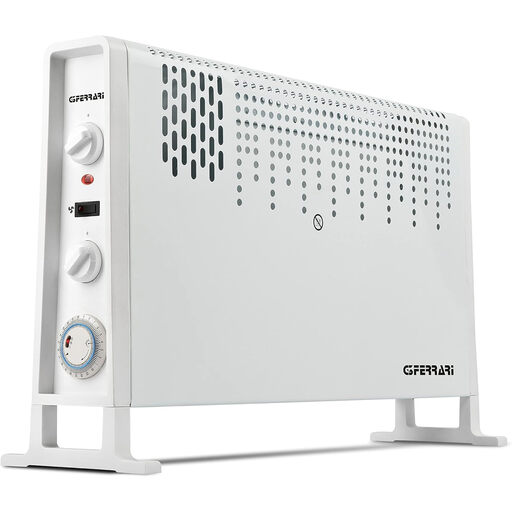
Why it suits this profile: This compact model is designed for users looking for a simple room heater without advanced smart features. The product information lists an adjustable thermostat and overheating protection.
The specifications make no exaggerated claims about room size. Before buying, however, check the exact wattage on the rating plate, as this is not stated in the information provided.
Compact design, adjustable thermostat and overheating protection according to the product description.
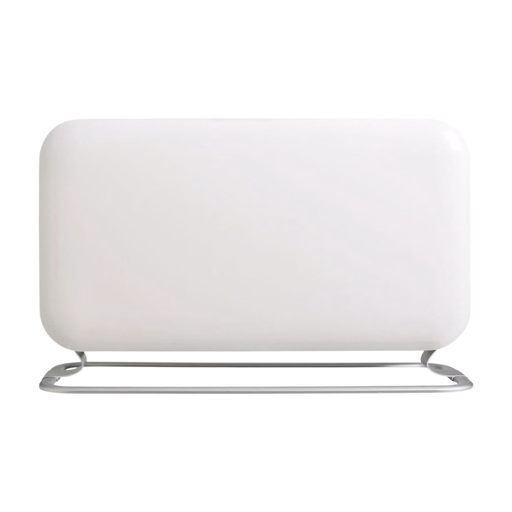
Why it suits this profile: The combination of a convector element, electronic display and thermostat suits anyone looking for a permanent, straightforward heating solution for a living room or office.
The stated power of 2,000 watts and suitability for up to 20 m² make comparisons more meaningful. The manufacturer warns that the appliance must not be covered.
2000 W, three settings, LED display, electronic thermostat and a fan for improved air circulation according to the product specifications.

Why it suits this profile: According to the product description, this model is aimed at bedrooms, offices and study areas where noise levels and adjustability are important.
The stated noise level ranges from 25 to 42 dB, depending on the setting. Tip-over and overheating protection are also listed; check the manual for the precise conditions of use.
1500/1300/900 W settings, thermostat from 5–35 °C, timer and portable design. The claim of savings of up to 40% is based on DREO’s own information and should not be treated as a fixed expectation for every home.

Why it suits this profile: Weighing 930 grams and with a compact design, this is a portable heater for direct warmth at a desk or in a very small room.
The lower power level prevents you from choosing a 2,000 W model for desk heating. It is not intended to replace heating in a large living room.
600 W, 45° oscillation, thermostat, dual overheating protection and tip-over protection according to the product information.
We have compiled a complete, up-to-date list of products that fully meet these strict selection criteria and the applicable European safety requirements.
That depends on the wattage and your electricity tariff. A 2,000-watt model uses 2 kWh per hour at full power. At a rate of €0,30 per kWh, this works out at €0,60 per hour. A thermostat can reduce the actual operating time. Check your own energy tariff for an up-to-date calculation.
It can be, provided the model is suitable for indoor use and is placed securely. A quiet heater without a fan can be comfortable while you sleep. Also choose a model with a thermostat, timer and overheating protection. Keep textiles, bedding and curtains at least the distance specified in the manual from the appliance, and never cover it.
Its lifespan depends on how frequently it is used, exposure to dust, storage conditions and the quality of the cable and casing. A simple compact room heater can remain usable for longer if you store it in a dry place, do not move it while it is hot and take any damage seriously straight away. Also check the warranty terms and whether servicing or replacement parts are available.
