
Vandaag of morgen in huis

Kwaliteit gegarandeerd

Welkomstaanbiedingen ontgrendelen: GRATIS bezorging | Tot 80% korting | Gratis 30 dagen JoyPlus-proefperiode
Download de app
A ceramic electric heater can quickly make a cold bedroom, home office or student room more comfortable. However, a high wattage or promise of “instant heat” is not enough to guarantee a good choice. The right heater depends on the size of the room, your preferred controls, noise level and safety features.
Pay particular attention to three common pitfalls:
A 1500W heater is often practical for a bedroom, home office or study. A 2000W heater can deliver heat more quickly or be suitable for a larger room, but it also uses more electricity at maximum power.
The product information for the models in this guide states, among other things:
These figures do not guarantee a particular room temperature. In a poorly insulated rented property, even a smaller room may require more power than the product page indicates.
A PTC ceramic heater uses a ceramic heating element together with a fan. The fan distributes warm air more quickly than a traditional radiator without airflow. The downside is that it creates fan noise, and the airflow can feel draughty when you are sitting close by.
A ceramic element is often presented as an efficient or safe solution. According to brands’ own research, including DREO and Philips, their models can reach the desired temperature quickly or use less energy in certain modes. These percentages and time claims are brand claims; your actual energy consumption depends on the selected setting, thermostat, insulation and duration of use.
For a bedroom or office, a quiet heater is more important than it is for a living room. The stated figures in the product specifications range from 24 dB(A) for the Philips CX2120/01 to 25–42 dB for various DREO models. However, check whether the quoted noise level applies to the lowest setting.
Useful features include:
An electric heater uses approximately the stated amount of power when the heating element operates continuously at that setting. The simple calculation is:
power in kW × number of hours = consumption in kWh
A 1500W heater theoretically uses 1.5 kWh per hour at full power. A 2000W heater uses 2 kWh per hour. Multiply this by your electricity tariff to estimate the cost. A thermostat can reduce average consumption because the element does not remain active continuously, but it does not lower the maximum power.
Therefore, use a portable electric heater mainly for targeted supplementary heating. For example, heat only the room where you work rather than the entire home, provided this suits your comfort and ventilation needs.

Why it suits this profile: At 1.51 kg, this compact heater is easy to move between a student room, desk and bedroom. The two power settings of 600W and 1500W give you flexibility to adjust how you use it.
The stated coverage of up to 15 m² is better suited to targeted heating than heating a large living room. The thermostat and multiple settings make the “energy efficient” claim easier to assess in everyday use.
Stated noise level of 24 dB(A), tip-over and overheat protection, plus a built-in carry handle.

Why it suits this profile: The combination of 2000W power, an adjustable temperature of 5–35°C, oscillation and remote control makes it suitable for a living room or larger home office.
The specifications state a coverage range of 15–25 m² and include a thermostat, so you do not have to choose based solely on the maximum wattage claim.
Stated noise level of 25–42 dB, 12-hour timer, 70° oscillation, plus tip-over and overheat protection.

Why it suits this profile: This model is designed for wall mounting in the bathroom and has an IPX2 rating, a towel rail and a programmable weekly timer.
The moisture resistance and wall mounting are clearly specified. Before installation, however, check the instructions, the distance from water and that the unit is properly earthed.
Adjustable from 1400W to 2000W, overheat protection, open-window detection and a timer with multiple daily programmes.
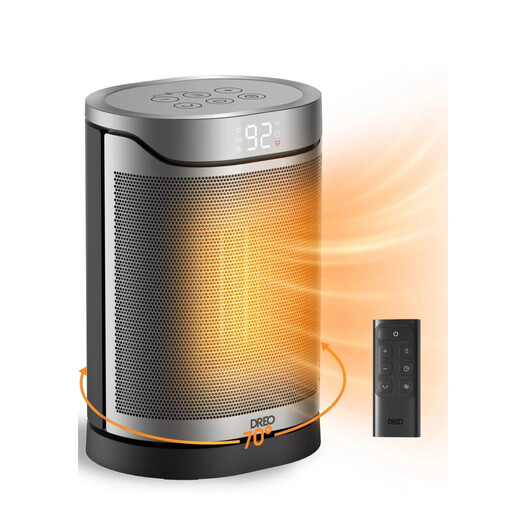
Why it suits this profile: According to the product information, this compact 1500W heater is suitable for 10–20 m² and has a stated noise level of 25–42 dB, making it suitable for working or sleeping.
The three power settings of 900W, 1300W and 1500W offer more choice than simply switching the heater on or off. The stated energy saving of up to 40% is a DREO claim and depends on the conditions.
Adjustable thermostat from 5–35°C, remote control, 12-hour timer and multiple safety layers according to the product description.
We have put together a complete, up-to-date list of products that fully meet these strict selection criteria and the applicable European safety regulations.
Before buying, check that the heater is suitable for the room. An ordinary portable heater is not automatically suitable for a bathroom. Only use a model whose manufacturer clearly states that it is suitable for use in damp areas, and follow the installation instructions.
Also bear the following points in mind:
The ceramic element does not automatically make a heater more economical. Maximum consumption is mainly determined by the wattage and duration of use. A thermostat, lower setting and ECO mode can limit average consumption because the heater spends less time running at full power.
This depends on the instructions and the safety features provided. A timer and thermostat can limit operation, but do not leave a portable heater running unattended unnecessarily. Keep it away from bedding and curtains, do not cover the appliance and, if in doubt, unplug it.
The lifespan varies by brand, model and usage. Dust in the air inlet, falls, moisture and prolonged use at maximum power can accelerate wear. Clean the appliance only as described in the instructions, and stop using it if the casing, cable or plug is damaged.
