
Vandaag of morgen in huis

Kwaliteit gegarandeerd

Welkomstaanbiedingen ontgrendelen: GRATIS bezorging | Tot 80% korting | Gratis 30 dagen JoyPlus-proefperiode
Download de app
A ceramic electric heater can be useful when you need extra heat in the bedroom, living room, study or home office for a while. But a high wattage doesn’t tell you everything. A model that heats up quickly may also use a lot of electricity, while an appliance with a long list of features isn’t always easy to use every day.
Watch out for these common pitfalls:
A PTC heater uses a ceramic heating element. PTC stands for Positive Temperature Coefficient: the element’s electrical resistance changes as it heats up. In practice, you’ll often find several settings, such as 750W, 1200W, 1500W or 2000W.
A lower setting may be enough for a small home office or study. A 2000W heater is better suited to a larger living room or a space where you want extra heat quickly. Don’t just look at the maximum power. Also check for:
A ceramic element doesn’t automatically make a heater energy-efficient. Electric heaters convert most of their electricity into heat, but a thermostat and lower setting can help prevent the heater from running at full power for longer than necessary.
A ceramic heater with a thermostat can make it easier to control the temperature than a model with just an on/off switch. Some models offer a range of 5°C to 35°C, while others switch between just a few heat settings.
A heater with a timer is useful when you want it to stop running after a set period. Check whether the timer can be set for up to 12 or 24 hours. A heater with a remote control is particularly handy beside the sofa or bed. A model controlled by an app or voice commands can be useful too, but check whether it needs an internet connection or an additional app.
A heater with oscillation moves the air outlet from side to side. An angle of 70° or 90° can help spread heat across a wider area. This doesn’t replace correct positioning: keep the air intake and outlet clear, and place the heater on a hard, level surface.
At the very least, check for:
Don’t use a portable heater in a damp room unless the instructions expressly allow it. Never cover the appliance, and only move it once it has been switched off and has cooled down.
The selection below is based on different usage scenarios. The features listed come from the product information provided. Where the brand mentions performance or energy savings, this is a claim from the product description, not an independent finding.
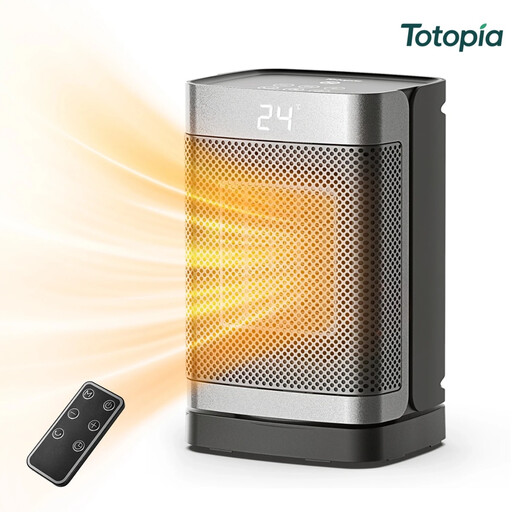
Why it suits this type of user: This compact model is designed for bedrooms, offices and personal workspaces. Its two heat settings keep the controls simple.
The product information lists a 12-hour timer, adjustable temperature, tip-over protection and overheat protection. This gives you more control than a basic model without a timer.
1500W model with remote control, LED display, wide oscillation and two heat settings.
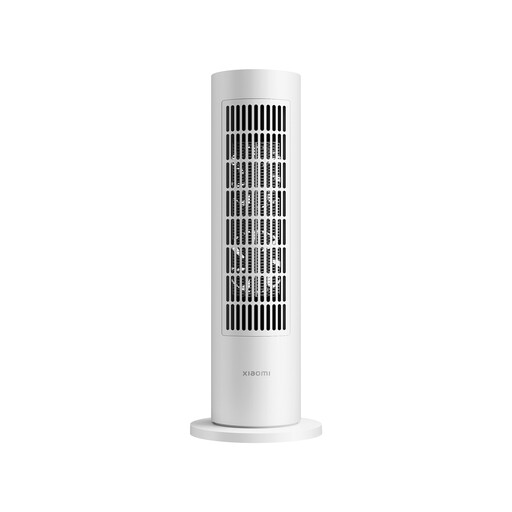
Why it suits this type of user: If app or voice control matters to you, this smart-home-focused option is suited to a living room, bedroom or home office.
The product information lists a thermostat, timer, tip-over protection and overheat protection. Bear in mind that you’ll need the Mi Home app to use all the features.
2000W power, tower design, 70° oscillation according to the product name, and app and voice control.

Why it suits this type of user: This model is aimed at people who value longer periods of use, multiple settings and precise temperature control.
The specifications list five settings, an ECO mode, a thermostat, tip-over protection and overheat protection. The energy-saving wording is a claim from PELONIS’s product description.
2000W PTC heating, 24-hour timer, concealed handle and adjustable thermostat.

Why it suits this type of user: The combination of a thermostat, timer and remote control, along with a stated minimum noise level of 38 dB, makes it suitable for a bedroom or office.
Rather than simply describing it as “quiet”, the product information gives three noise levels: 50, 45 and 38 dB. Performance and perceived noise may vary depending on the setting and the room.
1800W power, temperature settings from 5°C to 35°C, 24-hour timer, ECO mode and tip-over protection.
We’ve put together a complete, up-to-date list of products that meet these strict selection criteria and the applicable European safety requirements.
A simple calculation can help you compare models. A 2000W heater uses 2 kWh per hour at full power. Multiply this by your energy tariff to work out the hourly cost. A model running on a lower setting or switching off temporarily via its thermostat may use less than its maximum power rating suggests.
Also check that the stated settings match the model you’re looking at. Some product descriptions list different wattages. Check the technical overview and instructions for the specific model.
It can be, as long as the model is intended for indoor use and has suitable safety features. Ideally, choose one with a timer, thermostat and tip-over protection. Leave at least the clearance specified in the instructions, and don’t place the heater next to bedding or curtains.
Not necessarily. Both appliances use electricity to produce heat. A ceramic element can heat up quickly, but consumption is mainly determined by the power rating, how long you use the heater and how the thermostat controls it.
Its lifespan depends on how often it’s used, dust, storage and maintenance. Keep the air vents clear, clean the appliance as instructed, and unplug it before moving or cleaning it. Store it in a dry place and let it cool completely before putting it away.
