
Vandaag of morgen in huis

Kwaliteit gegarandeerd

Welkomstaanbiedingen ontgrendelen: GRATIS bezorging | Tot 80% korting | Gratis 30 dagen JoyPlus-proefperiode
Download de app
An electric ceramic heater can be a practical solution for a cold bedroom, study, living room or office. However, a high wattage does not automatically mean that a model is suitable for your space. Terms such as “energy-efficient”, “quiet” and “rapid heating” also need to be considered in the right context.
The main pitfalls when buying a ceramic fan heater are:
The power rating determines how much heat the heater can deliver at most. Many compact models have settings such as 600, 900, 1200, 1500 or 2000 watts. Lower power is often suitable for a small room or as supplementary heating. More power can be practical for a larger or less well-insulated room.
Pay attention to the relationship between the power rating and the stated room size:
At maximum power, an electric heater uses approximately 1.5 kWh per hour at 1500 watts or 2 kWh per hour at 2000 watts. Calculate the cost by multiplying this consumption by your current electricity tariff. A thermostat can switch the heater off once the set temperature has been reached, but it does not reduce maximum consumption while the heater is warming the room.
A PTC heater uses a ceramic heating element with a positive temperature coefficient. Product descriptions often associate this with rapid heat output and controlled operation. Focus particularly on the actual features:
An electric heater with a thermostat is generally more flexible than a model with only an on/off switch. The thermostat prevents the appliance from continuing to heat unnecessarily, although accuracy varies by model. Also check whether the thermostat measures the room temperature or only regulates an internal temperature.
For a bedroom or study, a quiet fan heater is more important than wattage alone. Manufacturers often state the noise level in decibels. According to their own product information, DREO models, for example, have a range of 25–42 dB. Philips states 24 dB(A) for model CX2120/01, according to the product description. These values may vary depending on the fan setting.
An electric heater with oscillation distributes warm air across a wider angle. This is useful when several people are in the room or when you are not sitting directly in front of the heater. A timer, remote control and display make the heater easier to use, especially when you want to operate it from bed or from a desk.
Before buying, check that the product information clearly lists the relevant safety features. Useful properties include:
A CE marking is a declaration by the manufacturer that the product meets the applicable European requirements; it is not an independent quality ranking. According to the product information for the models mentioned, some appliances are also certified or compliant in relation to CB or RoHS requirements. Check the exact documentation on the product page.
Always place an electric heater on a level, stable and hard surface. Keep textiles, curtains, furniture and bedding at a safe distance; the safety information for several products specifies at least 1 metre from the air outlet. Never cover the heater, do not use it in a damp room unless this is expressly permitted, and unplug it when you are not using it. Never use a portable bedroom heater on the bed, under a blanket or on soft textiles.

Why it suits this profile: Weighing 1.51 kg, this compact model is easy to move and has adjustable power settings of 600 and 1500 watts.
The two power settings help prevent you from using maximum power continuously in a small room. The product information also mentions overheat and tip-over protection.
Maximum 1500 watts, three temperature settings and a stated noise level of 24 dB(A), according to Philips.

Why it suits this profile: According to the product information, this tower model is designed for rooms measuring 15–25 m² and offers a remote control, oscillation and temperature adjustment from 5–35°C.
You are not limited to an on/off switch: the thermostat and multiple settings allow you to fine-tune the heat more effectively.
2000 watts, 70° oscillation, a timer of up to 12 hours and a stated noise range of 25–42 dB. DREO states energy savings of up to 40%, according to its own product information.
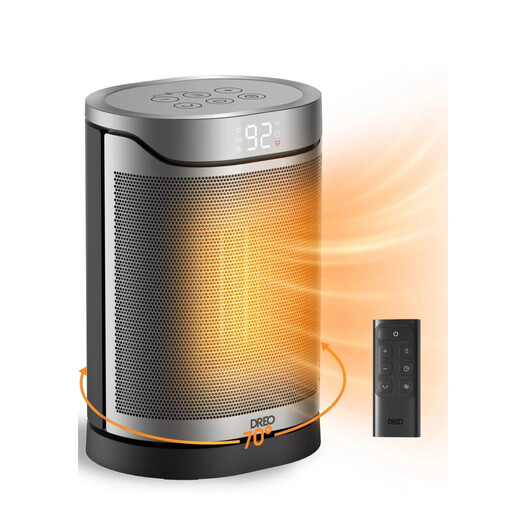
Why it suits this profile: This model combines 1500 watts with a compact size of 17.9 × 14.5 × 26 cm, making it practical for a bedroom, office or study.
The three power settings of 900, 1300 and 1500 watts give you more control than a heater with just one fixed setting.
70° oscillation, remote control, a timer of up to 12 hours and a stated noise level of 25–42 dB.
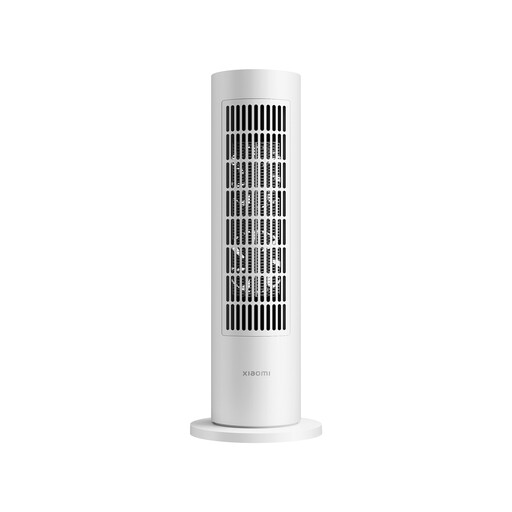
Why it suits this profile: If app and voice-assistant control are important to you, this model offers additional adjustment options through the Mi Home platform.
The thermostat, timer and app control give you more control than manual switching on and off alone. The Mi Home app is required for full functionality.
2000 watts, 70° oscillation, smart thermostat, timer and tip-over and overheat protection according to the product information.
We have put together a complete, up-to-date list of products that fully meet these strict selection criteria and the applicable European safety regulations.
A heater with a PTC element is not automatically more economical than every other electric heating appliance. Electricity consumption is determined primarily by the power rating and how long the heater is used. A thermostat, multiple settings and an ECO mode can help reduce the amount of time spent heating at maximum power. Savings quoted by brands based on their own research or product information, such as “up to 40%”, are not guaranteed in your situation.
This depends on the specific model’s instructions and safety features. For use in a bedroom, preferably choose a heater with a timer, thermostat, tip-over protection and overheat protection. Keep the appliance away from bedding and curtains, do not cover it, and make sure that the air inlet and outlet are not obstructed. A timer is not a substitute for safe use or supervision.
Its service life depends on build quality, ventilation dust, frequency of use and maintenance. Allow the heater to cool down, unplug it and remove dust from the outside using a dry cloth. Do not open or repair the appliance yourself. Check the warranty terms before buying; within the EU, many consumer products are covered by at least the statutory protection for conformity, in addition to any extended manufacturer’s warranty.
