
Vandaag of morgen in huis

Kwaliteit gegarandeerd

Welkomstaanbiedingen ontgrendelen: GRATIS bezorging | Tot 80% korting | Gratis 30 dagen JoyPlus-proefperiode
Download de app
A ceramic heater is a flexible way to provide additional heating in a bedroom, living room, office or study. You only switch the appliance on where and when you need extra warmth. Even so, the range can be more complicated than it first appears. A high wattage, “quiet operation” or “energy-saving mode” does not tell the whole story.
Pay particular attention to these three common pitfalls:
Power is measured in watts. An electric heater rated at 1500 to 2000W is suitable for quick supplementary heating, but maximum power is not automatically needed for every room.
Also look for several heat settings. Using a lower setting allows you to run the heater for longer without constantly operating it at maximum power. A heater with a thermostat can also switch the heating on and off around the set temperature. This may be more convenient than continually adjusting it manually.
Most ceramic fan heaters use a PTC heater. PTC stands for Positive Temperature Coefficient: the heating element changes its electrical resistance as it becomes hotter. In practice, the most important point is that the appliance uses a fan to blow warm air around the room.
Look out for:
A heater with oscillation will not necessarily heat a room faster, but it can help prevent the heat from being directed at just one spot.
A suitable portable heater should stand securely and have enough clear space around the air inlet and outlet. At a minimum, check for:
Keep textiles, curtains, bedding and furniture at least 1 metre away from the air outlet, unless the manual specifies a greater distance. Never cover an electric heater and do not use a standard indoor model in a bathroom or other damp area.
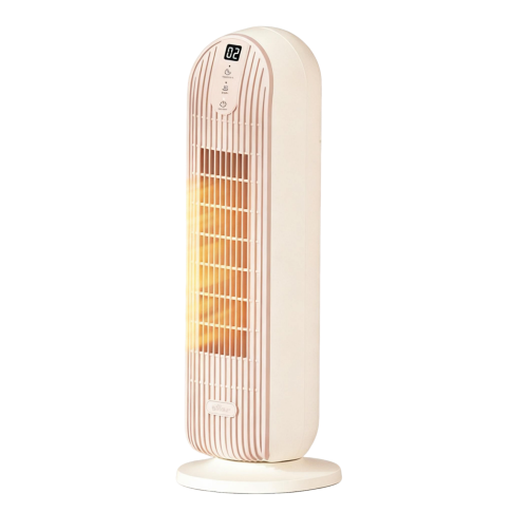
Why it suits this profile: A portable electric heater with two power settings for anyone looking for a straightforward solution for the bedroom, living room or office.
The product description lists 1200W and 2000W, so you are not limited to using the highest setting. The 90° oscillation helps direct the airflow across a wider area.
PTC technology, a timer of up to 12 hours, an HD display, a concealed handle and, according to the product description, quiet operation.

Why it suits this profile: For anyone looking for a compact heater with low and high settings, temperature control and an emphasis on quiet operation in a bedroom.
The stated 600W and 1500W settings allow you to avoid using maximum power continuously. The product information states 24 dB(A); do check that this matches your expectations.
1500W power, a built-in handle, a thermostat range of 20–30°C according to the product information, plus tip-over and overheating protection.

Why it suits this profile: Suitable for users who want to combine a 2000W heater with precise temperature control, oscillation and a remote control.
The product description lists a thermostat range of 5–35°C, 70° oscillation and a timer of up to 12 hours. This gives you more specific settings than simply an on/off switch.
Stated noise level of 25–42 dB, 2000W power, remote control and tip-over and overheating protection.
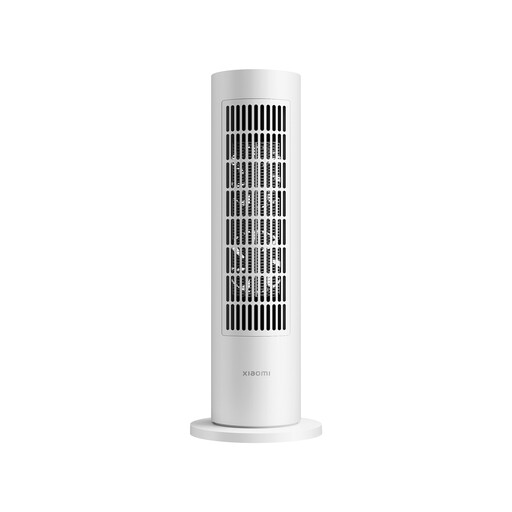
Why it suits this profile: For anyone who wants to control electric room heating via an app, voice assistant and smart temperature control.
The controls and timer are not limited to a button on the appliance: according to the product description, the Mi Home app is required for full functionality. This is important to know in advance.
2000W PTC heating, 70° oscillation according to the product data, app control and tip-over and overheating protection.
We have put together a complete, up-to-date list of products that fully meet these strict selection criteria and the applicable European safety regulations.
An ECO mode can automate operation, but it does not mean that every model always uses less electricity. According to information provided by some brands, the power is adjusted to the measured room temperature. Therefore, check the settings and actual energy use.
That depends on the power rating, selected setting and duration of use. A 2000W model uses up to around 2 kWh per hour at full power. A thermostat, low setting and timer can help limit how long it runs. Calculate the cost by multiplying consumption in kWh by your current electricity tariff.
Check the stated heating range, but take insulation, draughts and ceiling height into account. For a small bedroom or workspace, 1200–1500W may be sufficient for supplementary heating. For a larger or colder room, 1800–2000W is more suitable. Ideally, heat the room you are actually using rather than trying to heat an entire home with one portable heater.
Only if the manual allows it and the appliance is stable and positioned away from textiles. Ideally, choose a quiet heater with a timer, tip-over protection and overheating protection. Do not operate the heater while it is covered and keep it away from bedding and curtains.
