
Vandaag of morgen in huis

Kwaliteit gegarandeerd

Welkomstaanbiedingen ontgrendelen: GRATIS bezorging | Tot 80% korting | Gratis 30 dagen JoyPlus-proefperiode
Download de app
A bottle of cordial syrup might seem simple to choose. Yet syrups vary greatly in flavour, composition, dilution and use. A large bottle doesn’t automatically give you the most glasses. Terms like “fruity”, “natural” or “zero” only really tell you something when you look at the ingredients list and nutritional information.
For households and families, these pitfalls are particularly important:
The mixing ratio determines how many glasses you get from one bottle. Karvan Cevitam, for example, states a ratio of 1 part syrup to 9 parts water. According to the product information, a 600 ml bottle therefore yields up to around 6 litres of cordial, which is roughly 30 glasses of 200 ml.
Slimpie Raspberry, according to the product description, uses a ratio of 1 to 11. The 650 ml bottle would therefore produce nearly 8 litres of cordial, or about 39 glasses. So don’t just compare the price per bottle, but also the price per litre of prepared drink.
The same rule applies to syrup for sparkling water. Sparkling water can bring out the flavour differently to still water. Start with a little less syrup and add more to taste.
Regular fruit syrup often contains sugar and fruit juice. Karvan Cevitam Raspberry Original, according to the product data, contains 55 grams of sugar and 231 kcal per 100 grams of product. Raak Strawberry contains 6.8 grams of sugar and 28 kcal according to the stated nutritional information, while the brand indicates that the syrup contains less sugar than regular fruit syrups.
With a low-calorie syrup or sugar-free cordial syrup, you’ll often find sweeteners such as sucralose, acesulfame-K or steviol glycosides on the label. Slimpie Raspberry is described in the product information as having 0% sugar and 0% calories. Raak Bosraak states 0 grams of sugar and 1 kcal per 100 grams. Always check the current packaging, as recipes can change.
A raspberry syrup can have a distinct raspberry flavour without raspberry being the main ingredient. In Slimpie Raspberry, the fruit juice mentioned in the product information consists of 2.5% raspberry and 2.5% apple. Karvan Cevitam Raspberry states 75% fruit juice from concentrate, including apple, raspberry and elderberry.
If you want to make cordial for everyday use, flavour and yield are usually more important than a fancy bottle. For desserts, cocktails or mocktails, a more concentrated fruit syrup can actually be more convenient. In that case, check whether the manufacturer describes the product for these uses as well.
Also look out for:
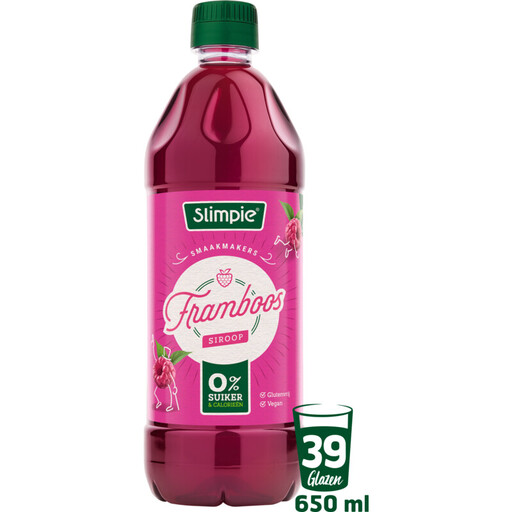
Why this fits the profile: A practical choice for families who want to make lots of glasses and are watching their sugar and calorie intake. According to the product information, the syrup is vegan and gluten-free.
The product description mentions both the mixing ratio of 1 to 11 and a yield of nearly 8 litres. This means you can better estimate the cost per glass in advance.
0 grams of sugar and 0 grams of carbohydrates according to the stated nutritional information; fruity raspberry flavour and suitable for sparkling water.
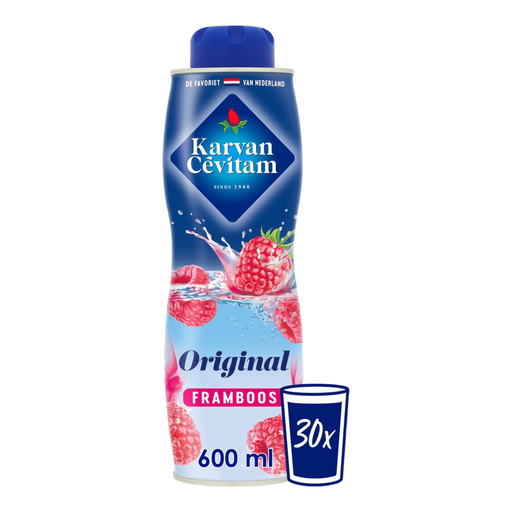
Why this fits the profile: Ideal for anyone looking for a regular fruit syrup with a pronounced fruit profile who also wants to use the cordial with sparkling water or in a mocktail.
The product data states a ratio of 1 to 9, a yield of around 6 litres and a fruit juice content of 75%. This gives you more information than just a flavour name on the front.
According to the product information, the syrup contains vitamin C, no colourings or artificial flavours, and one bottle is enough for around 30 glasses.
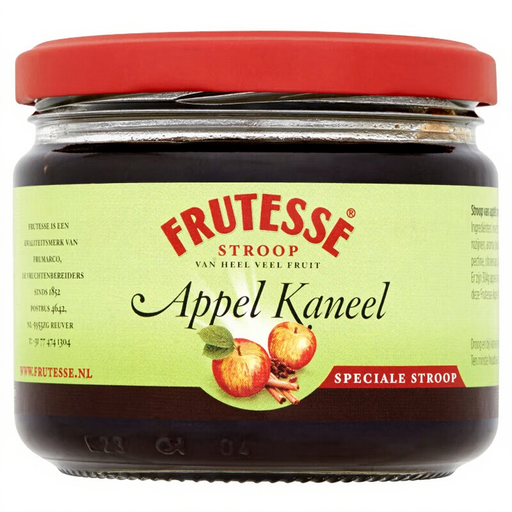
Why this fits the profile: This apple syrup with cinnamon and raisins is, according to the product description, mainly suitable for desserts, spreads, baking and recipes where a thicker fruit syrup is desired.
The intended use is clearly different from that of classic squash. By not judging the product solely as a drink base, you avoid buying a syrup that’s too thick for everyday use.
Contains apple fruit syrup, raisins, pectin and cinnamon according to the product information; suitable for sweet dishes and warm flavour combinations.
For a classic strawberry syrup, you could look at Raak Strawberry, JENI Strawberry or Teisseire Strawberry Raspberry. Teisseire is described in the product information as a syrup without sugar, containing strawberry, raspberry and berry juice from concentrate.
Fans of a dark fruit flavour can choose blackcurrant syrup, such as Karvan Cevitam Blackcurrant. For a versatile fruit flavour, Karvan Cevitam Multifruit is an option; according to the product description, this variant contains 0% sugar and 0 calories and one bottle yields up to 6 litres of drink. Grenadine syrup, such as the Karvan Cevitam variant, combines apple, elderberry and rosehip according to the label. With JENI Blueberry and JENI Peach, check whether you want to use the syrup as a drink base or as a flavour enhancer for cocktails and desserts.
We’ve put together a full, up-to-date list of products that fully meet these strict selection criteria and comply with current European safety regulations.
Follow the mixing ratio on the label. A ratio of 1 to 9 means one part syrup and nine parts water. Stir the drink and taste it before adding extra syrup. For sparkling water, it’s wise to mix gently to prevent excessive frothing.
This varies by product. Many syrups need to be stored in the fridge after opening and used within the period stated on the packaging. Close the lid tightly and don’t use the syrup if the packaging is damaged or the product smells or tastes unusual.
Not automatically, but many sugar-free varieties are low in calories. Check the nutritional information per 100 ml of syrup or prepared drink. Also pay attention to the mixing ratio: that determines how much syrup ends up in one glass.
