Who is a ceramic heater suitable for?

Occasional conservatory user

You want to warm up an enclosed conservatory during a short visit, without committing to a permanent heating system. Eurom and Inventum product information describes ceramic heaters as suitable for adjustable or occasional supplementary heating.

Someone who usually sits in one place

You want to feel comfortable in a regular seating spot, even if the surrounding surfaces stay cold. Milieu Centraal describes infrared panels as supplementary heating for a specific area and shorter periods of use.

Regular conservatory user

You want to keep the whole room warm often, so you also need to consider heat loss and electricity use. Milieu Centraal and CE Delft describe electric heating mainly as supplementary heating for rooms that lose a lot of heat or are used infrequently.

What should you look for in a conservatory heater?

Ceramic fan heater

Suitable if: you use your enclosed conservatory occasionally and want to circulate warm air quickly.

Consider: a fan heater warms the air, but it won’t solve cold walls, heat loss or damp problems.

Infrared panel by your seating area

Suitable if: you usually sit in one place and want to feel warm there for short periods.

Consider: the comfort is localised; you won’t automatically feel the benefit outside the area covered by the heat.

Reduce heat loss and explore other options

Suitable if: you want to heat the conservatory as a whole, frequently or for long periods.

Consider: insulation and any heat pump solution need to be assessed for your specific conservatory. If there’s damp, ventilation remains important.

What to consider What should you check? Who is this most relevant to?
Quick supplementary heating Check the heat settings, thermostat and whether the exact model oscillates. Don’t assume that a stated room size guarantees comfort in a conservatory with lots of glass. If I only use the conservatory for a short time, I want warm air quickly without installing a permanent system. Around 31% of consumers prioritise quick supplementary heating above all else.
Cold walls and damp Decide whether you want to heat one seating area or the whole room. If there’s condensation, check the ventilation and investigate any recurring damp. If I mainly sit in one place, I want to feel comfortable there despite the cold walls; if there’s condensation, I also want to tackle the cause. Around 25% of consumers prioritise comfort around cold surfaces or damp.
Running costs Take the length of use and the chosen power setting into account. For prolonged use, it’s sensible to assess heat loss and a suitable heating solution first. If I heat the conservatory often, I want to consider the cost of prolonged electricity use in advance. Around 25% of consumers make running costs their main consideration.
Safe positioning Check the CE marking and instructions, keep the heater dry and clear of obstructions, and, if possible, plug an electric heater directly into a socket. If I put a portable heater in the conservatory, I want to make sure the location, surroundings and connection follow the instructions. Around 19% of consumers put safe positioning first.

Common buying mistakes

  • Assuming the stated room size guarantees it will work in a conservatory

    A room size stated in the product information doesn’t automatically mean a model will keep a conservatory with cold walls comfortable. Insulation and heat loss also play a part.

    Compare how you plan to use it with the dimensions and conditions in your conservatory. If the walls stay cold, start by investigating heat loss.

    If the heat doesn’t feel sufficient, running the heater for longer may still not give you the comfort you want.

  • Taking ‘ceramic’ or an energy-saving claim as proof that it’s cheap to heat a room for long periods

    Direct electric heating calls for a different assessment when heating a room for long periods than when providing supplementary heat for a short time. A product claim may also be based on a comparison with the highest setting on the same model.

    Factor in the power setting, how long you’ll use it for and your own electricity tariff. If you plan to use it regularly, it’s sensible to look into insulation and a suitable heating solution too.

  • Using a standard portable heater in a damp area or with an extension lead

    An unsuitable environment or connection can pose safety risks; safety features don’t replace the instructions for use.

    Check where the heater can be used, keep it dry and, if possible, plug a high-power appliance directly into a suitable socket. Brandweer Nederland recommends this for electric heaters too.

Brands to compare

Eurom

The Safe-t-Heater 2000 is a ceramic fan heater for adjustable, occasional supplementary heating.

  • Eurom lists 1000–2000 W, a thermostat, oscillation, and tip-over and overheat protection for this model.
  • These features don’t show that the heater warms cold conservatory walls or is suitable for exposure to moisture.

Inventum

The KC221W and KC222WOS are ceramic heaters for supplementary heating; the KC222WOS also oscillates.

  • Inventum lists a maximum of 2000 W and safety features for both models. The KC222WOS has 60° oscillation.
  • Inventum limits the intended use to well-insulated areas or occasional use. According to the product information, these models don’t have a timer.

Rowenta

The Mini Excel Eco Safe SO9266 is a compact ceramic heater with two heat settings.

  • Rowenta lists 1000 and 2000 W settings, an electronic thermostat and overheat protection for this model.
  • Rowenta’s energy-saving claim compares the model with full power and the highest thermostat setting in a general use scenario. This doesn’t prove an advantage when meeting the same heating demand in a conservatory.

Duux

The Threesixty² is a ceramic fan heater that can be controlled using buttons or an app.

  • Duux lists a maximum of 1800 W and tip-over and overheat protection for this model.
  • The range of up to 30 m² stated by Duux isn’t a confirmed performance figure for a cold, glass conservatory. App control doesn’t replace the safety instructions.

Philips

The CX2120/01 is listed as a 1500 W ceramic model in Kieskeurig’s Dutch product overview.

  • The listing confirms the model identity and stated power.
  • This isn’t an independent test of suitability for conservatories. Philips describes the separate CX2120/01R1 as refurbished; don’t assume that version is the same product for sale without checking further.

Ceramic heaters at Joybuy

These product picks focus on ceramic fan heaters for adjustable supplementary heating indoors. They don’t prove that a model is suitable for a damp conservatory or prolonged heating.
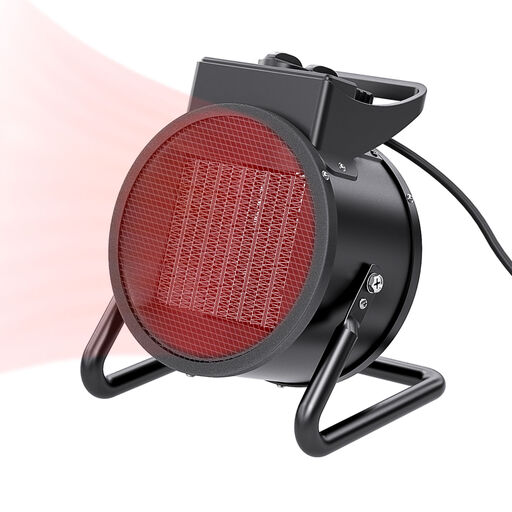
LZQ ceramic fan heater, 2 kW

LZQ ceramic fan heater, 2 kW

Could suit you if you’re looking for an adjustable ceramic heater for indoor use; the title lists the home and office as possible settings.

The title lists a ceramic PTC element, 2 kW, a thermostat and three heat settings.

View at Joybuy
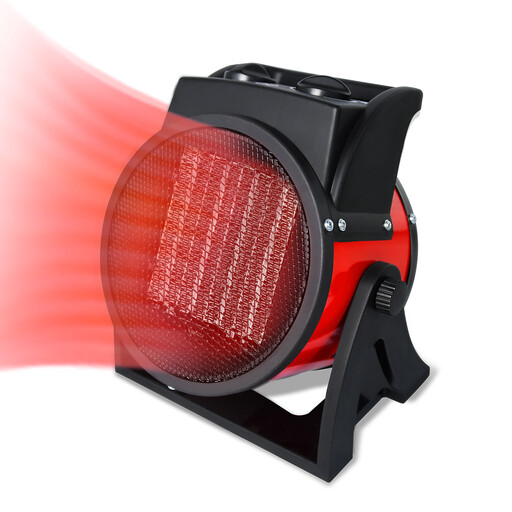
LZQ ceramic fan heater for workshops, 2 kW

LZQ ceramic fan heater for workshops, 2 kW

Could suit you if you’re looking for an adjustable ceramic heater for indoor use; the title lists the home, workshop and garage among its intended settings.

The title lists a ceramic PTC element, 2 kW, a thermostat and three heat settings.

View at Joybuy

Philips 2000 Series Compact Ceramic Heater CX2120/01

Philips 2000 Series Compact Ceramic Heater CX2120/01

Could suit you if you’re looking for compact ceramic supplementary heating indoors; position the heater according to this model’s instructions.

The product name lists 1500 W and three settings. The product information also mentions a 600 W setting, warns against use in wet rooms and requires at least 1 metre of clearance from flammable materials.

View at Joybuy

OmniHeat ceramic fan heater, 1800 W

OmniHeat ceramic fan heater, 1800 W

Could suit you if you want to adjust the heat setting and spread of a ceramic supplementary heater.

The product information lists a thermostat with a range of 5–35 °C, oscillation, four settings, a 24-hour timer, and tip-over and overheat protection.

View at Joybuy

Totopia PTC-907B ceramic heater, 1500 W

Totopia PTC-907B ceramic heater, 1500 W

Could suit you if you need adjustable ceramic supplementary heating and heat circulation indoors.

The product information lists four settings, including 750 W and 1500 W, a ceramic heating element and wide oscillation. The manufacturer warns against use near water or damp and states that it is for indoor household use only.

View at Joybuy

Frequently asked questions

Can a ceramic heater stop condensation on cold conservatory walls?

Not necessarily: heating doesn’t replace ventilation. If damp or mould keeps coming back, investigate the cause, such as poor ventilation or a structural problem; Milieu Centraal highlights these possible causes.

Where should I position a portable heater safely?

Follow the instructions for the exact model and keep the heater dry, unobstructed and away from flammable materials. The Inventum manual states that the KC221W is for indoor use and must not be covered; Brandweer Nederland recommends plugging electric heaters directly into a socket wherever possible.

Is CE marking mandatory for an electric heater in the Netherlands?

CE marking is mandatory for an electric heater placed on the market in the Netherlands as an electrical product, according to the Netherlands Food and Consumer Product Safety Authority. A CE mark doesn’t prove that a model has been independently tested for suitability for your conservatory.

How do I maintain a ceramic heater?

Follow the cleaning instructions for the exact model and keep the air vents clear. Don’t assume that every model has the same filter or cleaning method.

How does the statutory guarantee work when buying in the Netherlands?

You’re entitled to a product that meets reasonable expectations; this is separate from any additional manufacturer’s warranty. According to the Dutch government, there is no fixed statutory guarantee period in the Netherlands: what you can expect from a product depends on various factors, including the product itself.
