
Greenhouse user who needs a short burst of extra heat
If you mainly sit in one spot, you can focus on heating that area without first warming the entire greenhouse.


If you use your greenhouse for short periods and sit in one fixed spot, targeted radiant heat may suit you better than a heater that warms all the air in the space. To warm the air throughout the greenhouse, you could compare a convector heater with a fan heater. However, heating for longer periods can use a lot of electricity if the walls are cold and lose heat. A heater won’t resolve condensation, mould or other damp problems on its own.
If you mainly sit in one spot, you can focus on heating that area without first warming the entire greenhouse.
If you want warmer air beyond your seating area, it’s worth taking heat loss, available space and how long you’ll use the heater into account.
If mould keeps returning, leaks or inadequate ventilation could also be contributing factors, according to Milieu Centraal. Simply turning up the heat may not address the cause.
Best suited to: short periods in the greenhouse when you mainly want to heat one fixed seating area, with a suitable place to mount the panel and direct its radiant heat.
Bear in mind: it won’t necessarily warm areas beyond its range or heat all the air in the greenhouse.
Best suited to: warming the air in an enclosed greenhouse, if you have space for a freestanding or wall-mounted model.
Bear in mind: if a lot of heat escapes, you may need to run it for longer. A stated room capacity doesn’t guarantee a particular result in your greenhouse.
Best suited to: temporary air heating, if you have a safe, clear spot for the heater.
Bear in mind: the fan moves air and can be noisy. Tip-over protection doesn’t replace careful positioning.
Best suited to: anyone considering a portable radiator without a built-in fan.
Bear in mind: the manufacturer says the oil continues to give off heat after the radiator is switched off. This doesn’t prove that it uses less electricity.
First decide whether you want to heat one seating area or the air throughout the greenhouse. Then consider how long you’ll use the heater, its electricity demand, where it can be placed and whether you have any damp problems.
| What to consider | What should you look for? | Who is this most important for? |
|---|---|---|
| Heat for one seating area | Check the mounting position, direction of the radiant heat, controls and whether the seating area is within range. | If I only sit in one fixed spot for a short time, I want direct heat there without warming the whole greenhouse. Around 36% of consumers say localised warmth for a seating area is their top priority. |
| Warmer air in the greenhouse | Compare placement, thermostat, maximum power and stated room capacity. The latter doesn’t guarantee a particular result in your greenhouse. | If I move around the greenhouse, I don’t want to heat just my seating area. Around 29% of consumers say warmth throughout the room is their top priority. |
| Electricity consumption | Work out consumption for each scenario: power in kW × actual hours switched on gives you kWh. Then apply your own tariff. | If I use a heater regularly, I want to estimate its electricity consumption in advance. Around 21% of consumers say running costs are their top priority. |
| Damp and safe placement | Investigate recurring condensation or mould, follow the placement instructions and, where possible, plug a high-power appliance directly into a socket. | If I notice damp patches or need to place a heater close to walls, I want to assess both the cause and a safe position for the appliance. Around 14% of consumers say damp and safe placement are their top priorities. |
The conditions behind a manufacturer’s rating may differ from those in a greenhouse with cold walls and heat loss.
Consider insulation, glazing, draughts and how long you want to use the heater before choosing its power output.
Targeted heat in one spot is different from heating a greenhouse that loses heat over a long period. Milieu Centraal says infrared panels are less suitable as a main heating source, except in very well-insulated homes.
Choose targeted heat only if it suits your seating area and how long you’ll use it. If you plan to use it for extended periods, factor in heat loss too.
Heating alone won’t fix a possible leak or inadequate ventilation. Milieu Centraal identifies these as potential underlying causes of mould.
Look into sources of damp and ventilation as well as choosing a heater.
Eurom offers a ceiling-mounted infrared panel and a convector heater, for those considering targeted warmth or warmer air throughout the space, respectively.
The Threesixty 2 is a compact ceramic fan heater for temporary air heating.
The Dragon 4 TRD40820 is a portable, oil-filled radiator.
The CUS1800MECW is a compact ceramic fan heater.
The range includes wall-mounted convector heaters, including the CWM P and CND Duo Convector, for those considering a fixed installation.
These products are related to electric heating for a greenhouse. Before use, check that the instructions and installation requirements are suitable for your space.
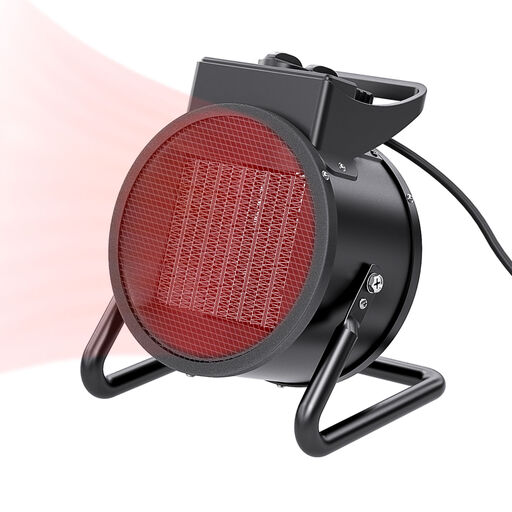 No image available
The product name lists the home and office as suitable places for using it. Check whether the instructions allow you to use it in your greenhouse.
The product name lists a thermostat, three heat settings and a PTC heating element.
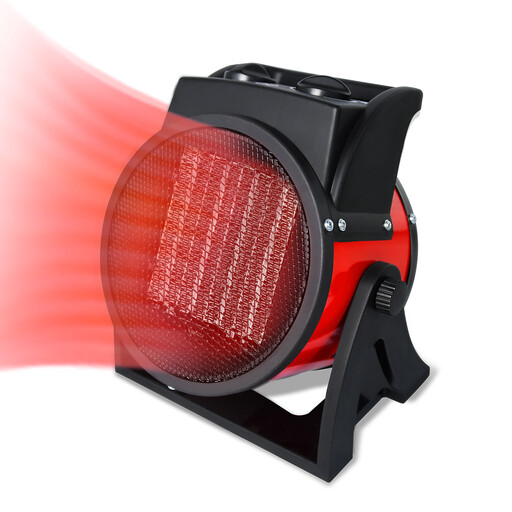 No image available
The product name lists building sites, homes and workshops as places for its use. Check whether the instructions allow you to use it in your greenhouse and at your chosen location.
The product name lists a thermostat, three heat settings and a PTC heating element.
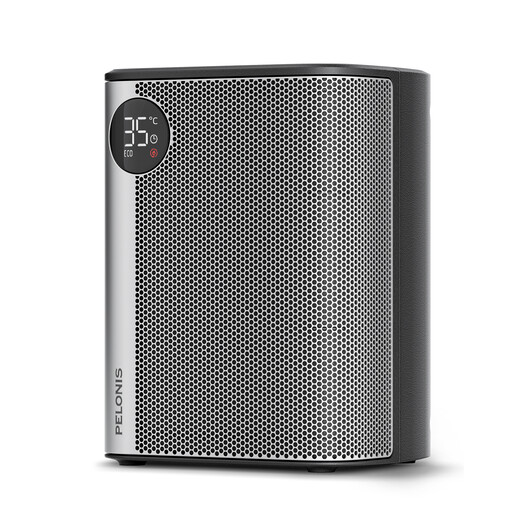 No image available
The product name describes a portable ceramic heater. Check whether the instructions allow you to use it in your greenhouse and at your chosen location.
The product name lists an ECO mode, 24-hour timer, thermostat and overheat and tip-over protection.
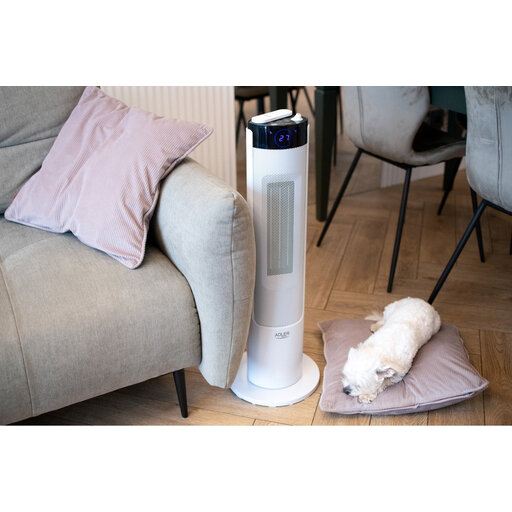 No image available
The product name describes a tower-style electric convector heater. Check that you have a suitable place for it in your greenhouse.
The product name describes a white ceramic convector heater.
Not necessarily. Milieu Centraal lists leaks and inadequate ventilation as possible causes of recurring mould. Investigate these separately and make sure you continue to ventilate appropriately.
Divide the power in watts by 1000 and multiply it by the number of hours the heater actually runs at that setting; the result is kWh. Multiply this by your own tariff per kWh. A thermostat and heat loss affect how long the heater actually runs.
The Fire Service recommends plugging high-power appliances such as electric heaters directly into a socket rather than into an extension lead or cable reel. Also follow the instructions for the model you choose.
CE marking is compulsory for electrical products within the applicable voltage range of 50 to 1000 V, according to the Netherlands Food and Consumer Product Safety Authority. A CE mark on its own doesn’t prove that the product being offered has undergone independent testing. The revised EU ecodesign requirements for electric local space heaters have applied since 1 July 2025, according to the European Commission.
No. Purchases made by consumers in the Netherlands are also covered by statutory warranty rights. If a product proves faulty under normal use sooner than could reasonably be expected, the seller is responsible for providing an appropriate free solution, according to ACM ConsuWijzer.