
If you mainly sit in one spot
Do you only use your conservatory occasionally and mainly want to warm your seating or work area? Milieu Centraal describes infrared panels as an option for short periods of supplementary heating in a specific spot.


If you only use your conservatory occasionally and mainly want to warm one seating area, consider an infrared panel. To heat the whole room temporarily, compare a convector with an oil-filled radiator. Infrared heat is targeted, and a heater’s stated coverage is no guarantee of performance in a conservatory with significant heat loss. Before buying, also check the permitted positioning, connection requirements and product specifications for the exact appliance.
Do you only use your conservatory occasionally and mainly want to warm your seating or work area? Milieu Centraal describes infrared panels as an option for short periods of supplementary heating in a specific spot.
If you want to stay warm beyond one regular seating area, weigh the benefits of heating the room air against the heat loss from your conservatory. A heater’s stated coverage is not a performance measurement specific to conservatories.
Permitted mounting positions and exposure to moisture vary by appliance, and different components may have different requirements. Follow the instructions for the specific model and keep the required clearance around the heater.
First decide whether you want to warm a seating area briefly or heat the air throughout the conservatory. Then consider where you can position the heater and how long you’ll use it.
| What to consider | What should you check? | Who should consider this most? |
|---|---|---|
| Targeted heat | Check that you can point the panel towards your seating area and mount it as instructed. | If I only use the conservatory for short periods, I mainly want warmth where I sit. Around 31% of consumers say targeted heat is their main priority. |
| Heating the whole room | Compare the size and insulation of your conservatory with the power and stated coverage of the exact model. Don’t treat that coverage as a guarantee. | If I move around the conservatory, I need warmth beyond one regular seating area. Around 25% of consumers want to heat the whole conservatory. |
| Safe positioning | Check the instructions on moisture, mounting and clearance, including those for the controls. Ideally, plug a high-power appliance directly into a suitable socket. | If the area is damp or the socket is awkwardly positioned, I want to know where and how the appliance can be installed safely. Around 25% of consumers put safe positioning first. |
| Electricity use | Check the power consumption and expected hours of use. A thermostat can affect how long the heater runs, but it doesn’t guarantee a set saving. | If I’ll be heating the space for longer or more often, I want to weigh up the electricity use. Around 19% of consumers consider running costs the deciding factor. |
An infrared panel mainly warms the area it is pointed towards. That doesn’t automatically make it suitable for heating a poorly insulated conservatory as a whole over a long period.
First decide which spot or surface you want to warm, and how long you plan to use the heater. If you’ll be using it for extended periods, take the insulation into account too.
A coverage area stated by the manufacturer for a specific model doesn’t measure heat loss in your conservatory.
Use the stated coverage as a starting point only, and assess the glazing, insulation and intended usage separately.
Eurom lists different IP ratings for the panel and smart control box of the Mon Soleil 600 Ceiling Wifi.
Check which positioning and moisture exposure are permitted for every component of the exact model.
Eurom offers infrared panels for targeted heat, as well as convectors for heating the room air.
The Radia S TRRS0715 is a portable oil-filled radiator for anyone looking for a heater without a fan.
The Invisible Smart WiFi Panel Heater 1500W Gen. 4 is an example of fixed panel heating with controls.
These products are electric ceramic heaters with adjustable settings for heating indoor spaces. Check whether the exact appliance is permitted in your conservatory and complies with the relevant product safety and ecodesign requirements. According to the European Commission, the applicable ecodesign requirements cover electric local space heaters within the scope of Regulation (EU) 2024/1103 that are placed on the EU market from 1 July 2025.
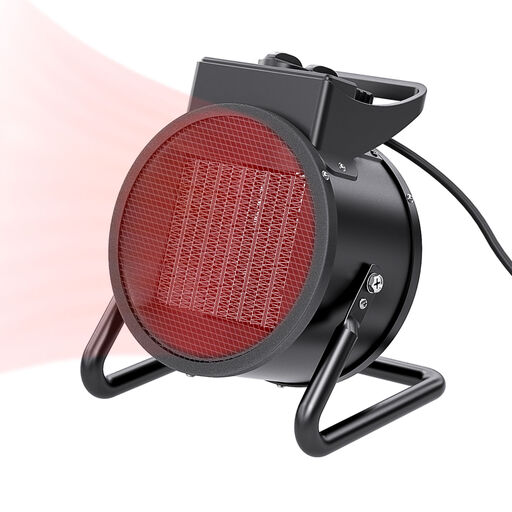 No image available
May suit anyone looking to heat an indoor space temporarily; check that the instructions allow it to be used in your chosen conservatory location.
The product title lists a PTC heating element, a thermostat and three settings.
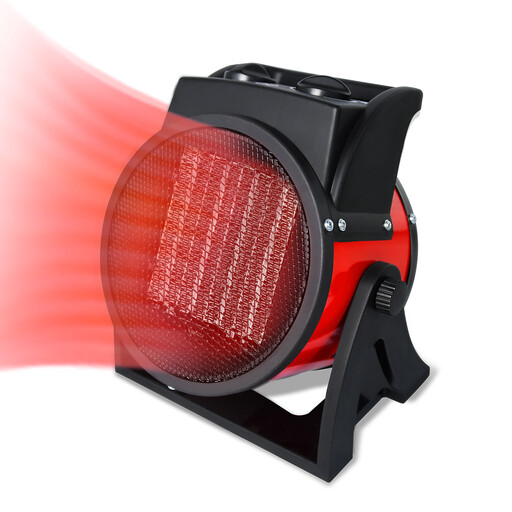 No image available
An option to compare if you’re looking for a ceramic heater with adjustable heat; check that it’s permitted in your space.
The product title lists a PTC heating element, a thermostat and three heat settings.
 No image available
May suit you if you’re looking for a portable heater with adjustable heat. The description says to use it indoors on a dry, stable surface and away from water.
The product information lists a thermostat, a 24-hour timer, five heat settings and overheat and tip-over protection.
An infrared panel is mainly suitable for supplementary heating in an area you use. Milieu Centraal says that continuous infrared heating of an entire room is suitable only when the home is very well insulated. Assess the insulation and intended usage of your conservatory separately.
Follow the mounting and clearance instructions for the exact model, keep the space around the appliance clear and don’t cover it. The Netherlands Fire Service recommends plugging high-power appliances such as electric heaters directly into a suitable socket, rather than into a cable reel or extension block.
Multiply the power in kilowatts by the number of hours the appliance is switched on to estimate its consumption in kilowatt hours. A 2000 W heater running continuously at full power for one hour uses 2 kWh on this basis; thermostat controls can change how long it actually runs.
According to the European Commission, EU energy labelling rules exclude electric local space heaters. This is separate from the applicable ecodesign and product safety requirements, so check these for the specific model.
Yes. ACM ConsuWijzer explains that Dutch law does not set a fixed statutory warranty period of two years: what you can expect from a product depends on the product and how it is used. For your statutory rights, contact the retailer.