
Vandaag of morgen in huis

Kwaliteit gegarandeerd

Welkomstaanbiedingen ontgrendelen: GRATIS bezorging | Tot 80% korting | Gratis 30 dagen JoyPlus-proefperiode
Download de app
A ceramic fan heater can quickly warm a bedroom, home office or study without requiring a permanent installation. However, it’s not wise to choose one based only on its wattage, a glossy product photo or claims such as “energy-efficient”. The right choice depends on the room, the noise level you’re comfortable with, the controls and the built-in safety features.
A higher wattage doesn’t automatically mean a heater is suitable for every room. A 2,000-watt model draws more power from the socket than a compact 600- or 1,500-watt heater. That may be more than you need for a desk or small bedroom, while a larger living room may need better heat distribution.
So pay attention to:
A PTC or ceramic heater converts electricity into heat, but its energy use still depends on its wattage and how long you run it. A 1,500-watt model running at full power for one hour uses 1.5 kWh in theory. Calculate the actual cost using:
energy use in kWh × your electricity tariff per kWh
An ECO mode, timer and thermostat can help limit energy use. For example, DREO claims in its product description that smart power and temperature control can save up to 40% energy. Treat this as a manufacturer’s claim: actual energy use depends on the room, insulation, temperature setting and conditions of use.
A heater with tip-over protection and overheat protection offers an extra layer of safety, but it doesn’t replace careful use. Place the heater on a hard, level surface and keep it away from curtains, bedding, furniture and other flammable materials. Never cover a fan heater or use one in a damp room unless it’s specifically designed for that purpose.
Also check whether the manual includes a CE mark, the correct mains voltage and clear details of the manufacturer or responsible party. A safety feature is no reason to leave a working heater running unattended.
A PTC heater uses a ceramic heating element with a positive temperature coefficient. Product descriptions typically associate this with fast heat output and stable operation. A fan circulates the air, which is why these models are also sold as fan heaters.
Bear in mind that “ceramic” doesn’t automatically mean the appliance is quieter or more energy-efficient. Check the stated noise level, power settings and whether it has a thermostat.
A quiet electric heater is more important in a bedroom or office than for occasional use in a garage. A noise level in decibels is more useful than a general claim such as “quiet”. For example, the Philips CX2120/01 is listed at 24 dB(A), while DREO lists a range of 25–42 dB for certain models. These figures come from the product information; the noise you hear may vary depending on the fan setting and the room’s acoustics.
A heater with a timer is useful if you want it to switch off automatically after a set period. A remote control is handy when you’re in bed or sitting at your desk, while app or voice control is best suited to a connected smart home.
Also check:
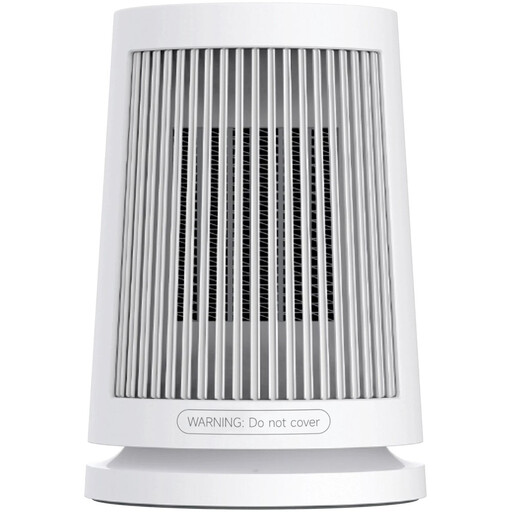
Why it suits this profile: Measuring 142 × 132 × 188 mm and weighing 930 grams, this compact model is suitable for a desk, small bedroom or personal workspace.
The product name states 600W, so its power rating is clear. The listing also mentions tip-over protection and dual overheat protection.
45° oscillation, a thermostat according to the product description, and automatic shut-off if the heater tips over.

Why it suits this profile: For anyone looking for a compact electric heater for an office or bedroom, with clear information on noise levels and safety.
The product information lists a noise level of 24 dB(A), two power settings of 600W and 1500W, and five safety features.
Adjustable from 20–30°C, with a carry handle, tip-over protection and overheat protection.
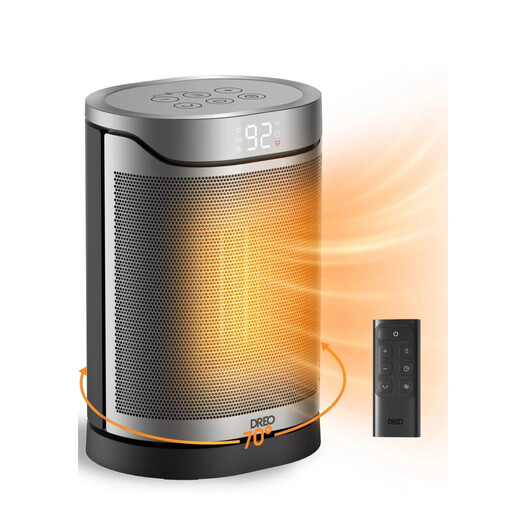
Why it suits this profile: Its combination of thermostat control, timer and low stated noise levels makes it a good fit for extended use in a bedroom, home office or living room.
The listing specifies three power levels, a thermostat range of 5–35°C, a timer, and overheat and tip-over protection.
According to the product information, the noise level ranges from 25 to 42 dB. It also has 70° oscillation and a remote control.
Use a ceramic electric heater plugged directly into a suitable earthed socket if the manual instructs you to do so. Avoid multi-socket adaptors and extension leads if the manufacturer advises against them. Keep it about one metre away from curtains, clothing and bedding if the manual specifies this. Switch off the appliance and unplug it before cleaning or moving it.
That depends on your electricity tariff, gas price, insulation and the room you’re heating. A portable heater can be useful for heating a specific area, but the wattage and number of hours it’s used determine the cost. So compare energy use in kWh rather than looking only at the purchase price.
This depends on the model and its manual. If you plan to use it overnight, choose a model with a timer, thermostat, tip-over protection and overheat protection. Never place the heater on a bed, under a blanket or close to curtains. Automatic safety features reduce risks, but supervision and an unobstructed air intake are still important.
Its lifespan depends on how long it’s used, dust build-up, fan wear and whether it’s stored correctly. Let the appliance cool down before moving it, keep the air vents clear and don’t use it if the cable or casing is damaged.
We’ve put together a complete, up-to-date list of products that meet these strict selection criteria and the applicable European safety regulations.
