
Vandaag of morgen in huis

Kwaliteit gegarandeerd

Welkomstaanbiedingen ontgrendelen: GRATIS bezorging | Tot 80% korting | Gratis 30 dagen JoyPlus-proefperiode
Download de app
An air purifier with a HEPA filter can help remove dust, pollen and other airborne particles from indoor air. However, not every model is right for every home. A compact unit in a large living room, for example, may run at high speed for long periods, while a powerful model in a bedroom could make more noise than necessary.
The product name doesn’t tell you everything, either. Pay particular attention to the combination of filter layers, CADR, noise level, sensors and replacement costs. Read on to find out what to look for and which models suit different homes and uses.
Manufacturers use different criteria when stating the room size a purifier can cover. One calculation may be based on one air change per hour, while another assumes several. As a result, a unit may be described as suitable for a large area, even though it works most effectively at higher speeds in a smaller room.
That’s why it’s worth checking the CADR, or Clean Air Delivery Rate. This figure tells you how many cubic metres of filtered air a unit delivers per hour. For a large living room, a higher CADR is generally a more useful guide than a claim based only on the number of square metres.
A HEPA filter is designed to capture fine particles, but a pre-filter and activated carbon filter serve different purposes. The pre-filter catches larger particles such as hair and dust. Activated carbon can help reduce odours and certain gaseous substances.
Check whether the filter needs replacing and how much a replacement costs. Some models use a combined filter that can’t be washed or reused. As a result, a cheaper unit may work out less economical in the long run.
Claims such as “99.97%” are based on specific test conditions. According to the brand’s own testing, this figure may apply to the filter media and a particular particle size; it doesn’t automatically reflect the purifier’s overall performance in your room.
A stated noise level of, for example, 20 or 25 dB usually applies to the lowest setting or sleep mode. At maximum speed, the noise level is often noticeably higher. For a bedroom, it’s therefore worth checking both the sleep-mode noise level and the maximum noise level.
Use the stated room size as a guide, not as your only deciding factor. A lower airflow rate is often enough for a bedroom or home office. A living room with an open-plan kitchen, pets or lots of soft furnishings is more likely to need a higher CADR.
As a guide, you can calculate the room’s volume: length × width × height. A unit rated at 450 m³/h moves more air than one rated at 150 m³/h, but the results also depend on doors, ventilation and where you place the unit.
For everyday use, a combination of pre-filter, HEPA filter and activated carbon filter is practical. Check:
An air purifier for allergies or pollen doesn’t replace ventilation and isn’t a medical device. If you have asthma or severe allergy symptoms, it’s a good idea to discuss using one with a doctor or another healthcare professional.
An air purifier with a PM2.5 sensor can show measured air quality on a display and adjust the fan speed in automatic mode. However, the sensor measures air quality where the unit is placed, so don’t position it behind a sofa, curtain or cupboard.
A smart air purifier with app or voice control is useful for setting schedules and controlling the unit remotely. Before buying, check that it works with your Wi-Fi network and preferred voice assistant. If you’re looking for a straightforward unit, you may not need these features.
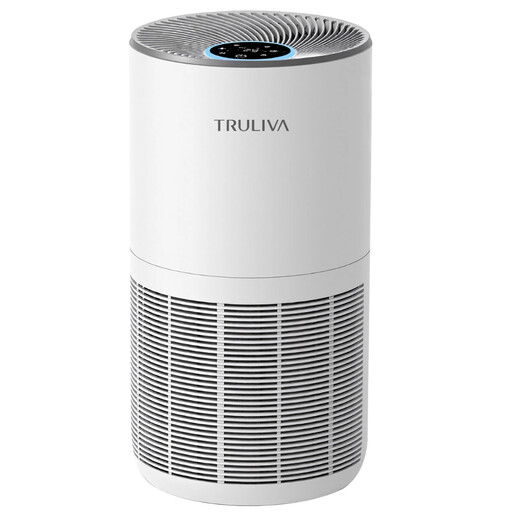
Why it suits this type of buyer: According to the product information, this model combines a pre-filter, H13 HEPA filter and activated carbon filter. With a CADR of 450 m³/h and a stated coverage area of 32–55 m², it’s a practical choice for a medium-sized living room or home office.
The CADR is listed alongside the coverage area, so you don’t have to rely on a square-metre claim alone. The timer, filter indicator and child lock also make everyday use easier to manage.
360° air intake, PM2.5 display, sleep mode and a 24-hour timer. The maximum noise level is ≤66 dB(A), according to the specifications.

Why it suits this type of buyer: According to the product information, this model is designed for large living spaces and has a CADR of more than 700 m³/h. App control, automatic mode and night mode are ideal if you want plenty of settings to manage.
The manufacturer lists both a high airflow rate and automatic sensor readings. Do check that the stated coverage suits the number of air changes you want.
HEPASilent filtration, OdorFence technology according to the manufacturer, app control and a design that can also be used as a side table.
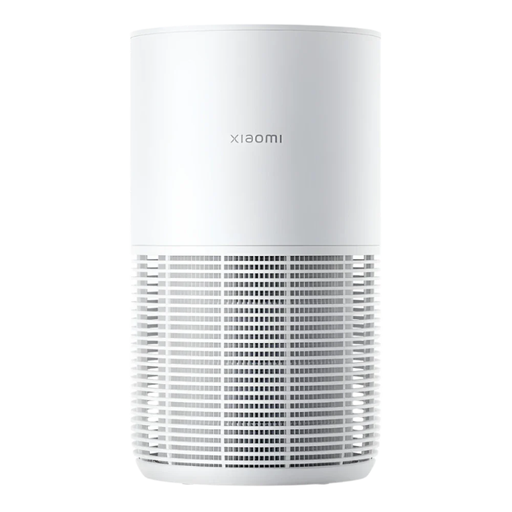
Why it suits this type of buyer: For a pet-friendly home, this model offers a pre-filter, HEPA filter and activated carbon layer, according to the product information. It has a CADR of 230 m³/h and covers 16–27 m².
The pre-filter and tool-free replacement filter make it a good fit for homes with pet hair and dust. A child lock helps prevent accidental operation.
Xiaomi Home app, voice control, PM2.5 display, automatic adjustment and a stated power consumption of 27 W.
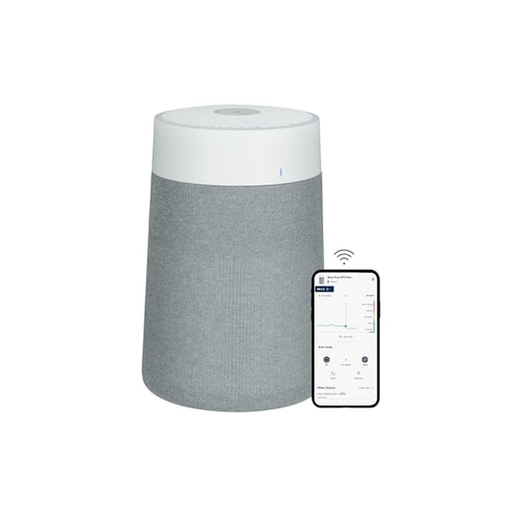
Why it suits this type of buyer: According to the product information, this compact model has a CADR of 212 m³/h, a noise level of 19 dB on its lowest setting and coverage of up to 43 m² under the stated conditions.
The manufacturer lists separate noise levels for low and high speeds. That makes it easier to get a realistic idea of how it will sound at night than relying on the word “quiet” alone.
HEPASilent technology according to Blueair, night mode, app control and a stated coverage area of 43 m².
We’ve put together a complete, up-to-date list of products that meet these strict selection criteria and the applicable European safety requirements.
Yes, as long as the model is suitable for the room and has a sleep mode. Check the noise level on both the lowest and highest settings. A dimmable display or lights that can be switched off can make a purifier more comfortable to use in a dark bedroom.
It varies by model. Product information gives replacement intervals ranging from around six to twelve months, although some manufacturers state a longer lifespan. Use the filter indicator as a guide, but check the filter regularly too and follow the manual.
As well as electricity, your main ongoing cost will be replacement filters. A 20–40 W unit uses less energy when running continuously than a 60 W model, but the actual cost depends on how long you use it and your local electricity rate. Before buying, compare the power consumption, filter lifespan and price of genuine replacement filters.
