
Vandaag of morgen in huis

Kwaliteit gegarandeerd

Welkomstaanbiedingen ontgrendelen: GRATIS bezorging | Tot 80% korting | Gratis 30 dagen JoyPlus-proefperiode
Download de app
An air purifier can help filter dust, pollen, smoke particles and odours from indoor air. But a smart app or attractive display doesn’t guarantee that a device is right for your home. The best choice depends above all on the room, the air delivery rate, the filtration system and the maintenance required.
There are three common pitfalls for households in the Netherlands:
The CADR, or Clean Air Delivery Rate, tells you how much filtered air an air purifier can deliver per hour. It’s usually measured in m³/h. A higher CADR is useful for larger rooms or when you want to clean the air more quickly.
Don’t rely on a claim such as “for 60 m²” alone. Check the air-change rate used to calculate that floor area too. An air purifier for a large room will generally need a much higher CADR than a compact bedroom model.
A simple comparison:
The layout of your home, ceiling height, open doors and ventilation all affect the results you’ll get in practice.
A HEPA air purifier is designed to capture fine airborne particles such as dust and pollen. A pre-filter often traps larger particles, such as hair and clumps of dust. A carbon-filter air purifier is used to help remove odours and some gaseous substances.
A 3-in-1 system usually consists of:
Check the difference between a washable pre-filter and a disposable combination filter. Only wash a filter if the instructions expressly say it’s safe to do so. Before buying, also check the price and availability of the original replacement filter, and how often it’s recommended to replace it.
If you’re looking for an air purifier for allergies, think of the filtration technology as a way to help reduce airborne particles. It doesn’t replace ventilation, cleaning or medical advice.
For an air purifier for the bedroom, the noise level in night mode matters more than the maximum power alone. Models in this selection, for example, list noise levels from 19, 20.5, 23 or 25 dB, but their maximum noise levels are higher.
An air purifier with a PM2.5 sensor can show the concentration of fine particles and automatically adjust the fan speed. This kind of sensor is useful, but its reading doesn’t measure every substance in the air.
A smart air purifier often offers app control, scheduling and sometimes compatibility with Google Assistant, Amazon Alexa or other platforms. Check in advance whether you need 2.4GHz Wi-Fi and whether you find the app easy to use. If you’re after a straightforward device, an automatic mode and a physical button may be all you need.
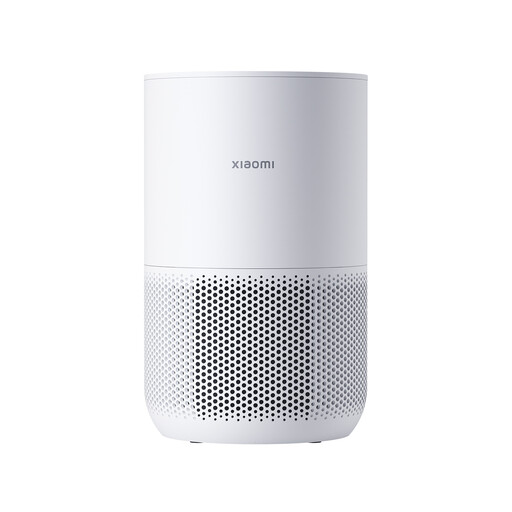
Why it suits this profile: This compact model is suitable for smaller rooms and offers Wi-Fi control without taking up much floor space.
The specifications list a particle CADR of 230 m³/h and a filter life of around 6–12 months. Be sure to check your actual room size before ordering.
2.4GHz Wi-Fi, around 27 W rated power and noise levels from 18.3 dB(A), according to the product information.
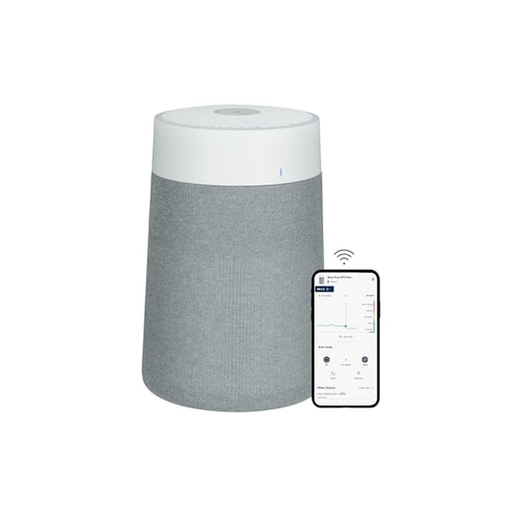
Why it suits this profile: A quiet, smart air purifier for living rooms or bedrooms up to the stated 43 m², with app control and night mode.
As well as a low noise level of 19 dB on the lowest setting, the product information also lists a maximum of 48 dB. This gives you a more realistic picture of its noise range.
CADR of 212 m³/h, an app with scheduling and air quality monitoring, plus a stated noise range of 19–48 dB.
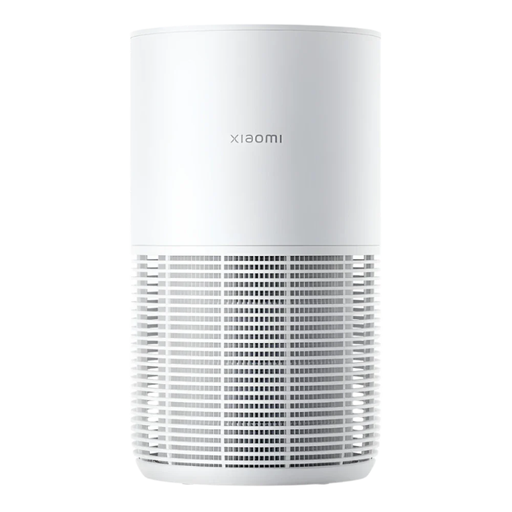
Why it suits this profile: The combination of a pre-filter, HEPA filter, activated carbon, child lock and app control is a good fit for homes with pets.
The product description specifically mentions a 3-layer filter and a tool-free filter replacement system. This makes maintenance easier than with filters that are difficult to access.
CADR of 230 m³/h, coverage of 16–27 m², child lock and a stated power rating of 27 W.
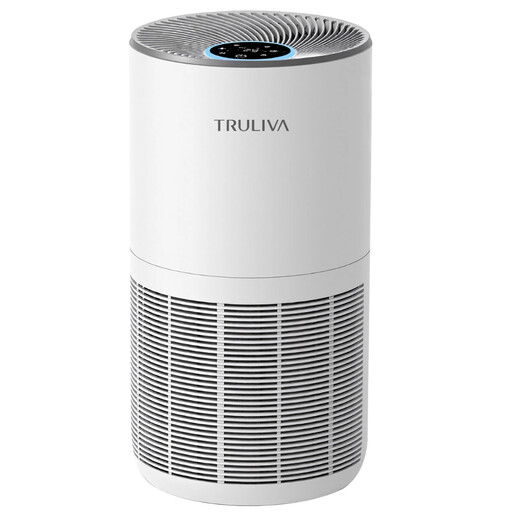
Why it suits this profile: According to the product information, this model is designed for rooms of 32–55 m² and combines a high CADR with a 360° air inlet.
The stated CADR of 450 m³/h is clearly listed alongside the recommended room size. Do check that the maximum noise level of up to 66 dB(A) suits the way you plan to use it.
H13 filter, activated carbon, PM2.5 display, child lock, 24-hour timer and 450 m³/h CADR.
We’ve put together a complete, up-to-date list of products that meet these strict selection criteria and the applicable European safety regulations.
Don’t place an air purifier right next to a wall or behind a curtain. Keep the air inlet and outlet clear, and follow the clearance guidance in the manual. In a living room, a central position may work better than a corner behind a cupboard.
Also bear in mind:
A model with a suitable fine-particle filter can capture airborne particles such as dust and pollen. According to product information from various brands, pet dander is also mentioned. This doesn’t mean an air purifier removes every allergen from your home. Ventilation, cleaning and limiting sources of allergens remain important.
It varies by model. Product information often gives a lifespan of 6 to 12 months, though some filters have a different stated lifespan. Replace the filter when the indicator tells you to or when the manual recommends it. A saturated filter can restrict airflow.
This depends on the power rating, how long you use it and your electricity tariff. A 27 W device running at the same power for 24 hours a day would theoretically use 0.648 kWh per day. In practice, consumption varies by setting. Compare the stated power with how you expect to use the device, and check the cost of replacement filters too.
