
Vandaag of morgen in huis

Kwaliteit gegarandeerd

Welkomstaanbiedingen ontgrendelen: GRATIS bezorging | Tot 80% korting | Gratis 30 dagen JoyPlus-proefperiode
Download de app
An air purifier can help filter airborne particles such as dust, pollen and pet dander from indoor air. However, it is unwise to rely solely on terms such as “powerful purification” or “for large rooms”. Performance depends on the filter configuration, airflow, room size and how often you use the device.
For households in the Netherlands, three purchasing pitfalls are particularly important.
An air purifier with a HEPA filter sounds appealing, but a filter classification does not indicate how much air the device actually processes per hour. A compact unit with an efficient filter may still work slowly in a large living room.
Alongside H13 or a comparable designation, pay attention to the CADR rating. CADR stands for Clean Air Delivery Rate and is expressed in cubic metres per hour. The higher the value, the more filtered air the device can deliver under specific conditions.
Manufacturers sometimes show several coverage figures: for example, a room in which the air is refreshed once per hour and a smaller area treated several times per hour. These figures are not directly comparable.
For a bedroom, home office or nursery, a quiet air purifier with sufficient CADR is generally more important than a large marketing coverage figure. For a living room with an open kitchen, pets or lots of textiles, additional capacity is more practical.
A filter does not last indefinitely. Before buying, check:
As a result, a budget air purifier may prove less economical in the long run. Never wash a replacement filter unless the manual explicitly allows it.
Use CADR as a practical point of comparison. A rating of 212 to 280 m³/h is generally better suited to a bedroom, office or medium-sized living room than to a large open-plan living space. Models rated at 450 m³/h or more make more sense when you want to circulate air more quickly in a larger room.
Also consider the layout. An open-plan living room with a kitchen has a different airflow pattern from an enclosed 15 m² bedroom. Position the air purifier away from curtains and furniture, leaving sufficient clearance around the air intake and outlet.
A typical configuration consists of:
An air purifier for pollen and household dust therefore depends on more than the word HEPA. Also check whether the filter is replaceable and which particles are mentioned in the product description. Claims about removal percentages are brand or test claims; where available, review the testing method and conditions used.
Activated carbon is relevant for odours. For pet hair, the pre-filter primarily captures larger hairs, while dander and fine dust are handled by the finer filter layers. An air purifier does not replace vacuuming or ventilation.
A bedroom air purifier should not only be quiet at its lowest setting. Check whether sleep mode dims the lights and whether the stated noise level applies to that specific mode. Product specifications range from approximately 19 to 30 dB on low or sleep mode, while the highest setting can be considerably louder.
An air purifier with an app can be useful for schedules, remote control and filter alerts. However, check whether a 2.4GHz Wi-Fi network is required and which app is used. A smart air purifier with a PM2.5 sensor can automatically adjust the fan speed, but a sensor reading indicates the particles measured in the room—not a complete assessment of indoor air quality.
When considering an air purifier with an ioniser, pay attention to the manual and emissions information. Ionisation is an additional feature and does not eliminate the need to consider filtration capacity or ventilation requirements.
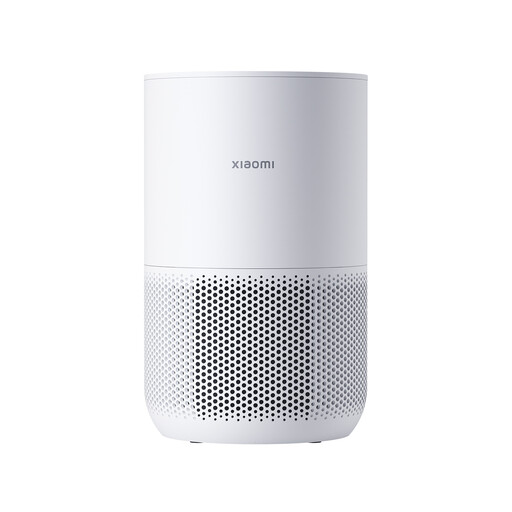
Why it fits: A compact model for a bedroom, home office or smaller living space, with Wi-Fi control for everyday use.
The 230 m³/h CADR and stated coverage make it clear that this unit is intended primarily for smaller rooms, not a large open-plan living room.
2.4GHz Wi-Fi, a stated noise level from 18.3 dB and a filter lifespan of approximately 6 to 12 months.
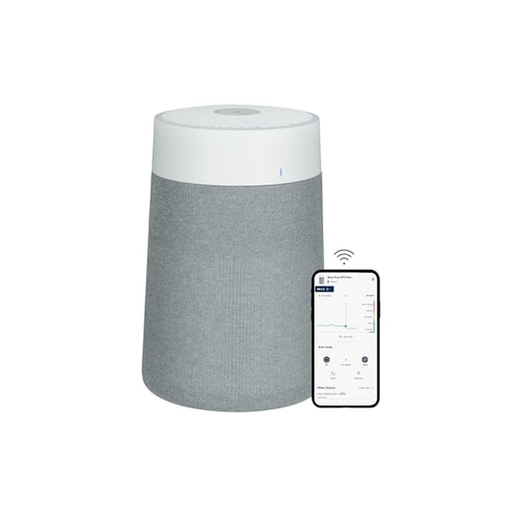
Why it fits: For anyone looking for a compact air purifier for a bedroom or home office, with app features and a low stated noise level.
The 212 m³/h CADR and coverage of up to 43 m² provide a more realistic picture than the claim of rapid purification alone.
A stated noise level of 19 dB on the lowest setting, a maximum of 48 dB and control via the Blueair app.
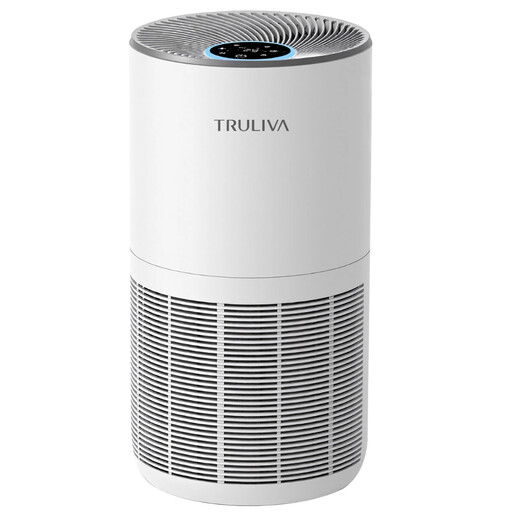
Why it fits: The cylindrical 360-degree air intake and high CADR suit larger living spaces and households with pets.
The product description lists both coverage of 32–55 m² and a maximum noise level of 66 dB. Take the operating mode and room layout into account.
A CADR of 450 m³/h, pre-filter, H13 HEPA filter and activated carbon filter, plus PM2.5 display and child lock.

Why it fits: This model is designed for large living spaces, households with pets and users who want app and voice control.
The stated coverage of 154 m² applies, according to the product information, to one air change per hour. Do not automatically use this figure as an indication of intensive filtration.
CADR of more than 700 m³/h, app and voice control, and a stated filter replacement interval of approximately 6 to 9 months.
Browse a current selection of air purifiers with different filters, CADR ratings, noise levels and features for households in the Netherlands.
That depends on your objective, ventilation and room size. For a bedroom, prioritise noise level in sleep mode, CADR and the ability to dim the display light. Do not place the device directly next to curtains or against a wall.
The stated lifespan varies by model and usage. For the products mentioned, it ranges from approximately 6 to 12 months, although some models specify a longer period. Heavy dust, pollen, smoke or pet hair can place greater strain on the filter. Always follow the filter indicator and manual.
Consumption depends on the rated power and selected speed. For example, the models in this selection range from approximately 23 to 60 watts. A lower setting generally uses less electricity, but it also moves less air. Therefore, compare not only wattage, but also CADR and the number of hours per day you use the device.
