
Vandaag of morgen in huis

Kwaliteit gegarandeerd

Welkomstaanbiedingen ontgrendelen: GRATIS bezorging | Tot 80% korting | Gratis 30 dagen JoyPlus-proefperiode
Download de app
Replacing an air purifier filter may seem straightforward, but choosing the wrong one can result in a poor fit, increased noise or reduced purifier performance. This is especially true for replacement filters for popular models, where terms such as “HEPA”, “99.97%” and “universal fit” are sometimes used without sufficient context.
For households with children, pets or indoor pollen, three purchasing pitfalls are particularly important:
Use these checkpoints and product recommendations to find a replacement air purifier filter more confidently.
The most important specification is the exact model of your air purifier. Check the model number on the device, in the manual or on the old filter. A filter for a similar model is not automatically compatible.
Pay attention to the following:
Brand and model number
A filter for the TRULIVA KJ450 will not automatically fit the KJ260. Even within the same brand, the diameter, height and mounting system may differ.
Dimensions and shape
Cylindrical filters should be checked for both diameter and height. For example, the Homintell Kilo/Mercury filter lists dimensions of Ø165 × 220 mm.
Connection and seal
Even a small gap can allow air to bypass the filter. Check the shape of the edge, the filter housing and any locking mechanism.
A “compatible air filter” is therefore only a suitable choice when the product explicitly lists your device model and the dimensions match.
Many filters combine several layers, each with its own function:
A 3-in-1 filter can therefore be more practical than one that only specifies a HEPA layer. According to the product description, the Homintell Kilo/Mercury filter combines a pre-filter, H13 True HEPA filter and activated carbon filter. The description states particle removal of up to 99.95%; this is a supplier product specification, not a general guarantee for every situation.
Even with a HEPA 13 filter, it is wise to check exactly what the filter was designed for. An H13 label does not mean the filter will fit every air purifier or eliminate odours completely.
The replacement interval varies by model and environment. In a home with pets, an open-plan kitchen, lots of textiles or ongoing renovation work, a filter may become saturated faster than one used in an infrequently occupied bedroom.
Look out for these signs:
Intervals stated on product pages are guidelines. For example, the ELECCI KXY550H-AW filter description recommends replacement every 6 to 8 months, while the homerunPET D1 filter specifies a period of 6 to 12 months, depending on usage and air quality.
A HEPA filter should not automatically be washed. According to the safety information for the Homintell Kilo/Mercury filter, it is neither washable nor reusable. Always follow the instructions for the specific filter. A washable pre-filter is not the same as a washable HEPA core.
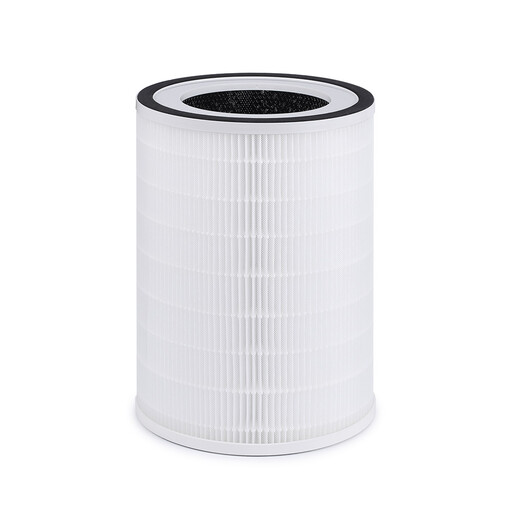
Why it suits this user: A practical choice for anyone looking for a cylindrical filter for a specific Homintell Kilo or Mercury model without having to combine separate filter layers.
The product description specifies both the model family and the dimensions of Ø165 × 220 mm. Check these details before ordering.
3-in-1 construction with a pre-filter, H13 True HEPA filter and activated carbon filter; according to the product description, suitable for dust, pollen and odours.
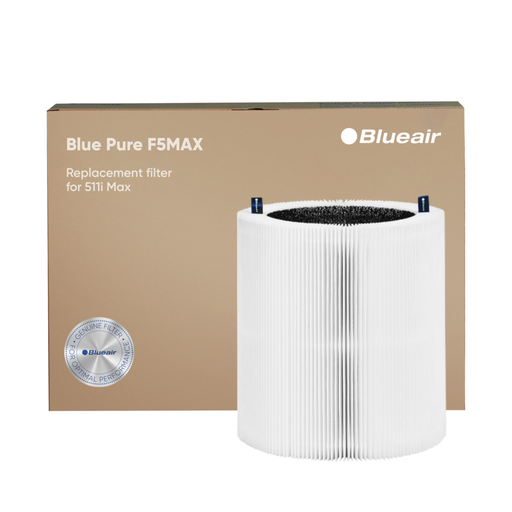
Why it suits this user: Suitable for anyone looking for a specific original replacement filter for the Blue Pure 511i Max, with support for a filter-life indicator.
The product information explicitly states compatibility with the Blue Pure 511i Max. This filter is not intended as a universal solution for other Blueair models.
According to the manufacturer, this model uses HEPASilent technology, while RealTrack alerts you when replacement is required.
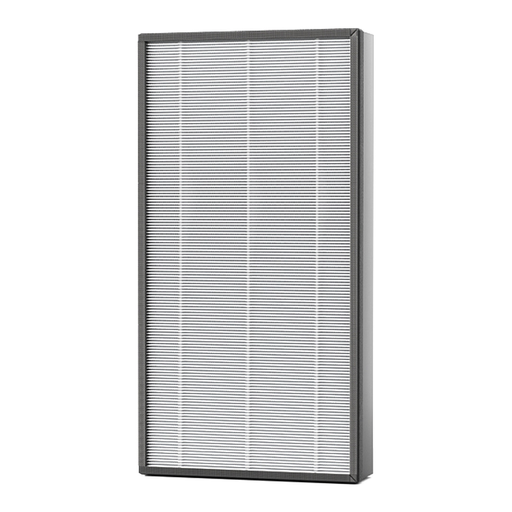
Why it suits this user: Designed for owners of the homerunPET D1, particularly in households with pets where hair, dust and odours are a regular concern.
According to the product information, this filter was specifically designed for the D1. That means there is no need to adapt a universal filter.
The description specifies a combination of pre-filter, H14 HEPA filter and activated carbon for hair, dust, pollen and odours.
Browse a current selection of filters by filter type, application and compatibility with different air purifiers.
Do not operate the air purifier without a correctly installed filter. Keep plastic packaging out of reach of young children.
That depends on the model, operating time and amount of dust, pollen, smoke or pet hair in the environment. Product descriptions often indicate approximately 6 to 12 months. You should also use the filter indicator and inspect the filter visually.
Not as a rule. A True HEPA filter or HEPA 13 filter is often not washable. Water can damage the filter material. Only follow washing instructions when the product information explicitly states that the filter is washable. A separate pre-filter may sometimes be cleanable.
An activated carbon filter is designed to adsorb certain odours and gaseous substances. Its effectiveness depends partly on the amount of carbon, airflow and source of the odour. According to the relevant product descriptions, various filters are designed to address smoke, cooking smells and pet odours; treat this as a product specification, not a guarantee that all odours will disappear.
Do not compare only the price per unit. Check compatibility, dimensions, filter layers and the expected replacement frequency. A cheaper filter that does not fit properly may ultimately be unusable.
