
Vandaag of morgen in huis

Kwaliteit gegarandeerd

Welkomstaanbiedingen ontgrendelen: GRATIS bezorging | Tot 80% korting | Gratis 30 dagen JoyPlus-proefperiode
Download de app
Vegetarian noodles are convenient for quick stir-fries, soups, salads and meat-free meals. However, not every package is suitable for every kitchen. For example, a dry Chinese noodle requires different preparation from pre-prepared shirataki udon. Terms such as “vegetarian”, “vegan” and “low-calorie” can also give an incomplete picture.
As a Joybuy Product Recommendation Officer, I filter the most important product information based on verifiable data. This shows you what to look out for before buying and which vegetarian noodles suit your needs.
Always check the ingredients and allergens. Some instant noodles contain egg, while sauces may contain ingredients such as milk derivatives, fish extract or shellfish. Igarashi Seimen Sapporo Miso Ramen is offered as vegetarian, but the product information lists prawns/shellfish as an allergen. This is an important point for vegans and people with an allergy.
Products containing only wheat flour, water and salt are often easier to assess. However, check the packaging, as recipes may change.
According to City Aroma’s product information, shirataki noodles contain approximately 9.5 kcal per 100 grams. This is the value for the noodles themselves. Sauce, oil, peanuts, tofu and toppings can significantly increase the total nutritional value of the dish.
“Low-calorie noodles” are therefore mainly a base product. Also look at salt, fibre, protein and the ingredients in the sauce.
A package containing multiple portions can be convenient for a family or a household that often eats noodles. However, with fresh, chilled or frozen products, you need to consider how much space you have and how long you can keep the package.
For example, 7FRESH Private Chef’s Vegetarian Monk’s Noodles are supplied as 3 x 660 grams, totalling 1.98 kg, and must be stored at a maximum of -18 °C. This is practical for several meals, but less suitable if you only use noodles occasionally.
Dry noodles must be prepared in boiling water. According to the product information, Toyoung Youbaifa Vegetarian Noodles are thin and straight and suitable for boiling, stir-frying, soup and cold dishes. This makes them flexible, but you need to add the vegetables, sauce and protein source yourself.
Shirataki udon is quicker to prepare: drain, rinse and optionally heat for two to three minutes. Its neutral flavour absorbs sauce well, but according to the product information, the noodles provide no protein. Therefore, add tofu, tempeh, edamame or pulses, for example, if you want to make a more filling meal.
Only compare products when you use the same basis. Some labels state values for dry noodles, while others refer to a product that already contains water.
The values cannot be directly compared on a like-for-like basis when the water content or preparation status differs. Therefore, always check the label on the packaging.
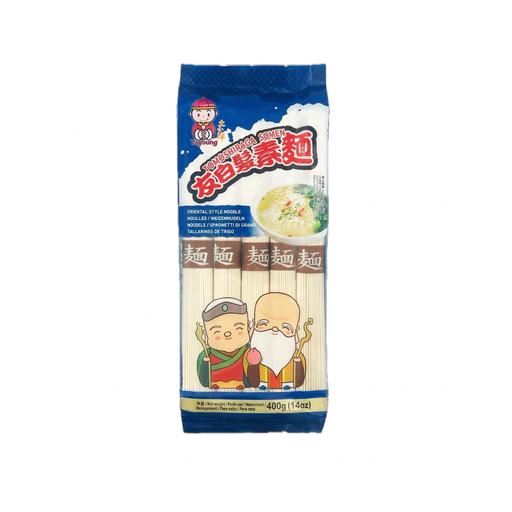
Why This Fits Their Persona: A simple base for people buying Chinese noodles for the first time who want to add their own flavour with vegetables, tofu and sauce.
The ingredients list is short: wheat flour, water and salt. There is no ready-made sauce that makes comparing salt or sugar more difficult.
400 g package; suitable for soup, stir-fries and cold dishes; 10 g protein per 100 g of dry product according to the label.
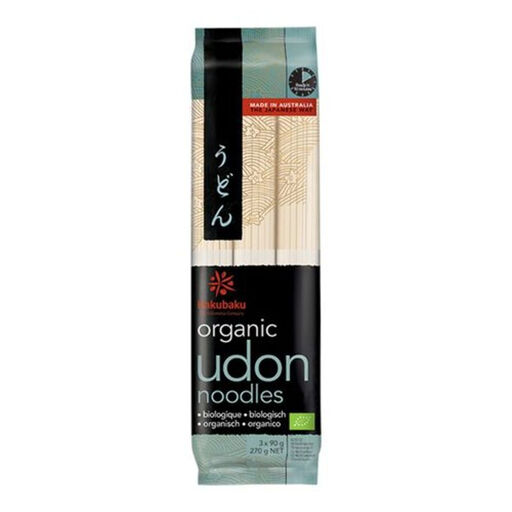
Why This Fits Their Persona: Suitable for people who want to use thick Japanese noodles in a light broth or stir-fry.
The product information lists wheat flour, salt and water. There is no instant flavour sachet included that you need to assess separately.
270 g package; 64.7 g carbohydrates and 7.2 g protein per 100 g according to the product information; suitable for soup and stir-fries.
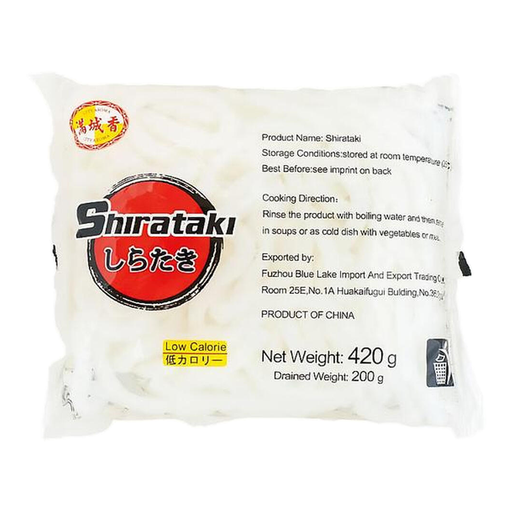
Why This Fits Their Persona: A practical choice for light stir-fries, soups or salads where the sauce and toppings determine the flavour.
The product information clearly states that the noodles must first be drained and rinsed. This prevents an unwanted packaging smell.
400 g; 9.5 kcal per 100 g according to the product information; made with konjac, water and acidity regulator.
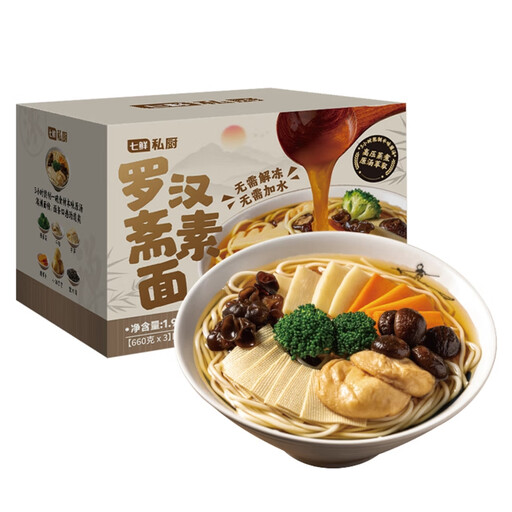
Why This Fits Their Persona: For families or households that regularly prepare multiple portions of vegetarian noodles.
The portions are divided into 3 x 660 g. According to the product description, they can be cooked straight from frozen; thawing is not necessary.
Total net quantity 1.98 kg; according to the product information, contains no egg, milk or meat; store at a maximum of -18 °C.
View a current selection of vegetarian udon and compare packaging, preparation and product information for your meal.
No. Check the ingredients and allergens on the packaging. Some products labelled “vegetarian” may contain egg, milk or other animal-derived ingredients. The product information for 7FRESH Monk’s Noodles lists no egg, milk or meat, but always check the current label on receipt.
Udon noodles are firm and thick and go well with broth and stir-fries. Thin Chinese noodles are versatile and absorb sauces quickly. Shirataki udon can be added directly to soup, salad or a stir-fry after you have drained and rinsed the noodles.
Store dry noodles sealed in a cool, dry place. According to the product information, shirataki noodles should also be stored in a cool, dry place while the package is unopened. Frozen products, such as 7FRESH Monk’s Noodles, must be stored at a maximum of -18 °C and must not be refrozen after thawing. Always read the current packaging for the correct storage and preparation instructions.
