
Vandaag of morgen in huis

Kwaliteit gegarandeerd

Welkomstaanbiedingen ontgrendelen: GRATIS bezorging | Tot 80% korting | Gratis 30 dagen JoyPlus-proefperiode
Download de app
Choosing a new vacuum cleaner seems straightforward, until you have to decide between a cordless vacuum cleaner, stick vacuum, robot vacuum or handheld vacuum. Marketing copy often emphasises high suction power, smart features or long battery life. However, one impressive specification does not tell you everything about everyday use.
Pay particular attention to these three common pitfalls:
A cordless vacuum cleaner or stick vacuum is practical for everyday crumbs, hard floors and carpet. You do not need a power socket, and many models can be converted into a handheld vacuum. The trade-off is that you need to charge the battery and regularly maintain the filters and brushes.
A traditional corded vacuum cleaner provides a constant power supply and is useful when you want to clean for longer periods at a time. A bagged model does require replacement dust bags. A bagless vacuum cleaner eliminates these consumables, but the dust container and filter need to be emptied and cleaned more frequently.
A robot vacuum cleaner is suitable for automated daily maintenance. The robot will not always cover every corner, stair, piece of furniture or high skirting board. Therefore, think of this type mainly as a supplement to a conventional vacuum cleaner. A car vacuum cleaner or small handheld vacuum is particularly useful for seats, keyboards, windowsills and hard-to-reach areas.
A powerful vacuum cleaner is not automatically suitable for every floor. For carpet, a motorised brush is useful for loosening dirt and hair. On parquet, laminate and tiles, a soft floor brush is often preferable to help minimise scratches.
When choosing a model for carpet and hard floors, look for:
Pa values can indicate the maximum suction pressure, but do not use them as your only point of comparison. Robot vacuum cleaners may list values such as 8,000, 10,000 or 20,000 Pa; the actual cleaning experience also depends on navigation, brush design and contact with the floor.
With a cordless vacuum cleaner, you should consider the maximum runtime alongside the charging time. For example, the Philips XC3033/01 states up to 60 minutes of use and around 5 hours of charging. That may be enough for a flat, but less convenient if you want to clean several floors one after another.
Also check:
For a quick clean in the car, a runtime of 12 to 16 minutes may be sufficient. For an entire home, a longer runtime or an additional battery is more practical.
A vacuum cleaner with a HEPA filter may, according to the product description, filter fine particles. Always check whether the filter is washable, how often it needs to be cleaned and whether replacement filters are available. The ATSHARK A-016 lists a HEPA filter; this is a product specification and not a medical guarantee.
A large dust container reduces how often it needs to be emptied. A 0.4 or 0.5-litre container is suitable for regular maintenance, but may fill up more quickly in homes with several pets. Also check for hair around the brush roller. A well-designed anti-tangle brush reduces maintenance, but does not eliminate the need for cleaning entirely.
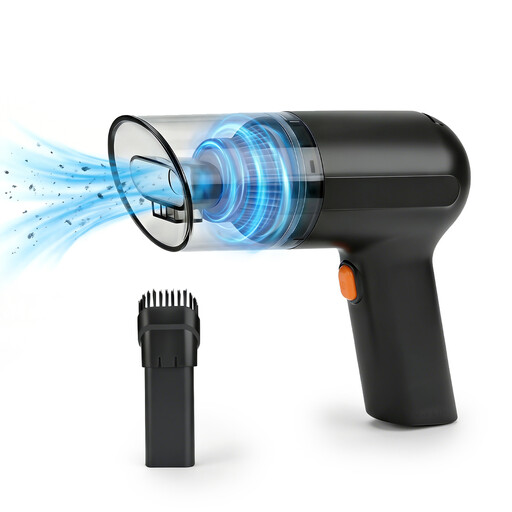
Why it suits this profile: This compact cordless handheld vacuum is designed for quick cleaning in the car, on a desk or in small corners. It weighs 290 grams and charges via USB.
The stated runtime is around 12 to 13 minutes, making it clear that this model is intended for quick jobs rather than cleaning an entire home.
290 grams, 3,000 Pa according to the product specification, USB charging and a removable, washable dust container.
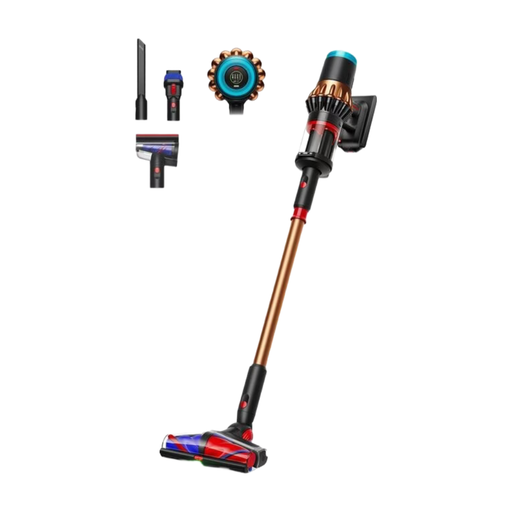
Why it suits this profile: A comprehensive stick vacuum for households with carpet, hard floors and pets, where a range of accessories and adjustable settings are important.
The product specification states a maximum runtime of 70 minutes in Eco mode. This shows that the selected setting affects battery life.
315 Air Watts according to the product information, a 1.35-litre dust container, multiple settings and a HEPA filtration system.

Why it suits this profile: This robot vacuum with a mopping function is designed for larger households with hard floors, carpet and pets, combining automated cleaning with app control.
The listed features are specific: carpet detection, multiple cleaning modes, map management and a station for emptying the dust container and washing the mop. Check that you have enough space for the station beforehand.
20,000 Pa according to the product information, automatic emptying, mop washing with 75 °C water and control via the ECOVACS Home app.
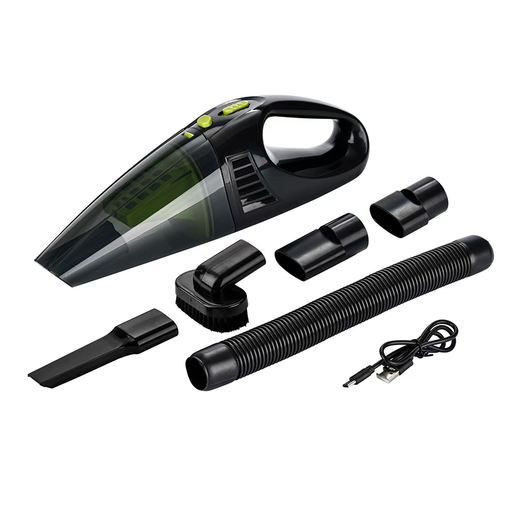
Why it suits this profile: A small car vacuum cleaner for seat gaps, mats and furniture, ideal for removing hair or crumbs every day without a cord.
According to the product specification, battery life is around 14 to 16 minutes and charging takes approximately 4 hours. That makes it suitable for quick cleaning sessions, not for an entire home.
3,500–4,000 Pa according to the product information, a 0.4-litre dust container, HEPA filter and two 1800mAh battery cells.
We have put together a complete, up-to-date list of products that fully meet these strict selection criteria and the applicable European safety regulations.
Empty the dust container before it becomes completely full and regularly check the brush for hair. Washable filters must be completely dry before you put them back. Do not use a standard vacuum cleaner for liquids, hot ash, glass or sharp objects unless the manual explicitly permits it.
With a robot vacuum cleaner, keep the sensors, wheels and brushes free from hair and dirt. Also check that the charging station remains accessible. This helps prevent smart features from becoming less practical because of an inconvenient placement.
It can be, particularly in smaller homes and with a model that offers sufficient battery life, a suitable floor brush and a large dust container. For larger homes, a second battery or a model with a long runtime may be more practical.
The lifespan depends on usage, maintenance, battery condition and the availability of parts. Clean the filters according to the manual, remove hair from the brush and charge lithium-ion batteries with the supplied charger. Also check the warranty conditions; several of the models mentioned state a two-year warranty or statutory guarantee.
For a cordless model, running costs mainly consist of electricity, replacement filters and, in the longer term, a replacement battery. A bagless vacuum cleaner saves you from buying replacement dust bags, but filters may still need to be replaced. A robot vacuum cleaner may also require dust bags, cleaning fluid or other accessories. Therefore, consider maintenance costs alongside the purchase price.
