
Vandaag of morgen in huis

Kwaliteit gegarandeerd

Welkomstaanbiedingen ontgrendelen: GRATIS bezorging | Tot 80% korting | Gratis 30 dagen JoyPlus-proefperiode
Download de app
A cordless vacuum cleaner with a mopping function can tackle crumbs, hair and spilt liquids in a single cleaning session. That sounds practical, but not every cordless appliance does the same job. Some models are only suitable for dry dirt, while others may only be used on hard floors.
For households with children, pets or lots of tiled, PVC and laminate flooring, the water control, battery life and maintenance are particularly important. Below, you’ll find what to look out for and which models suit different situations.
A standard cordless stick vacuum is usually intended for dry dirt. The Electrolux EW82U2DB, for example, has a 0.65-litre dust container, a 35-minute battery life and cyclonic filtration, but the product information clearly states that the appliance cannot pick up liquids.
The Bosch BSS825MULT is also a dry cordless vacuum cleaner. The included accessories make it suitable for various surfaces and furniture, but the safety information prohibits picking up liquids. So always check whether you’re looking at a genuine stick vacuum and mop, rather than just a stick vacuum with additional brush attachments.
A high figure in pascals, watts or Air Watts doesn’t tell you everything about everyday use. Also consider:
A stated battery life often applies to a specific mode. The Dyson V12 Detect Slim Absolute, for example, is advertised as offering up to 60 minutes on its lowest setting, while the highest setting lasts approximately 10 minutes according to the product specifications. Bosch’s product information mentions both 45 and 65 minutes, depending on the description. Therefore, use the most specific specification and allow for variation depending on the attachment and mode.
A self-cleaning floor cleaner will generally rinse the brush roll or internal pipes. This reduces the amount of manual cleaning required, but it doesn’t eliminate maintenance. After every wet-cleaning session, the dirty-water tank, filters and brush roll should be checked and cleaned or dried according to the instructions.
A floor cleaner with a self-cleaning station can offer extra convenience with hot-air drying. Even so, you still need to empty the tanks on time. Stagnant dirty water can cause unpleasant smells and affect the appliance’s performance.
If you’re looking for vacuuming and mopping in one, check whether the model is suitable for your flooring. Many wet and dry vacuum cleaners are designed for sealed hard floors, such as tiles, PVC, vinyl, laminate and sealed wood. Carpet and untreated wood are not automatically suitable.
Also consider how the appliance dispenses water. Adjustable water flow is useful for more delicate floors or light dirt. The UWANT D600 specifies three water levels and automatic adjustment of suction power and water flow. The Philips AquaTrio XW7110/01 has three cleaning modes, including a setting for picking up residual moisture.
Hair and dust often collect along skirting boards, chair legs and beneath low sofas. Look for edge cleaning on one or both sides, how easily the floor head turns and whether the appliance can be laid flat.
The Tineco Floor One Stretch S6 has a 180° lay-flat design and a stated height of 13 centimetres when laid flat. The UWANT D600 also specifies a 180° lay-flat function and dual-edge cleaning. These features are useful if you regularly clean beneath beds or sofas, but check the available clearance in your home beforehand.
Two separate tanks are important for a wet floor cleaner: one for clean water and one for dirty water. This prevents dirty water from being spread back across the floor. The Hoover HW3 has two 0.55-litre tanks, a running time of up to 40 minutes and an AutoClean function.
Hot-air drying can get the brush roll ready for use more quickly. The UWANT D600 specifies hot-water cleaning and warm air for drying, while the Tineco Stretch S6 mentions a five-minute FlashDry programme at 70 °C. These are product specifications from the respective product descriptions, not a guarantee that every floor or brush will be completely dry after every cycle.
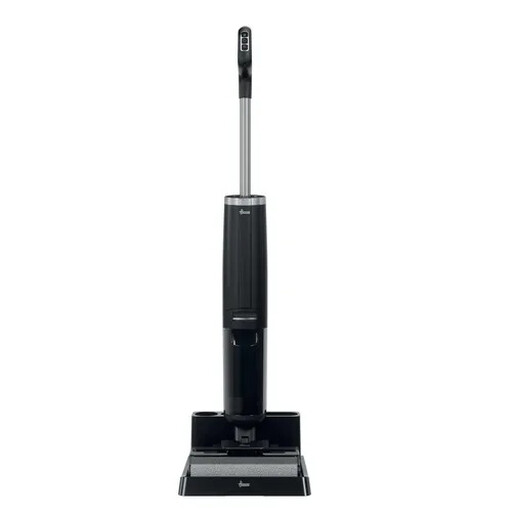
Why it suits this profile: This model combines everyday dry vacuuming with mopping and offers a simple choice between vacuuming only and vacuuming with water.
The product information explicitly states two cleaning modes, dual-edge cleaning and AutoClean. This makes its intended use clearer than that of a dry stick vacuum with separate mopping accessories.
40-minute running time, 0.55-litre tanks and an anti-tangle function for hair.
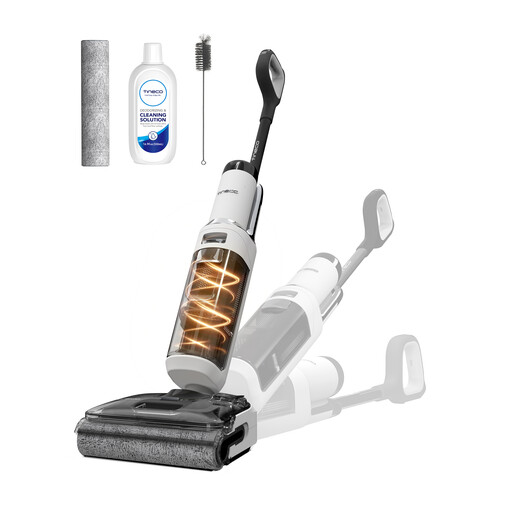
Why it suits this profile: Suitable for anyone who prioritises reaching beneath furniture, edge cleaning and automated maintenance over a compact design.
The 180° lay-flat function and three-sided edge cleaning address two points that are often overlooked. The stated FlashDry cycle makes maintenance more straightforward, but the filters and tanks still need to be looked after.
4.5 kilograms, suitable for several types of hard flooring, with a drying and charging station included.
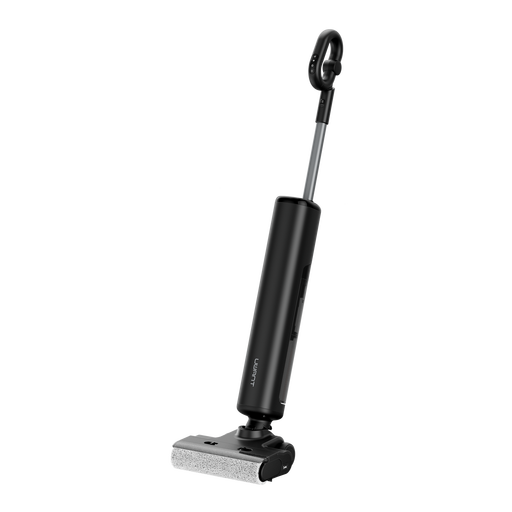
Why it suits this profile: A suitable choice for larger households and pet owners who regularly need to tackle edges, areas beneath furniture and spilt liquids.
The description mentions dual-edge cleaning, automatic adjustment of suction power and water flow, plus self-cleaning with warm air. This means both cleaning and aftercare are covered in the specifications.
Stated suction power of 23,000 Pa, three water levels and a push-in station for cleaning and drying.
We’ve put together a complete, up-to-date list of products that fully meet these strict selection criteria and the applicable European safety regulations.
For pet owners, an anti-tangle brush is useful, but you should still check the brush roll regularly. Long hair can collect around the ends. If you mainly clean carpets, furniture and stairs, a standard cordless stick vacuum with suitable accessories may be a better choice.
It depends on the model. Many wet floor cleaners are intended for hard floors and must not be used on carpets or soft surfaces. Always check the instructions for use. A dry stick vacuum with a motorised brush is generally more suitable for carpets.
The stated running time varies depending on the product and cleaning mode. Across the range, specifications vary from approximately 25 to 65 minutes. Turbo or intensive modes usually reduce the running time. For a large home, a replaceable battery, a longer stated running time or a second cleaning session may be worth considering.
In addition to electricity, you may incur costs for cleaning solution, filters, brush rolls and replacement batteries. Only use products approved by the manufacturer. Empty and clean the tanks after use to help prevent blockages, unpleasant smells and premature wear. The statutory guarantee in the EU is at least two years for the products mentioned; additional rights may apply under Dutch consumer law.
