
Vandaag of morgen in huis

Kwaliteit gegarandeerd

Welkomstaanbiedingen ontgrendelen: GRATIS bezorging | Tot 80% korting | Gratis 30 dagen JoyPlus-proefperiode
Download de app
Choosing a vacuum cleaner might seem straightforward at first. However, models vary considerably in how they work, how much maintenance they need and how well they suit hard floors, carpets, furniture or pet hair. A high suction power figure on the packaging also doesn’t tell you everything about everyday performance.
The three most common buying pitfalls are:
Looking only at the highest Pa figure
Pascal, or Pa, measures suction pressure under certain conditions. The measurement isn’t identical across every brand, so a vacuum cleaner rated at 60,000 Pa isn’t automatically more practical than one rated at 25,000 Pa.
Comparing battery life without considering the mode
The stated runtime for a cordless vacuum cleaner often applies to its lowest setting. In turbo mode, runtime can be considerably shorter. Check whether the battery is removable and how many settings the appliance has.
Assuming a mopping or cleaning function means completely maintenance-free cleaning
A robot vacuum cleaner with a mopping function can be useful for everyday upkeep, but the water tanks, mop pads, filters and brushes still need cleaning. The same applies to a wet and dry vacuum cleaner: you’ll need to deal with the dirty water and filters after use.
Don’t look only at the stated power or suction pressure. Also check:
A model with powerful suction can be useful for deep-pile carpets, but it usually uses more battery power and may feel heavier. For everyday crumbs and fine dust, a lower setting is often enough.
When choosing a stick or cordless vacuum cleaner, these practical points are important:
Always assess a stated runtime of 45 to 65 minutes alongside the suction setting you’ll use. A stick vacuum cleaner that stands upright on its own is also handy if you’re interrupted while cleaning.
A wet and dry vacuum cleaner, carpet cleaner or spot cleaner works differently from a standard vacuum cleaner. Check the following:
Only use an appliance on surfaces it’s designed for. A standard cordless vacuum cleaner is generally not suitable for liquids. Take extra care with a steam cleaner on untreated wood, delicate upholstery and surfaces that can’t withstand heat or moisture.
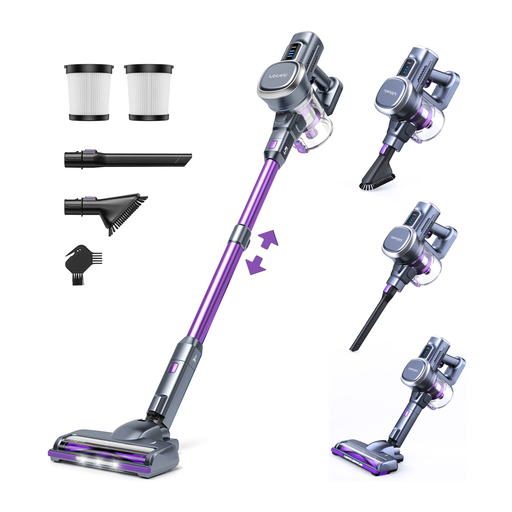
Why it suits this type of buyer: This stick vacuum cleaner is designed for everyday use on hard floors and carpets. Its 2.2 kg weight and self-standing design are practical in a home with several rooms or floors.
The product specifications list three settings: 10, 17 and 25 kPa. This lets you adjust the suction power and battery use to suit the task, rather than always using the highest setting.
Up to 50 minutes of runtime according to the product information, a V-shaped brush to help prevent hair build-up and a removable battery.
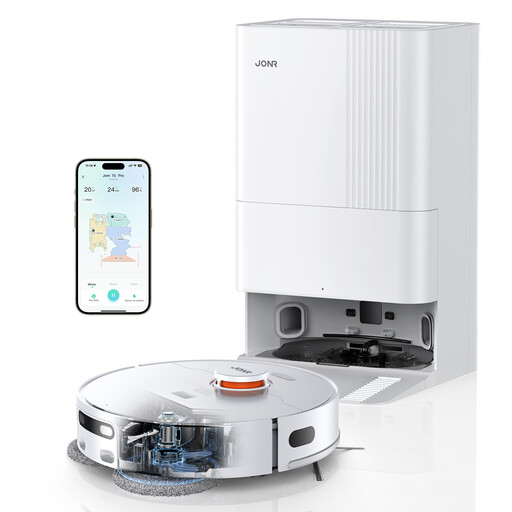
Why it suits this type of buyer: A good choice for households that want dust and light debris cleared every day without having to vacuum themselves each time. Its mopping function is designed for hard floors.
The instructions say you need to complete the initial set-up in full. You can adjust suction settings, schedules and no-go zones in the app, giving you more specific control than a general claim about automation alone.
LiDAR navigation, obstacle avoidance, an anti-tangle side brush and, according to the product specifications, 8150 Pa suction pressure with hot-air drying in the all-in-one station.
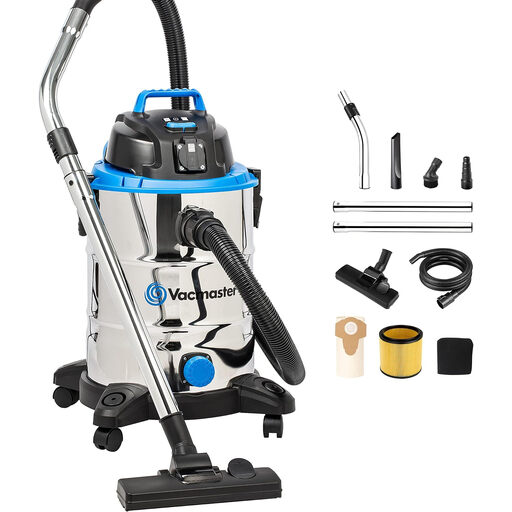
Why it suits this type of buyer: A practical choice for the garage, workshop or car, and for big cleaning jobs involving both dry debris and spills.
The product specifications distinguish between a cartridge filter for dry debris and a foam filter for wet vacuuming. You’ll still need to change and clean the filters.
1500 W motor, 30-litre stainless steel tank, blower function and an EU power socket for electric tools.
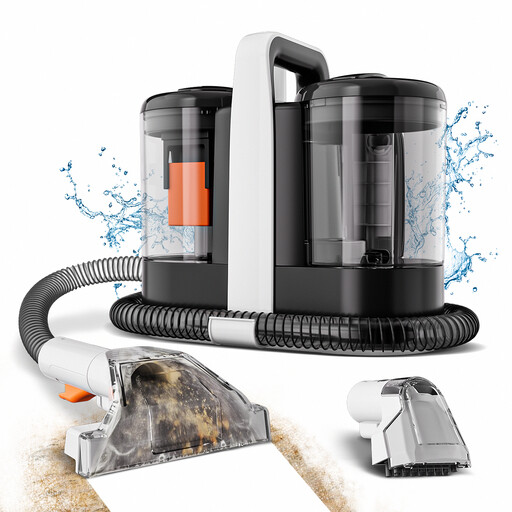
Why it suits this type of buyer: This appliance is designed for spot-cleaning carpets, sofas, car interiors and upholstery. It complements a standard vacuum cleaner rather than replacing it.
The two separate tanks help keep clean and dirty water apart. Check the MAX mark and empty the dirty water tank after use.
600 W power, 15 kPa suction pressure according to the product information, a 1.5-litre clean water tank and a 0.8-litre dirty water tank.
We’ve put together a complete, up-to-date list of products that meet these strict selection criteria and comply with the current European safety regulations.
It depends on the brush, dust container and floor. An anti-tangle brush can help prevent hair build-up, but check the brush regularly. For sofas, stairs and car upholstery, a stick or handheld vacuum cleaner is often more practical.
The main costs are electricity, filters, dust bags and replacement brushes. A lower power or suction setting can help reduce electricity use. If the model has a charging station, remember to factor in the cost of replacement dust bags or battery maintenance too.
Its lifespan depends on how you use and maintain it, as well as the parts it contains. Clean the filters as instructed in the manual, remove hair from the brush and let washed filters dry completely. Before buying, check whether filters, brushes, batteries and dust bags are available separately. Also check the statutory guarantee and the information provided about the seller and the responsible party within the European Union.
