
Vandaag of morgen in huis

Kwaliteit gegarandeerd

Welkomstaanbiedingen ontgrendelen: GRATIS bezorging | Tot 80% korting | Gratis 30 dagen JoyPlus-proefperiode
Download de app
Buying a vacuum cleaner seems simple, until you have to choose between a stick vacuum, a cordless vacuum, a wet and dry vacuum or a carpet cleaner. Marketing copy often focuses on impressive suction power, battery life or filtration figures. But those numbers don’t always tell you how practical an appliance will be in your home.
Pay particular attention to the combination of floor area, floor type, run time, maintenance and accessories. That way, you’re less likely to buy a model that turns out to be too heavy after a few weeks, runs out of charge quickly or isn’t suitable for wet messes.
Figures such as kPa or Pa are often given prominent placement. They indicate the maximum suction pressure, but don’t tell you on their own how well a vacuum cleaner performs on carpets, hard floors or pet hair. The brush, airflow, seals and filter also make a difference.
So don’t compare powerful vacuum cleaners based on just one figure. Also consider:
For a cordless vacuum cleaner, the maximum run time is usually measured in Eco mode. Turbo mode can use considerably more power. Check whether the battery is removable, how long it takes to charge and whether the stated run time suits your cleaning routine.
For a small flat, a stick vacuum with a shorter actual run time may be enough. In a larger home or one with lots of carpet, a replaceable battery or a model with a longer run time is more practical.
A vacuum cleaner with a mopping function can be handy on hard floors, but it doesn’t always replace a dedicated carpet cleaner. Tanks, rollers and pipes need to be emptied and cleaned after use. Any moisture left behind can cause unpleasant smells.
Be aware of the difference between:
For hard floors, a soft brush or floor head can help reduce scratches and prevent dust from being left behind. Carpets usually need a motorised brush to loosen dirt from the fibres. If you have pets, look for an anti-tangle brush and an upholstery tool.
A green LED on the floor head can make dust easier to see. It’s a cleaning aid, not a guarantee that every speck of dust will be removed.
A vacuum cleaner with a HEPA filter can capture fine dust in the filtration system, but always check which type of filter is specified and whether it’s washable or replaceable. A sealed filtration system is useful if you want to minimise dust escaping back into the air.
Follow the maintenance instructions carefully. A washed filter must be completely dry before you put it back. Product information for various models warns that a damp filter can damage the motor. Also, don’t use a wet and dry vacuum for hot ash, burning materials, sharp pieces of glass or flammable liquids.
A quiet vacuum cleaner is often described by its noise level in dB. Measurement conditions can vary between brands, so use this figure mainly to compare models in the same product category. For example, the Rowenta RO7457 is listed at 57 dB.
Also consider how heavy the appliance feels while you’re vacuuming. A 2.5 kg appliance in handheld mode feels different from a larger machine with a full tank. A self-standing stick vacuum is handy if you’re often interrupted while cleaning. A wall mount saves space, but does need to be installed.
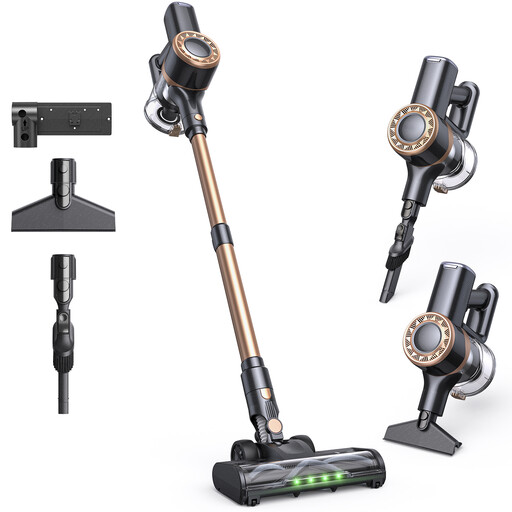
Why it suits this type of user: This cordless stick vacuum is designed for everyday cleaning of hard floors and carpets, without a cord getting in the way.
The product information lists several settings, a dust container of around 0.8 to 1 litre and a run time of up to 45–50 minutes in Eco mode. Before buying, check the run time available on the higher settings.
30 kPa according to the specifications, an anti-tangle brush, a self-standing design and a multi-layer filtration system with a HEPA filter.
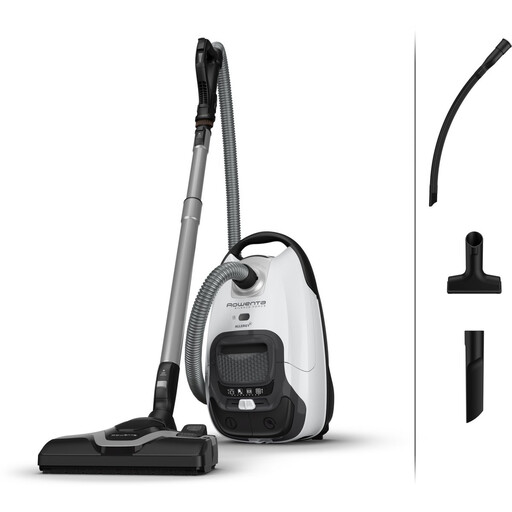
Why it suits this type of user: A bagged, corded model is a good fit for households that value consistent performance and a wide operating range.
You don’t need to worry about battery life. Do bear in mind the ongoing cost of dust bags, and check that the right type is available.
Listed noise level of 57 dB, 4.5-litre dust bag, 8.4-metre cord and an 11-metre operating range.
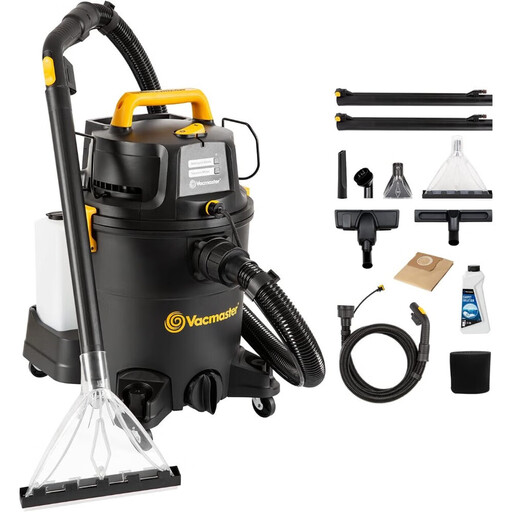
Why it suits this type of user: This model is designed for carpets, upholstery, stairs and car interiors, combining dry vacuuming with extraction cleaning.
The separate filters and tanks make it clearer which mode to use. Change the filter as instructed in the manual and empty the tanks after wet cleaning.
1300 W motor, 23-litre collection tank, 6-litre cleaning solution tank and a stated noise level of 72 dB.
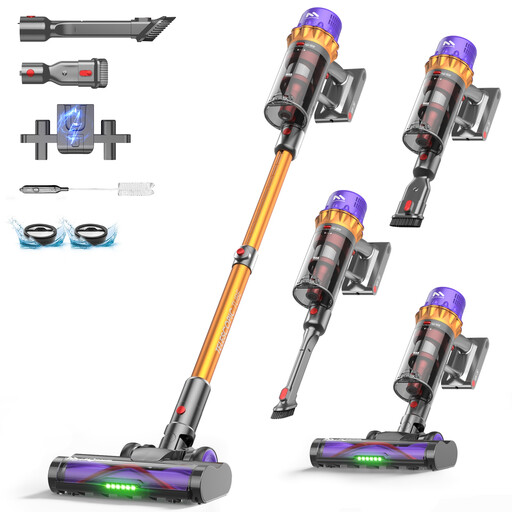
Why it suits this type of user: The wide floor brush, anti-tangle design and long stated Eco-mode run time make it a good match for homes with lots of pet hair and larger floor areas.
The manufacturer states a run time of up to 80 minutes in Eco mode and a maximum noise level of 65 dB. Check the run time in Carpet or Turbo mode to make sure it suits your needs.
550 W brushless motor according to the product information, removable battery, LED lighting on the floor brush and sealed HEPA filtration.
We’ve put together a complete, up-to-date list of products that meet these strict selection criteria and the applicable European safety regulations.
If you need a vacuum cleaner for a garage, cellar, patio or car interior, the Vacmaster VQ1220SC could be worth considering. It’s a 3-in-1 wet and dry vacuum with a stated motor power of 1250 W, suction power of 18 kPa and a 20-litre stainless steel tank. According to the product description, the blower function is designed for tasks such as clearing leaves or inflating air beds. Don’t use the appliance in an explosive environment or for hazardous materials.
If you mainly want to clean carpets and upholstery, you could also take a look at the Lubluelu V6 Washing Vacuum Cleaner. The product name lists 450 W and 13.500 Pa. Before buying, check which accessories are included, how the tanks are configured and how long it takes to dry, as these details affect how convenient the appliance is to use.
The Dreame Multi-Surface Floor Cleaner 450 ml isn’t a vacuum cleaner, but a cleaning solution for the Dreame L20 Ultra. Only use a product like this if it’s suitable for your specific appliance, and follow the dosage instructions on the packaging.
There’s no universal kPa figure that will suit every household. Consider the combination of suction power, a motorised brush and an anti-tangle function. For lots of pet hair, a specialist floor brush is usually more relevant than a higher Pa figure on its own.
It can be, especially if the battery lasts long enough for your home and there’s a suitable Turbo setting for carpets. Check the run time for each setting, charging time, battery replacement options and dust container capacity. For larger homes, a corded model may be more practical if you want to clean without interruption.
As well as the purchase price, you may need to pay for electricity, dust bags, filters, brushes and cleaning solution. A model with washable filters can help reduce some replacement costs, but it still needs regular maintenance. So compare more than just the price of the appliance: check the availability and cost of consumables too.
Its lifespan depends on how often you use it, how well you maintain it, how you clean the filter and whether spare parts are available. Empty containers promptly, remove hair from the brush and let washed filters dry completely. Check the warranty terms too; some models come with a two-year warranty, in addition to the statutory consumer rights that apply in the European Union.
