
Livraison le jour même et le lendemain

Qualité garantie

Débloquez vos offres de bienvenue: Livraison GRATUITE | Jusqu'à -80 % | 30 jours d'essai gratuits à JoyPlus
Téléchargez l'application
Tofu skin is also known as bean curd skin, tofu sheets or dried bean curd skin. It is a soya product created when a skin forms on boiled soya milk. Depending on its shape and preparation, you can buy it as thin sheets, dried sticks, strips, knots or fried rolls.
For home cooks in the UK, the available options are not always easy to understand. A packet labelled “tofu skin” may contain a chilled product, while “dried bean curd” has a much longer shelf life and can be stored in the cupboard. Preparation times also vary considerably. The points below will help you avoid buying a product that is unsuitable for your hotpot, stir-fry or salad.
Not all bean curd skin is dried. Fresh or chilled tofu sheets generally need to be stored at 0–4 °C and used quickly after opening. Dried tofu, bean curd sticks and bean curd strips can usually be kept sealed in a cool, dry place.
Before buying, check:
A chilled sheet is convenient for immediate use, but less suitable if you want to build up a stock of Chinese soya products.
Nutritional values on the label are often given per 100 grams. For dried products, this usually refers to the dry weight. After soaking, the product absorbs water, so the nutritional value per prepared weight is lower.
The figures are therefore most useful when comparing products in the same format. Also check the ingredients list. Some varieties contain only soya beans and water, while others contain salt, oil, alcohol or food additives.
Thin tofu sheets are ideal for rolling, stuffing or adding to soup. After soaking, bean curd sticks and strips have a firmer, springier bite and retain their shape better in a hotpot that cooks for a long time. Fried tofu skin products absorb stock quickly, but often contain more fat because of the oil.
The name “tofu skin” does not tell you everything. Check the shape too: sheet, strip, stick, knot or roll.
Tofu skin naturally contains soya. Check the allergen information when cooking for guests. Products with a short ingredients list are easy to assess, but that does not automatically mean every variety tastes the same or has the same texture.
Also look out for possible cross-contamination. For example, FENGHEJU Fried Bean Curd Sheet states that the product may contain gluten because of shared production facilities. This is important information for anyone who needs to avoid gluten.
The correct preparation method depends on the thickness and degree of dryness:
Use clean water and drain the product thoroughly after soaking. Fully cook varieties labelled “cooking required” before serving.
As well as the price, compare the weight and nutritional value. A 120-gram packet is suitable for trying a dish. For regular hotpot meals or a larger household, 500 grams or 1 kilogram may be more practical.
As an indication, several products in this range list approximately 36–45 grams of protein per 100 grams of dry product. This makes tofu skin a useful vegan source of protein as part of a meal, but the exact value varies from product to product. Use the nutritional information on the packaging as your guide.
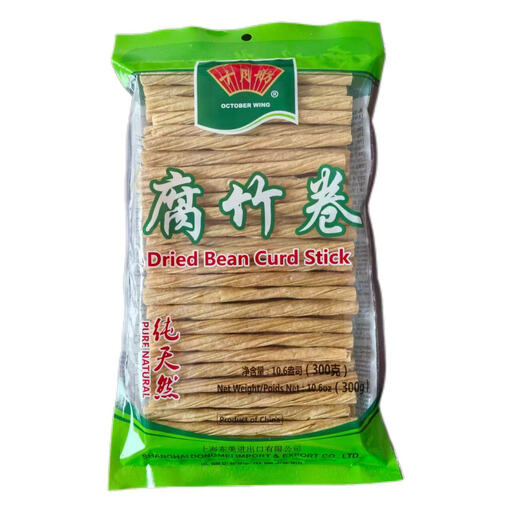
Why it suits this profile: A 300-gram packet offers a manageable quantity for trying bean curd sticks for the first time in hotpot, soup or a stir-fry.
The product information lists soya beans and water as the ingredients and makes it clear that this is a product from China. Check the packaging before use and soak the sticks according to the stated instructions.
Dried format for cupboard storage; suitable for hotpot and a range of Chinese dishes.
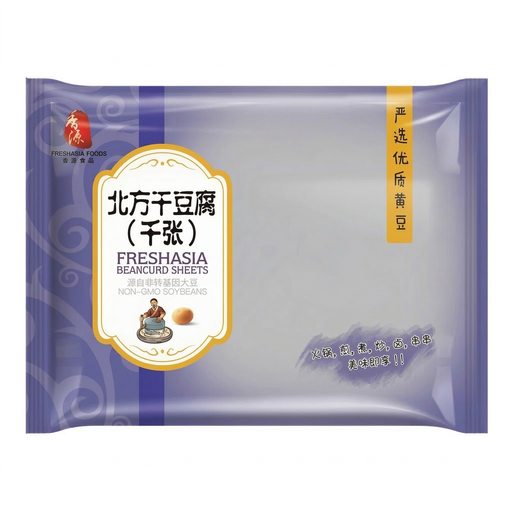
Why it suits this profile: The sheets can be used in stir-fries, hotpot and salads, or as wrappers for fillings. The product description mentions a firm, chewy texture and an ingredients list containing soya beans, water and salt.
The storage conditions are clearly stated: keep refrigerated at 0–4 °C. This makes it immediately clear that it is not a long-life product for storing in the kitchen cupboard.
190 grams; 16.5 grams of protein per 100 grams according to the product information; suitable for several preparation methods.
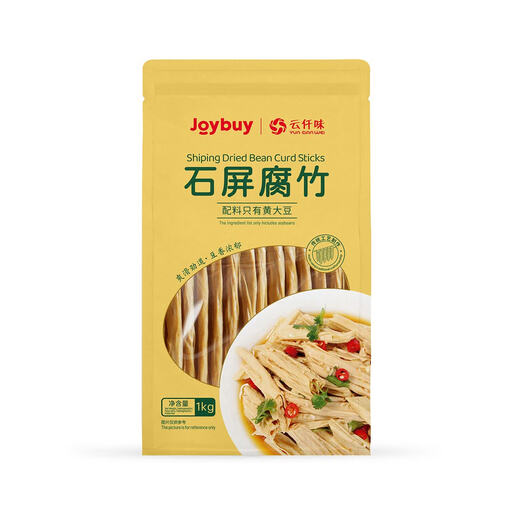
Why it suits this profile: The 1-kilogram pack is aimed at people who regularly prepare hotpot, stews, salads or stir-fries and want to keep a stock of dried tofu.
The instructions recommend soaking for 2–3 hours and state that the sticks are suitable for longer cooking once rehydrated. This makes preparation more predictable than guessing at a short soaking time.
1 kilogram contents; according to the product information, 41.3 grams of protein per 100 grams; only yellow soya beans listed as an ingredient.
We have put together a complete, up-to-date list of products that fully meet these strict selection criteria and the applicable European safety regulations.
For a cold salad, briefly blanch soaked bean curd strips, then mix them with soya sauce, sesame oil, garlic, vinegar and ingredients such as cucumber or coriander. For hotpot, add tofu skin once the stock is boiling, so that it absorbs the flavour without being cooked for unnecessarily long.
Yes, these terms are often used interchangeably in the UK. “Tofu skin”, “tofu sheets” and bean curd skin usually refer to a sheet-shaped soya product. Bean curd sticks and bean curd strips are similar dried soya products, but have a different shape and often a firmer texture.
That depends on the product. Thin tofu sheets and strips often need around 20–30 minutes. Thicker bean curd sticks may need 30–60 minutes or longer. Always follow the instructions on the packaging and check that the centre is soft before cooking.
Store dried tofu in a tightly sealed packet in a cool, dry place, protected from moisture and sunlight. Chilled varieties should be kept in the fridge at the stated temperature. The shelf life may change after opening, so follow the product information and use your senses to assess its quality.
