
Vandaag of morgen in huis

Kwaliteit gegarandeerd

Welkomstaanbiedingen ontgrendelen: GRATIS bezorging | Tot 80% korting | Gratis 30 dagen JoyPlus-proefperiode
Download de app
A pot of hotpot might seem simple: broth on the table, ingredients added, and off you go. Yet the choice of tofu for hotpot can make all the difference between a firm, flavourful bite and soggy pieces that fall apart. When ordering online especially, texture, storage and preparation aren't always immediately clear.
Watch out for these common pitfalls:
The shape largely determines how the product behaves in the broth.
Dried tofu, bean curd sheets and tofu skins are made from soya and need to be softened by soaking before use. They absorb broth well and are handy if you like to keep a stock in your cupboard. What's more, the dry nutritional values per 100g look high because the product hasn't yet absorbed any extra water.
Thin sheets, such as baiye or tofu skin, are suitable for cutting into strips, rolling up, or using as a wrap for fillings. As well as hotpot, they work well in salads, stir-fries and stews.
Tofu knots, also known as bean curd knots, are made from folded or knotted tofu skins. The shape keeps them firm in the pot. They're practical for a shared hotpot, mala tang, oden and soup.
The knots often have a springy bite and hold flavour in their folds. Dried knots usually need to be soaked for 20 to 30 minutes. Some packaged varieties can be prepared straight away, but always check this per product.
Fried tofu has a firm outer layer and a porous inside. This means it quickly absorbs broth and sauce. This type is often frozen and needs to be thawed before use, unless the packaging states otherwise.
Layered tofu, such as Chiba tofu, has a denser structure. This variety is suitable if you want to slice the tofu and cook it briefly in the broth, without a long soaking time.
Don't just look at the name – check the instructions too. Dried products often state a soaking time of 20 to 30 minutes followed by a cooking time of around 10 to 15 minutes. That's important when planning a hotpot meal.
A product that can go straight from the packet into the pot saves time. Fried or frozen tofu, on the other hand, often has a soft, spongy inside and can absorb broth quickly.
If you're using tofu as a plant-based protein source, compare the protein content per 100g. Pay attention to whether the value is for the dry or prepared product. With a dried product, the figure can look higher than it will be after soaking.
Also check the ingredients. Some products contain only soya and water, while others include salt, oil, wheat gluten, thickeners or flavour enhancers. Chiba tofu, for example, contains soya and wheat gluten. That's relevant for anyone avoiding gluten.
All the products mentioned contain soya. If you have an allergy, always check the label and the current product information.
According to the product information, dried tofu should be stored in a cool, dry place, sealed against moisture and pests. This makes these products suitable for the store cupboard.
Fresh or chilled tofu skins need to be kept at around 0–4°C and often used quickly after opening. Frozen products should stay at -18°C or lower. Thawed products must not be refrozen according to the stated instructions. So don't choose on price alone – also consider your available fridge and freezer space.
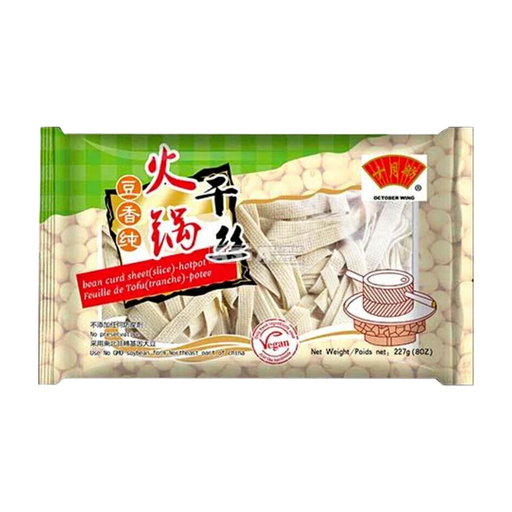
Why this suits the profile: The dry shreds are compact to store and can be used for hotpot, mala tang, soups, stews and salads.
The preparation steps clearly state 20–30 minutes of soaking followed by around 10–15 minutes of cooking. So you know upfront it's not a ready-to-use product.
Ingredients: soya and water. The stated nutritional value shows 40g protein per 100g dry product.
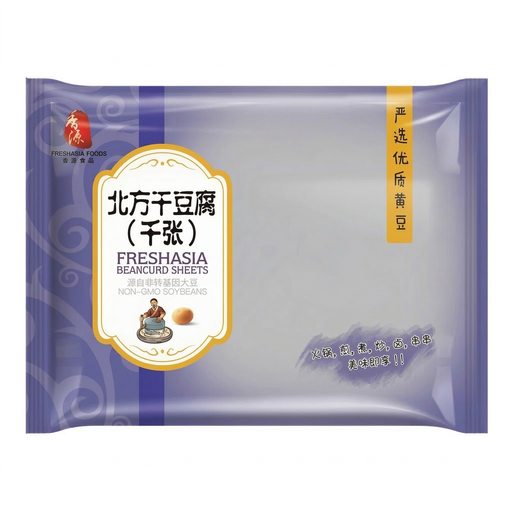
Why this suits the profile: The firm sheets are suitable for hotpot, stir-fries, salads and as a wrap for fillings.
The product information explicitly states chilled storage at 0–4°C and quick use after opening. This prevents confusion with long-life dry sheets.
Per 100g, 16.5g protein is stated. The ingredients list contains soya, water and salt.
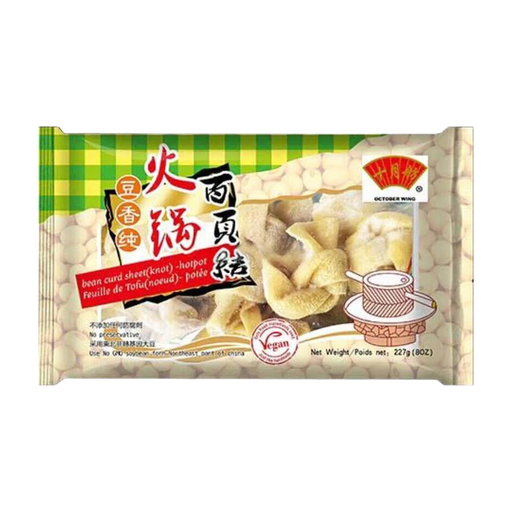
Why this suits the profile: The knotted shape is suitable for long cooking times in hotpot, mala tang and stews.
According to the product description, the knot structure stays firm during cooking. Soak for 20–30 minutes, rinse, then simmer for around 10–15 minutes.
The pack contains 227g. The nutritional information states 16g protein and 1g salt per 100g dry product.
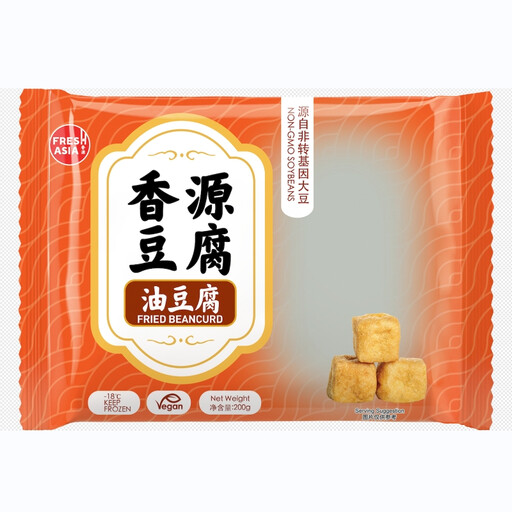
Why this suits the profile: The porous inside absorbs broth and sauce quickly. This suits home cooks who want minimal preparation.
The product information states that it is stored frozen at -18°C or lower. Thaw before use and do not refreeze after thawing.
Contains 24g protein per 100g according to the nutritional information. The ingredients include soya, vegetable oil and preservatives.
We've put together a full, up-to-date list of products that fully meet these strict selection criteria and comply with current European safety regulations.
Yes. Dried tofu and bean curd sheets usually need to be softened and made pliable first. The exact time varies per product; often 20 to 30 minutes of soaking is needed. After that, you still need to cook them according to the instructions.
Fried tofu has a strong absorbing effect thanks to its porous inside. Tofu knots and folded tofu skins also hold broth in their folds. Thin tofu skins take on flavour but generally have a shorter cooking time.
That depends on the type. Unopened dried varieties are generally suitable for store-cupboard storage until the date on the packaging, provided they are kept dry and sealed. Chilled and frozen products require constant temperature control. Always follow the storage and shelf-life information on the packaging.
